
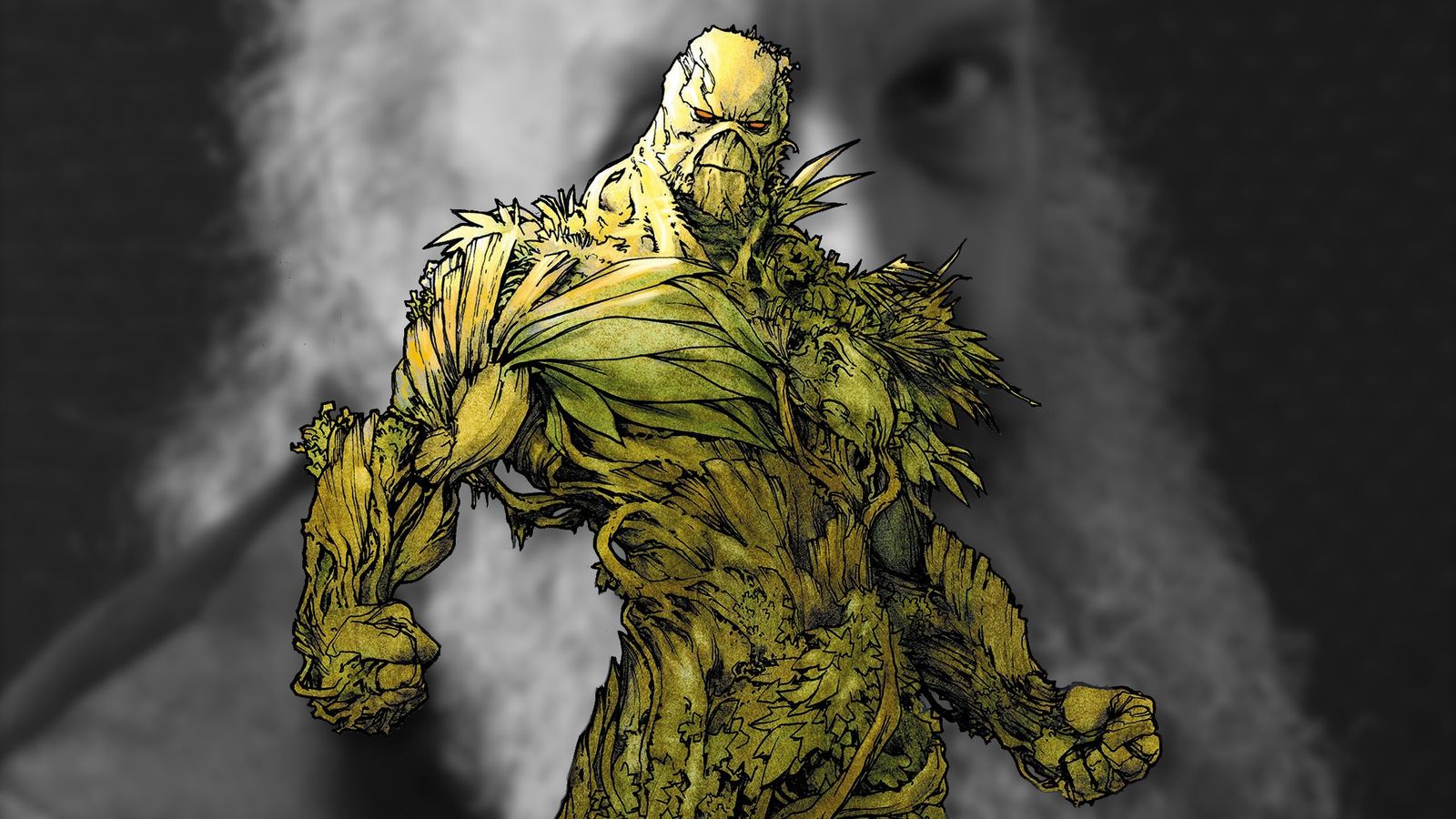
Published Oct 31, 2026, 11:50 PM EDT Kolt Day is a tenured freelancer who has brought invigorating and provocative takes to Screen Rant and ComicBook, alongside loads of writing experience in other realms. Outside of media journalism, Kolt loves music production and philosophy (particularly Nietzsche, Derrida, and Foucault). Of all DC Comics' iconic characters, few are as revered by hardcore fans as Swamp Thing. As a staple of DC's pulpy horror history, Swamp Thing has seen several iterations, but a new version from W. Maxwell Prince has established a new era for the character. With the last big moment for Swamp Thing being the ill-fated 2019 DC Universe series, this latest step proves to be a promising new iteration for one of DC's most underappreciated characters. Swamp Thing has also become DC deep lore, and became a defining part of Alan Moore's career during his run on the character from 1984 to 1987 (Saga of the Swamp Thing #20-#64). Although Moore would become known for major works like V for Vendetta, Watchmen, and The Killing Joke, he's also become synonymous with Swamp Thing's modern identity. Beyond the roots of the character, Prince's reimagining of Swamp Thing remains strangely resonant with Moore's highly original vision. Swamp Thing Gets Massive Revamp In The Deadman #5 With The Deadman, the award-winning writer behind horror darlings like Ice Cream Man and Haha has been given license to the iconic DC character Boston Brand, better known as the eponymous "Deadman". Fairly early into this run, Prince has started out with his signature surreal voice, a similar approach to the one Prince takes in Superman: The Kryptonite Spectrum: in effect, his work with The Deadman is a mission to show his fluency and creativity with existing DC characters. In the most recent issue (as of the time of writing), Prince has decided to reintroduce the character Swamp Thing in The Deadman #5, taking place largely within "the Gr33n". Where before Swamp Thing and the Green had largely occupied more organic roles, Prince's reimagining sees them in the context of a totally technologized Green. "5wampy" is realized as a figure emerging from stray Ethernet cables, speaking in a register that can only be described as "1337speak", or "leetspeak", the online language of a generation past. Although this presentation of Swamp Thing can be seen as outdated, it's also charming; the presentation of leetspeak veers into camp, which reinforces Prince's overall approach to the series as a whole. Swamp Thing has become a cyberpunk realization of the contemporary anxieties surrounding nature's compatibility with technology, accented perfectly by the modern preoccupation with AI. Swamp Thing's New Design Stays True To Alan Moore's Intentions One of the strangest things about this iteration of Swamp Thing is that it breaks so radically from the history of the character. After all, if Alan Moore's iconic run on the character is known for anything, it's for a radical reimagining of its mythology. Under Len Wein's original run, Swamp Thing had been imagined as a human—Alec Holland—who, through a tragic accident, became integrated with the life of the swamp. Swamp Thing enjoyed a great deal of success in its original run, with Swamp Thing battling many horrifying villains aiming to find the people who created his present circumstances. However, under Moore and artist Stephen Bissette, the character was revealed to be a sentient mass of plant matter that had inherited Alec Holland's memories. Through expert writing and artistry, this shift would yield one of Alan Moore's most iconic storylines, commenting on the interaction between humans and the environment through the lens of deep ecology. In this sense, W. Maxwell Prince's integration of the Green with technology itself might seem cynical. But for new readers, it's important to understand that The Deadman, like much of W. Maxwell Prince's work, is intended to read almost parodically: not as an endorsement of the comic book's realities, but as a sort of fun-house mirror by which readers can draw their own conclusions. Prince, after all, is known for nightmare-fuel horror comics. From this lens, Prince's reimagining of Swamp Thing as an AI agent built of cables and wires isn't a cynical displacement of the historical role of the character, but a very positive reimagining. If Alan Moore's original intention for Swamp Thing's reimagining was to position the character to comment on ecological issues, then Prince's new presentation of the character as a literal being from "the Gr33n" made of cables and wires can only serve to highlight the disconnect between technological development and ecological safety. In that sense, The Deadman #5's new imagining of Swamp Thing responds to contemporary anxieties in the same way that Moore's character once responded to the contemporary anxieties of nature, society, and ecology. Or, perhaps better put—what makes this character so strong is that, through Moore's irony, W. Maxwell Prince's reimagining of Swamp Thing puts the deep ecological principles of the character's reimagining to task against a world it could never have imagined.
DC Unveils Cyberpunk Redesign Of Classic Alan Moore Hero, And It's Beyond Epic
Full Article
Original Source
Read the full article at Screenrant →KhanList aggregates and links to publicly available news content. We do not host full articles from third-party sources. Always verify important information with original sources.