
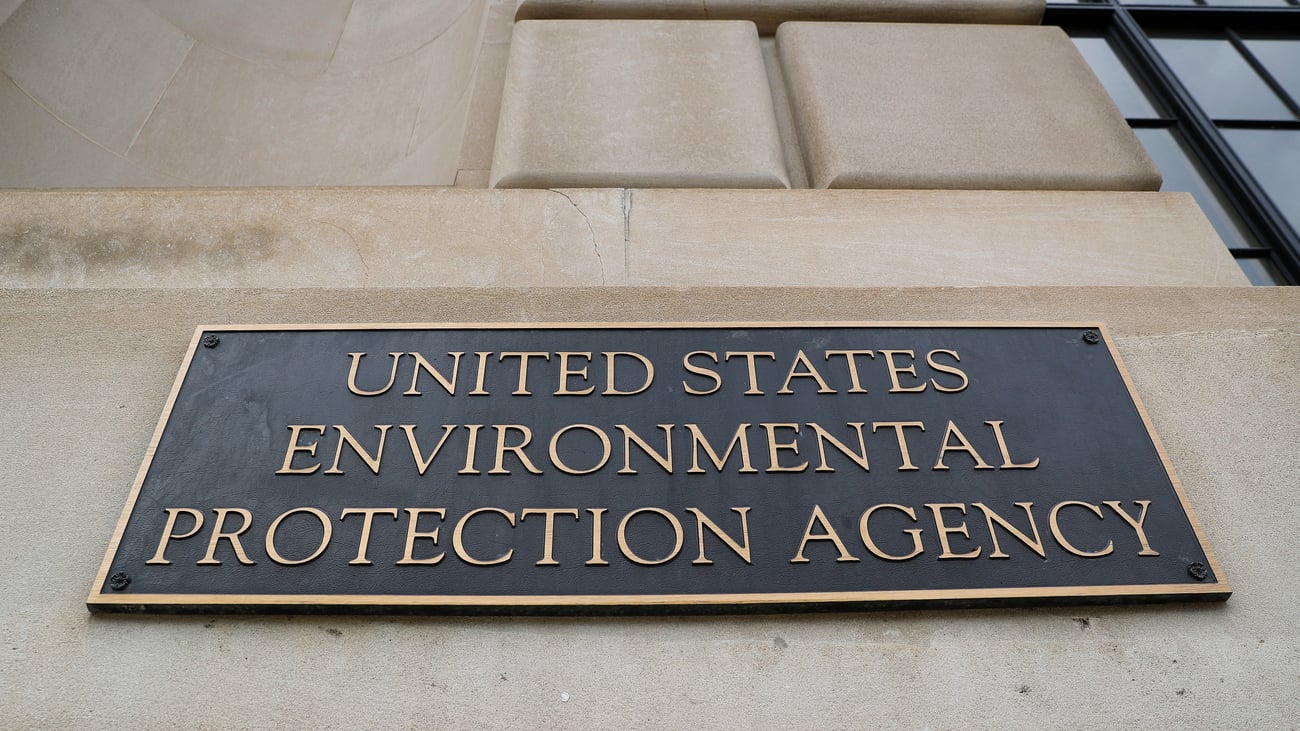
The three-judge panel sided with the environmental agency’s finding that the new emissions standards were unlikely to impact endangered species as the new rules changed very little.WASHINGTON (CN) — A D.C. Circuit panel on Tuesday rejected an environmental lawsuit challenging a new set of air emission standards for nitrogen, sulfur and soot pollution.The three-judge panel determined that the Environmental Protection Agency correctly found the new regulations would have no effect on air quality that could affect species, or their habitats, protected under the Endangered Species Act because the decision would not result in any area of the country being designated as needing additional emissions reductions.The Center for Biological Diversity challenged the EPA’s proposed rule in a lawsuit filed directly with the appellate court on Jan. 6, 2025, arguing the agency ignored evidence of the cumulative and ongoing effects of such emissions on wildlife.Chief U.S. Circuit Judge Sri Srinivasan, in a 21-page opinion, wrote that the agency’s no-effect determination was reasonable and reasonably explained with clear evidence that the EPA had fully considered the issue.“EPA’s no-effect determination satisfies those requirements,” the Barack Obama appointee wrote. “In its October 2024 memorandum, EPA concluded that its second [national ambient air quality standards] rule would have no effect on protected species because neither its revisions to the secondary [national ambient air quality standards] for [sulfur oxide] nor its decision to leave in place the preexisting standards for [nitrogen oxides] and [particulate matter] would result in any changes to air quality that could affect protected species."Srinivasan was joined in full by U.S. Circuit Judge Neomi Rao, a Donald Trump appointee, while U.S. Circuit Judge Karen Henderson wrote her own concurrence.In the EPA’s final rule, published in the Federal Register on Dec. 27, 2024, the agency said it reviewed air quality criteria for ecological effects and air quality standards regarding nitrogen oxides, sulfur oxides and particulate matter known as soot pollution.Based on the review, the agency revised the existing sulfur dioxide standard to allow an average of 10 parts per billion over the next three years, while retaining existing standards for nitrogen oxides and particular matter “without revision.”According to the Center for Biological Diversity, the agency relied on outdated air-pollution standards for nitrogen and soot pollution while rejecting scientific advice. Per the published final rule, the EPA retained its standards for the two sources of pollution from a 2011-2012 review.The Shenandoah salamander was listed as federally endangered in 1989 in part due to acid deposition that altered soil conditions at the Shenandoah National Park, where the salamander primarily resides.The bay checkerspot butterfly, found in Santa Clara County, California, near the San Francisco Bay as well as San Bruno Mountain and Edgewood County Park, was listed as threatened in September 1987 before the U.S. Fish and Wildlife Service uplifted it to endangered in 2022.According to the Fish and Wildlife Service, the butterfly faces threats from habitat degradation, climate change, pesticides and non-native invasive plant species exacerbated by nitrogen deposition cause by car exhaust.In the opinion, Srinivasan noted that the EPA’s analysis had found all but two monitor sites across the country had already met the revised standards of 10 parts per billion in a three-year average, and those remaining two spots were set to attain an average of under six parts per billion after implementing necessary controls.The finding supported the EPA’s conclusion that adopting the new standards would not push any additional areas out of attainment or require additional emission reductions, Srinivasan wrote.“Even assuming [the Center for Biological Diversity] is correct that the secondary [national ambient air quality standards] are insufficient to protect against ongoing and cumulative harms from deposition and inhalation of the criteria pollutants, [the center] fails to identify any effects that would not occur but for the 2024 rule,” Srinivasan wrote. “As EPA explained, its proposed rule would not result in any changes to attainment designations nor require implementation of additional pollution controls to reduce emissions beyond what the preexisting [standards] already required.”In her concurrence, Henderson, a George H.W. Bush appointee, highlighted her position that the EPA’s decision to ultimately forego modifying the secondary air quality standards was a “quintessential example of ‘inaction’ that does not trigger the Endangered Species Act’s interagency consultation requirement to begin with.”She wrote that she saw no need for the court to weigh the “soundness” of the EPA’s no-effect determination, but ultimately agreed with her colleagues that even if the decision amount to an action needed consultation, it was neither arbitrary nor capricious.Subscribe to our free newslettersOur weekly newsletter Closing Arguments offers the latest about ongoing trials, major litigation and rulings in courthouses around the U.S. and the world, while the monthly Under the Lights dishes the legal dirt from Hollywood, sports, Big Tech and the arts.Additional Reads
DC Circuit upholds EPA sulfur and soot pollution standards
Full Article
Original Source
Read the full article at Courthousenews →KhanList aggregates and links to publicly available news content. We do not host full articles from third-party sources. Always verify important information with original sources.