
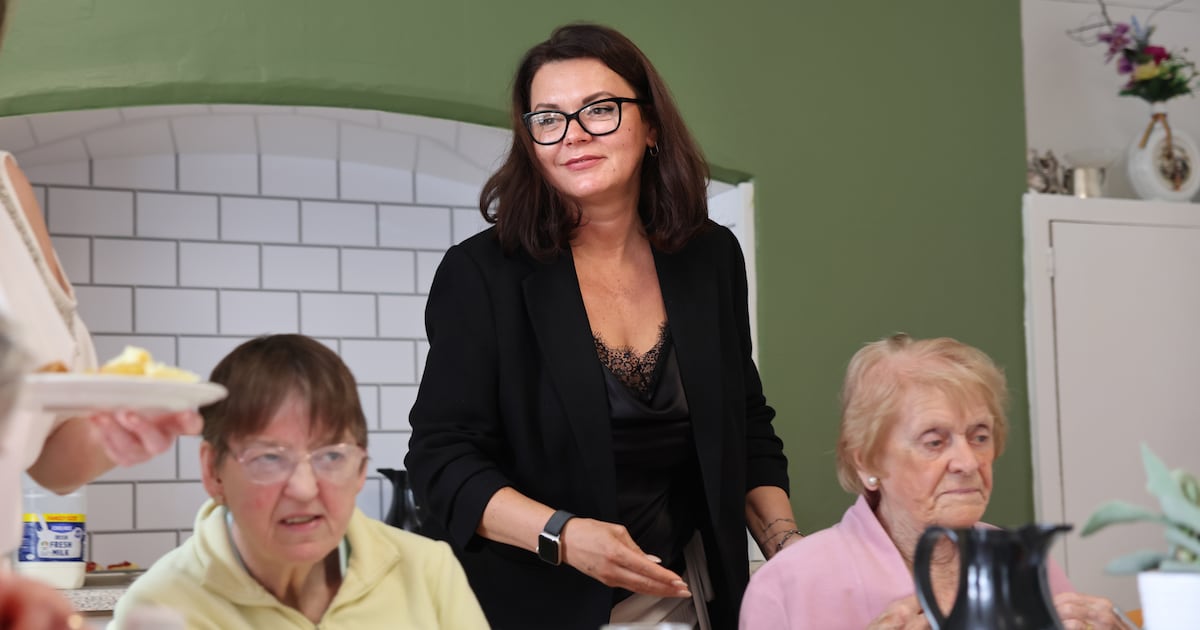
Manager Irina Bereznytska, herself Ukrainian, says the centre is likely to operate for only two or three days a weekAlina Kuzyk (centre) works as a carer at Four Districts Day Care Centre for Seniors in Rathcoole, Co Dublin. Photograph: Dara Mac Dónaill A south Dublin day centre says it may have to reduce its services for older people in the community because its Ukrainian staff members have to leave their accommodation at Citywest under a change in Government policy.The Four Districts day centre in Rathcoole has 13 staff members, seven of whom are Ukrainian, working as carers, gardeners and in the accounts department. They live in the former Citywest Hotel.The Government announced earlier this year it was phasing out State provision of accommodation for Ukrainians. And in a letter received at the end of June, the Ukrainians who were accommodated in Citywest were told they have to move out on September 18th.It told them they can either apply for accommodation at a State-supported accommodation centre if “they have specific needs” or source accommodation directly with “supports and information”.READ MOREThe State-supported accommodation centres include Inchmore House in Co Offaly, St Malachy’s in Co Louth, Punchestown and Kill Equestrian Centre in Co Kildare.Irina Bereznytska, who has been the manager of the day centre for 10 years, says she will “absolutely not” be able to operate the centre five days a week without the Ukrainian staff members.She says they could probably operate only two or three days a week.Supervisor Catherine Cullen, who has worked there for 15 years, says, “That’s our big worry, that we couldn’t provide a service ... that’s what we’re scared of.”So far only one woman has secured accommodation – and the rest face uncertainty over where they will live from September 18th.[ Ukrainians obliged to find alternative accommodation as State winds down contractsOpens in new window ]The Irish Times previously reported that 900 people at Citywest had been told the State would no longer provide accommodation for them. The former Saggart hotel is now the largest State-owned international protection accommodation centre after it was bought by the Department of Justice.More than 1,500 Ukrainians will be affected when almost 90 hotels end accommodation contracts with the State between August and the end of October.Bereznytska says many staff members at the day centre “want to integrate in the society” and want to “give back”. “They’re really, really grateful,” she adds.Bereznytska, who is originally from Ukraine and qualified as a doctor there, has lived in Ireland for 25 years. Of those who came to Ireland since Russia invaded in 2022, the “majority of them lost everything. There was nowhere to go”, she says.Alina Kuzyk is a carer at the day centre. She came to Ireland more than four years ago and lives in Citywest. Her son is deaf and on the autism spectrum, she says. She studied as a nurse in Ukraine.She was able to apply for the State-supported accommodation centres but says the four centres are too far from the school her son attends in Cabra, which is specifically for deaf students.[ The unlikely city that is Ukraine’s lifeline to the WestOpens in new window ]She says her first year in Ireland was “very hard”, adding that she was “shocked” and “depressed.”A year and a half ago, she starting working at the centre, describing it as a “very perfect opportunity”.After receiving the letter in June, she says, some of those who attend the day centre were “very worried about the situation”. She says she was worried, stressed and “cried so much”. She applied for lots of accommodation, but received no response. “Rent is very expensive,” she adds. It is “a miracle” she has now found somewhere to live, she says, and she and her son are “happy”.Oleh Zymovskii has been a gardener at the centre for two years, growing cucumbers, strawberries, potatoes and tomatoes as well as tending to the garden.Through Bereznytska’s translation, he says he came to Ireland three years ago.Oleh Zimovskii tends to tomatoes at Four Districts Day Care Centre for Seniors in Rathcoole, Co Dublin. Photograph: Dara Mac Dónaill He says he didn’t leave Ukraine because he wanted to, but because he realised he could lose his life.He says it was “a shock” when they received the letter telling them they had to leave Citywest, and they are feeling the “pressure” to find somewhere else.In Ukraine, he had retired and spent time on an allotment where he had an orchard and grew berries and vegetables.People are “really desperate” to find accommodation, he says, adding that his “heart is in Ireland”. He says the people are “very kind” and “very nice”. “I really love it,” he adds.Olena Denysova and her son Sergey Denysov both work at the Four Districts Day Care Centre in Rathcoole. Photograph: Dara Mac Dónaill The day centre cares for people aged 80 years and older from around 9.30am to 2.30pm Monday to Friday. The older people, who come from Rathcoole and nearby Brittas, Newcastle and Saggart, are collected and dropped home by a bus service.Before Covid, the day centre would have had 12 people on a busy day and this has since doubled to about 24. There is now a waiting list, Cullen says. Those who attend pay €10 a day and receive tea and home-made scones in the morning, followed by dinner and dessert later. They play bingo, sing songs, listen to music and take part in other activities, and about once a month they go out for a day trip.Ukrainian staff member Stratiy Olena looks after elderly people at the day care centre in Rathcoole. Photograph: Dara Mac Dónaill A spokesman for the Department of Justice says the ending of the provision of accommodation at the Citywest Hotel forms part of the wider phased withdrawal of State-contracted commercial accommodation for people granted temporary protection who arrived in Ireland before March 14th, 2024.The department says it “recognises that individual residents may have concerns regarding their personal circumstances, including medical needs, disability, caring responsibilities, education and employment”.These matters form part of the assessment process for those who apply for continued State-contracted accommodation, it says. Applications are being assessed on the “basis of the information provided by applicants”.Medical evidence may be submitted for individuals with highly complex medical needs, the department says.“Where a person’s application for ongoing accommodation is unsuccessful, they will be required to vacate their current accommodation on the applicable end date of their accommodation.”IN THIS SECTION
Day centre may have to reduce services after Ukrainian staff forced to leave accommodation
Full Article
Original Source
Read the full article at Irishtimes →KhanList aggregates and links to publicly available news content. We do not host full articles from third-party sources. Always verify important information with original sources.