
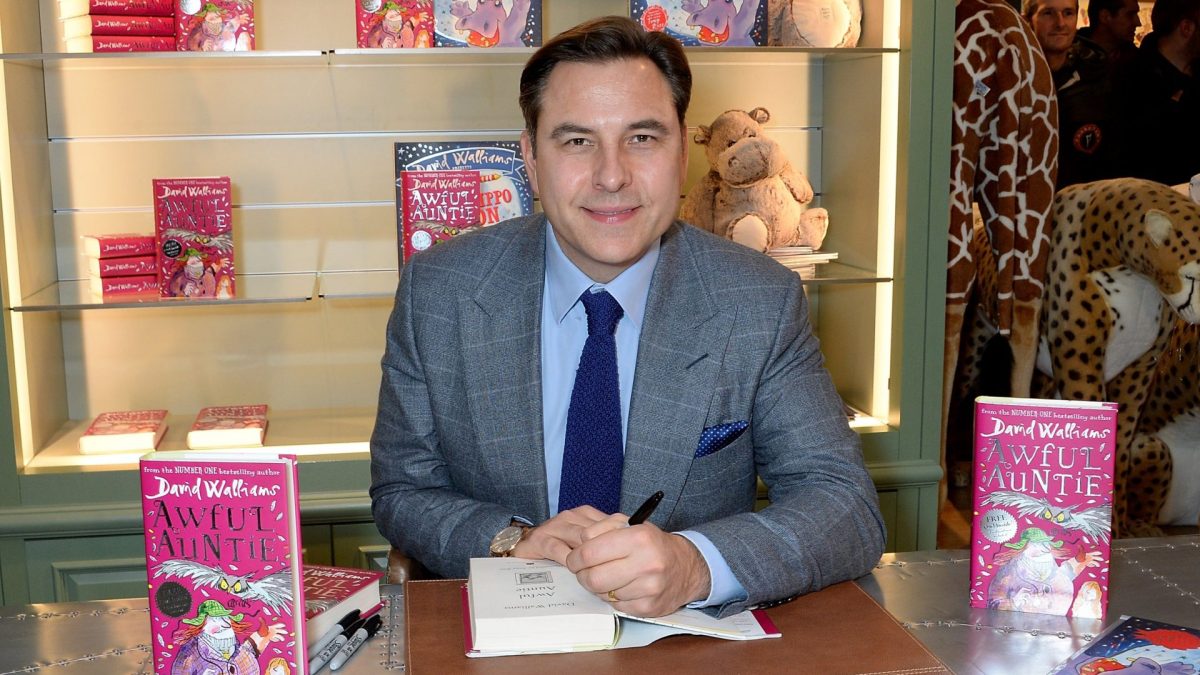
Little Britain was irresistible to children from the moment it arrived on our television screens in 2003 with Vicky Pollard in court “Yeah but no but”-ing her way through a shoplifting charge. It might have started out as a taboo-busting sketch show on Radio 4, skewering the prejudices of Middle England, but on screen, its grotesque costumes, high camp and unsophisticated, cartoon catchphrases, were catnip to a generation of pre-adolescents too immature to grasp satire, who deafened their playgrounds and classrooms with squawks of “I’m a lady” or “Computer says no” and missed the joke completely. David Walliams and Matt Lucas immediately became British comedy’s most ubiquitous double act, their popularity bolstered by their unusual – and rather unlikely, given how unsavoury their material could be – ability to appeal to both adult and younger audiences. That unexpected popularity set the course for Walliams’s career. At the very start, his act was strange, occasionally extreme and frequently hyper sexualised, yet rather than confining him to the fringe it fast-tracked him to the upper echelons of the mainstream entertainment industry, whose most lucrative market is “family”. That is the realm over which he came to preside. His children’s books, with their Quentin Blake and Tony Ross illustrations, had him hailed as the successor to Roald Dahl and were turned into all-star Christmas adaptations by BBC One. They were divisive but bestselling, and made his publisher HarperCollins £156million, until he was dropped amid misconduct allegations last year. His decade-long gig hosting Britain’s Got Talent beamed him into homes on Saturday nights for a decade, until he was sacked after being recorded using explicit, derogatory language about contestants in 2022.He always carried a sinister air – a dark mean streak, and was not cuddly or cosy – but for 25 years, he was omnipresent across the BBC and ITV and in the bedrooms of curious, imaginative children. He fronted documentaries and game shows; he launched a late-night chat show; he hosted the Royal Variety Performance and the National Television Awards; he swam the English Channel for Sport Relief. He got an OBE, and edged towards “national treasure” status, and wielded an extraordinary amount of power. It has now been alleged that he abused that power. An investigation by the Guardian and ITN features accusations from multiple women who allege that he groomed them, preyed on them for sex or harassed them in the workplace, during a period spanning the peak of his Little Britain fame, through Britain’s Got Talent and his 17 years at HarperCollins. Many of the woman who came forward were teenagers at the time. Two were 15 years old. He has denied the allegations, and sought (and was refused) an unprecedented injunction from the High Court to prevent their publication, claiming that the consequences would be fatal as they would leave him at risk of suicide. The investigation into Walliams makes spectacularly grim reading. It alleges that he would seek out young women at fan events, or on MySpace, or through their modelling agents. It alleges that he would flatter them over email – “You in the bath is a nice thought” goes one allegedly sent to a 17-year-old when he was 34 – and would invite them to his palatial north London home for celebrity parties and, in some cases, sex. It alleges that he would be left alone with teenage fans in his backstage dressing room at Britain’s Got Talent, or send creepy text messages to its female runners. It alleges that women would warn their female colleagues at the HarperCollins office not to go to Walliams’s house alone. With Russell Brand’s imprisonment this week for rape and sexual assault, and the publicity of his trial in the weeks beforehand, there has never been louder discussion about the ways men in British media have been able to exploit their status and fame in order to mistreat women, and the reasons those women might stay quiet about it. Walliams’s alleged behaviour follows the grim, seedy pattern of so many celebrity abusers who came before him, who take advantage of starstruck fans’ adoration and seduce them with their wealth and glamour, and whose success and profits protect them from consequences. Walliams seldom faced consequences, no matter the scandal or controversy he found himself at the centre of. He only got bigger. He was venerated as a silly, clowning, good-humoured icon for children, and the fans waiting to meet him backstage were often little more than that. The women he allegedly lured to his house after signing an autograph or offering them advice on getting into comedy were young and impressionable. They had grown up with him and, thanks to the establishment’s elevation of him as safe and family-friendly, believed that he could be trusted. Walliams built a career and a fortune on his popularity with children. It made him a force to be reckoned with in British entertainment, and made his employers a lot of money. If these chilling allegations are true, it also gave him direct access to vulnerable young women – and allowed a predator to go unchecked for decades.
David Walliams was an icon to children. This is a grim betrayal
Full Article
Original Source
Read the full article at Inews →KhanList aggregates and links to publicly available news content. We do not host full articles from third-party sources. Always verify important information with original sources.