
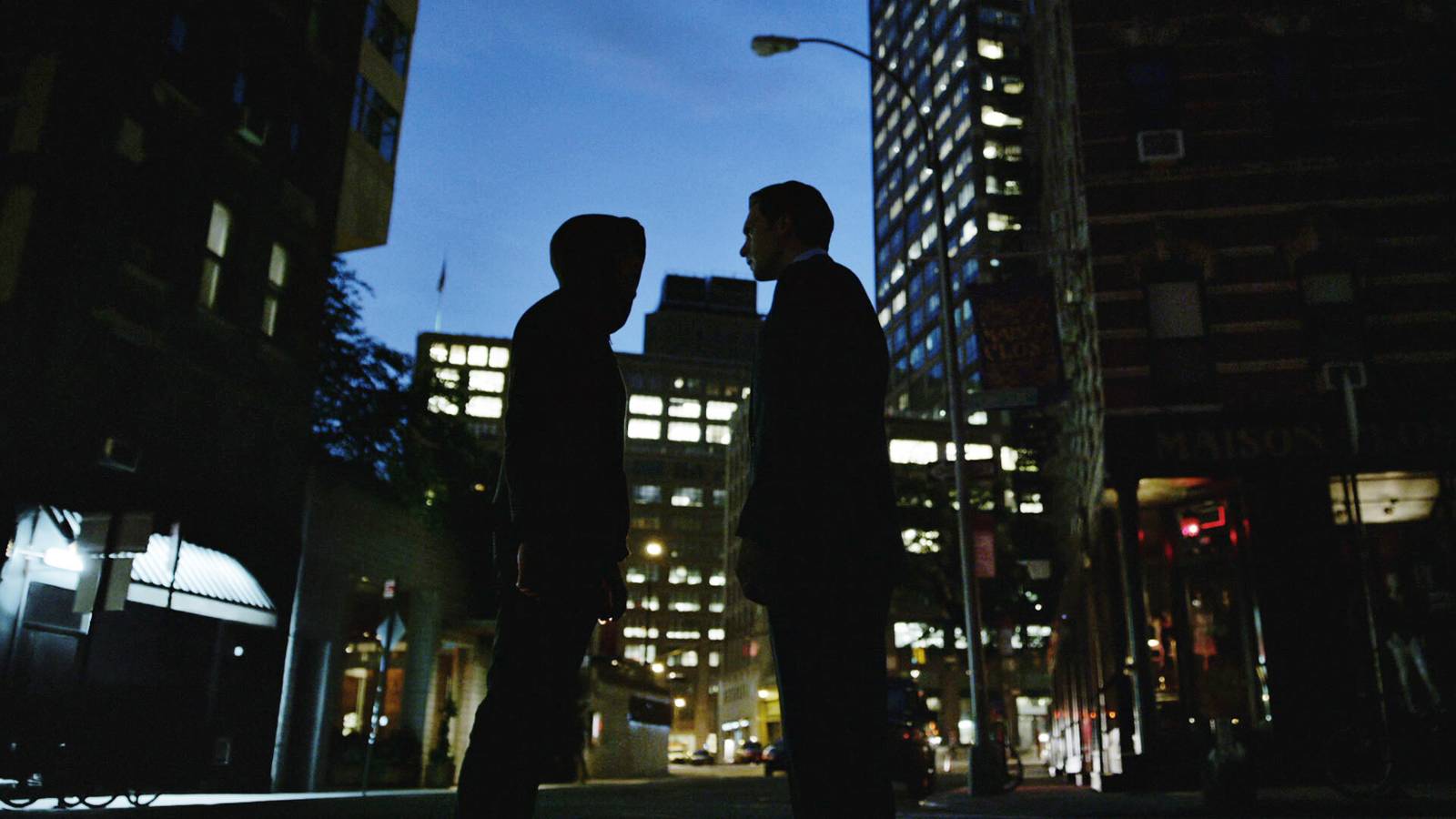
Published Sep 18, 2026, 1:00 AM EDT Dhruv is a Lead Writer in Screen Rant's New TV division. He has been consistently contributing to the website for over two years and has written thousands of articles covering streaming trends, movie/TV analysis, and pop culture breakdowns. Before Screen Rant, he was a Senior Writer for The Cinemaholic, covering everything from anime to television, from reality TV to movies. After high school, he was on his way to become a Civil Engineer. However, he soon realized that writing was his true calling. As a result, he took a leap and never looked back. Sign in to your ScreenRant account David Fincher and William Gibson have long-established themselves as visionaries in their respective genres. While Fincher never fails to deliver some of the most compelling and psychologically dense thrillers, William Gibson's literary sci-fi legacy continues to influence new additions to the genre. One show seemingly draws from the works of both creatives and delivers an unforgettable 4-season story. Created by Sam Esmail, Mr. Robot premiered in 2015 on the USA Network. Unlike most sci-fi thrillers that take their time to find their feet, Mr. Robot immerses viewers in its bleak yet fascinating New York City visuals and techno-drama from the very first episode. Despite delivering a top-notch pilot, the show refuses to slow down and only keeps raising the bar of its storytelling as it progresses. Mr. Robot has one of the most realistic portrayals of hacking on the screen. The series is further elevated by the incredible performances of its cast members and the brilliantly written characters they portray. While Mr. Robot never became a mainstream viral sensation, the show still has an unmatched cult following. Even its finale easily ranks among TV's greats. Mr. Robot is a completely original series, but it is hard not to see how it works so well because it echoes David Fincher's movies and William Gibson's sci-fi books in more ways than one. David Fincher’s Psychological Twists Meet William Gibson’s Post-Cyberpunk Vision In Mr. Robot Almost like David Fincher's Fight Club, Sam Esmail's Mr. Robot introduces viewers to an unreliable narrator, Elliot (played by Rami Malek). Instead of knowing what is happening in the objective world, viewers are thrown into Elliot's subjective and often fractured perception of reality. Similar to Fincher's Se7en and The Game, Mr. Robot also has this constant brooding atmosphere that hints at the existence of an omnipresent and invincible villain. Aligning with many Fincher movies, like The Killer, Fight Club, and The Social Network, Mr. Robot also raises questions and criticizes everything from the capitalist systems that control our lives to the ways technology influences human behavior. Even from a visual standpoint, the show masterfully captures its protagonist's alienation and nihilism in a comforting yet chilling way. This reminds one of Fincher's distinct visual language. While it is arguable whether Mr. Robot qualifies as a cybepunk series, it does adopt many tropes and devices from the sci-fi subgenre. It captures a world with clear class divides where E Corp ("Evil Corp") is essentially William Gibson’s Zaibatsu. The mega-conglomerate in the show is so sprawling that it even reigns above the national government. Meanwhile, the show's protagonist, Elliot, is a "low-life" in a "high-tech" world, with hacking as the only weapon at his disposal. Elliot comes off as a console cowboy like Case from Gibson's Neuromancer, although he seems even more isolated and withdrawn than the iconic cyberpunk character. Mr. Robot Has One Of The Best Pilots & Finales Of All Time It is rare for a show to snag a viewer's attention in the first ten minutes without being overly flashy or dramatic. Mr. Robot, however, stands as an exception as it takes minutes to pull viewers into Elliot's paranoia and genius hacking abilities. Even the overarching infrastructure and main players of its post-cyberpunk story are established in the first episode itself. Many sci-fi thrillers begin on a strong note and do a commendable job of presenting their ambitious ideas in their opening arcs. However, as they progress into their second and third seasons, they gradually lose steam and lose sight of their own vision. Mr. Robot remains top-notch throughout its runtime and rarely delivers any dull episodes. Its finale, too, feels complete as it resolves every underlying story thread while completely reframing the beginning. Mr. Robot also has an incredibly high rewatch value, making it the perfect series for fans of David Fincher's psychological thrillers and William Gibson's sci-fi novels. Young computer programmer Elliot struggles with drug abuse, an anti-social disorder, and paranoia, and connects to people by hacking them. When he is approached by a mysterious anarchist calling himself Mr. Robot, he joins a team of hacktivists called fsociety determined to take down the world's biggest corporations. Network USA Network Cast Rami Malek, Christian Slater, Carly Chaikin, Martin Wallström, Portia Doubleday, Michael Cristofer, Grace Gummer, BD Wong, Stephanie Corneliussen, Vaishnavi Sharma, Sam Esmail, Michelle Santiago, Kenneth Kopolovicz, Rachel Emma Slack, Ingrid Matias, Mario Telles, Chris Tera, Brandy Gardener, Kendrick Alan Reinsch, Kristopher Lee Weaver, Alice Schaerer, Greg Murphy, Laura Maselli, Maya Jasmin, George Goulart, Joseph Valle-Hoag, Michael Nagle Showrunner Sam Esmail Directors Jim McKay, Christoph Schrewe, Niels Arden Oplev, Nisha Ganatra, Tricia Brock Writers Sam Esmail, Adam Penn, Randolph Leon, Kor Adana, Robbie Pickering, Lucy Teitler, Kate Erickson Main Genre Drama Executive Producer(s) Steve Golin, Chad Hamilton, Kyle Bradstreet Producers Christian Slater, Rami Malek, Margo Myers Seasons 4
David Fincher Meets William Gibson In 45-Episode Thriller With 1 Of The Greatest Finales
Full Article
Original Source
Read the full article at Screenrant →KhanList aggregates and links to publicly available news content. We do not host full articles from third-party sources. Always verify important information with original sources.