
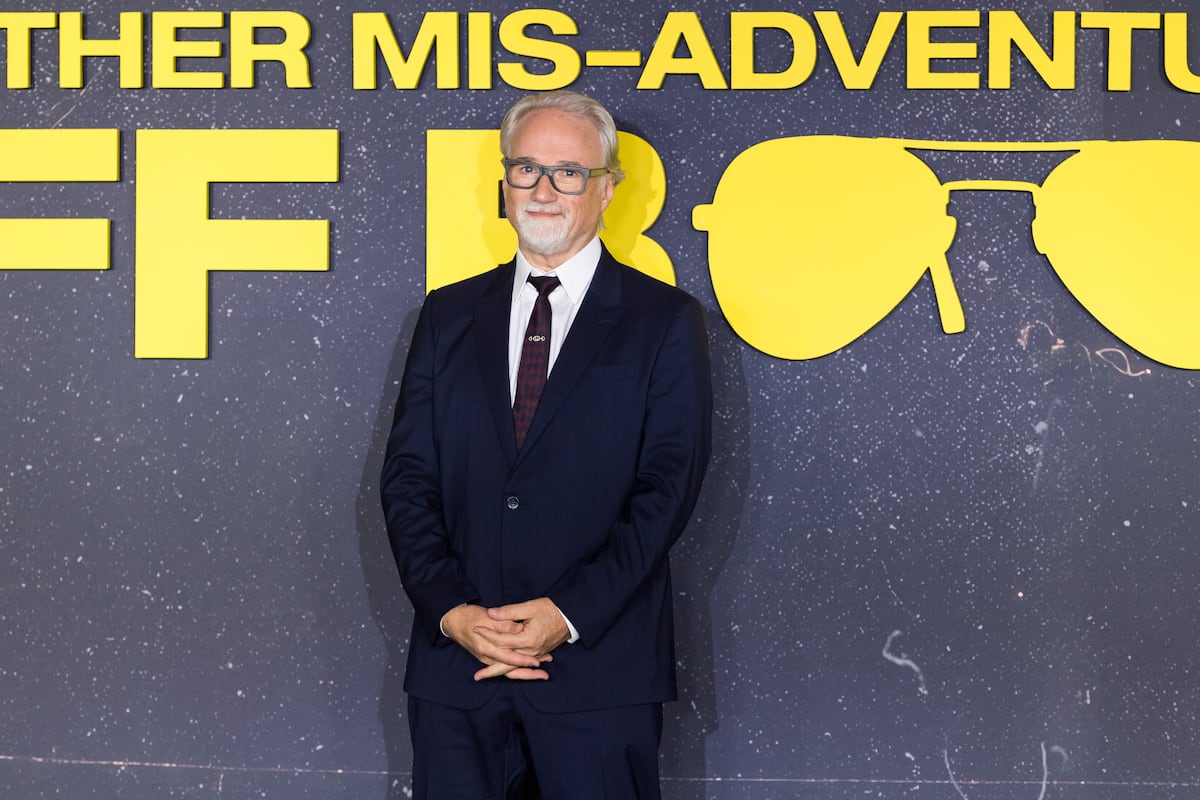
Quentin Tarantino has just become a father for the third time, and Brad Pitt is laid up in bed with the flu. So, in the absence of both the screenwriter and its leading man, director David Fincher, 64, took center stage at the European premiere of The Further Mis-Adventures of Cliff Booth, held in London on Monday night.Eight years after the events depicted by Tarantino in Once Upon a Time in... Hollywood, Cliff Booth, the stuntman played by Pitt, remains stuck in Los Angeles. He lives with his father and drifts from one job to another, far removed from the glamour of doubling for the character portrayed by Leonardo DiCaprio. Some of those jobs are criminally dirty, though all are connected to the movie business in one way or another.With his trademark darkness and bitterness, Fincher turns his gaze on a fading Los Angeles in 1977, during the months surrounding the release of Star Wars. Hence the word “misadventures” in the film’s title. The movie arrives in theaters on Wednesday before becoming available on Netflix.On a cold Tuesday morning in London, a smiling Fincher greets the journalist warmly. The trip for this interview was financed by the streaming platform as part of the promotional campaign marking the end of Fincher’s seven-year relationship with the company.Question. Your contract with Netflix has ended. Do you feel happy, liberated?Answer. [Laughs] I’ve never been a happy person. I’ve had some good times at Netflix. I’ll answer in parts. Right now I’m exhausted; I feel like when a woman, after giving birth, is asked if she’d do it again and she says no. It’s the same thing. That said, ask me in six months [laughs]. Here in London, jet lag is adding to it. But what I am relieved about is that right now I don’t have any projects lined up; I’m free of any commitments.Q. What did you connect with in the script that led you to accept the project?A. I was working on several projects when Brad Pitt — with whom I’d already made three movies — called me and said he had a script he wanted me to read. Now, did he have the author’s permission? Brad called me back and confirmed that he did, that Tarantino would be flattered if I was interested in taking on the project. That really excited me. Do you know what drew me in? Following Pitt’s character and telling Booth’s story. And we started putting the cast together: Scott Caan was in the script from the start; Elizabeth Debicki was my choice; everything just fell into place.Q. You cut 60 pages of dialogue from Tarantino’s 230-page script. Did he essentially accept that the film was yours, that it was a Fincher film?A. The thing is, I didn’t cut any scenes. It was all dialogue. And as we refined the script, Debicki’s role actually grew, for instance. Tarantino had only one goal: to get the film made. It’s been fun because, really, think about my films. Think about Zodiac: it’s about losing hope. And in Cliff Booth, despite all the villains and the killings, and I’ve never had so many deaths on screen, the tone is different.Q. There’s a bit of Robert Towne and a bit of Hal Ashby in this film.A. Thank you. I collaborated with Towne twice on two separate projects — each lasting three years — and they didn’t pan out. And I hope Cliff Booth’s women remind you of Towne’s, strong and resolute. I explained to Pitt that Crosby, the character played by Debicki, would never be a mere prop. That the romantic element, which is obviously there, wasn’t the main focus. She’s sophisticated; she’s driven by her own thoughts. Pitt loved it; it almost came as a relief to him. And my editor said this movie is Shampoo [Ashby’s classic] with killings.Q. You were a teenager in 1977, the year Cliff Booth takes place. What do you remember about the movies from that era?A. Pitt really likes The Towering Inferno from those years. And of course, I also enjoyed [Paul] Newman and [Steve] McQueen. But those studio films overshadowed the work of, say, Hal Ashby. That’s why I was interested in this script. Let me go back to the beginning: Cliff is over 50, his father lives with him, and he’s facing and navigating his retirement.Q. In recent days, there has been a heated debate about the use of AI in your film to reconstruct that version of Los Angeles and what’s shown on TV. Did you see this coming?A. You know what the thing is? The debate over AI masks a culture war; it has nothing to do with movies. I’ve never been in a situation where people cared about the tools I used. Look, my goal is to tell a story. You have a certain amount of money, you have to shoot a certain number of sequences, and you have to animate them, bring them to life.Q. Are you interested in the new generation of horror directors coming out of YouTube? I’m referring to the creators of Obsession and Backrooms.A. I have to admit I haven’t seen them because I’ve been a little busy [laughs]. But yes, I’m very interested. I had an interesting conversation a couple of weeks ago with some people who work in intellectual property, actually, on the studio side. They were talking about this new boom happening in horror, but mostly because they were interested in these new properties and new ways of thinking about horror. And they asked me: Why do you think this is happening in horror? I replied: Think about it. Horror filmmakers have to come up with a new way to kill someone every month. Twelve times a year. And they have to evolve, create new ways to scare people. They’re forced to continually evolve in how they build suspense, the killer’s identity, and their motivation. See how you tie it all together. And another detail that bothers Hollywood: there’s no one like them involved. There’s no adult oversight. When you watch these films, they’re cheap. And yet they pay for the cars, the lighting, the actors’ union… Where do they save money? Well, they don’t pay all those executives. And then, horror is very personal — everyone is scared by something different — so you can find success with different audiences.Q. Speaking of personal fear, how do you feel about the United States today?A. Right now? Politically, in the United States, the situation has been very difficult over the past 12 years. We’re in the midst of a culture war. It’s funny. We’re a country of “comrades” — I don’t mean to sound like I’m trying to be funny — we really support each other as colleagues, which is actually kind of fun, but that also means we get worked up when talking about our desires, and our anger can also be very… intense.Q. You say that if you achieve 60% or 65% of what you planned for a movie, you’ve succeeded. What about this one?A. Let me explain. What I mean is that in my head, I work on movies; I build them there. Then you have to make them, and that’s when you transform them into something tangible. And that’s where that percentage comes from. Of course, in my head they’re perfect… I’ll also tell you that lately I’ve been having a lot of conversations with friends, enemies, all kinds of people, and I’m surprised by how much complaining there is and how much people look back. Film distribution and production were also complicated decades ago. I’m much more interested in the conversation about where we want to go. It has to do with AI. We’ve been painting on walls for thousands of years and shooting films for a century. I’m not willing to get swept up in that melancholy notion that VistaVision — which was born in 1954 — was the best format. And I don’t think that’s true. Let’s move forward; there’s so much to explore. I’m collaborating with [Spanish director] Alberto Mielgo right now. This guy is a genius; he’s doing some incredible things… When I show our work to my friends, they say, “What is this?” They can’t believe it. So we’re not done yet.Sign up for our weekly newsletter to get more English-language news coverage from EL PAÍS USA Edition
David Fincher, filmmaker: ‘The AI debate masks a culture war. It has nothing to do with movies’
Full Article
Original Source
Read the full article at English →KhanList aggregates and links to publicly available news content. We do not host full articles from third-party sources. Always verify important information with original sources.