
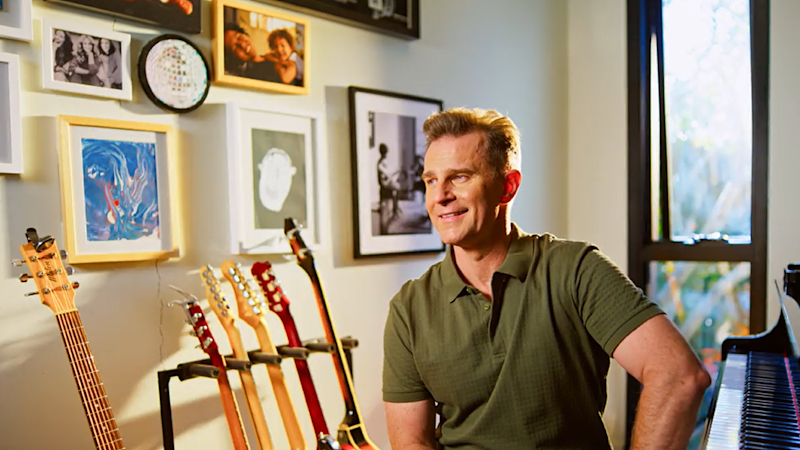
Sponsored by Specsavers AudiologySeptember 1, 2026 — 9:15amBehind the heavy velvet of a closed theatre curtain, an orchestra begins to tune up. It is a flurry of strings, woodwinds and brass finding their collective pitch. For singer, actor and TV presenter David Campbell, this precise moment is pure backstage magic. “There’s really nothing like it,” David says, his face lighting up with an unmistakable performer’s grin. “You hear the orchestra tune up, and that’s when you know, OK, we’re about to start. It’s so exciting.”David has spent his entire life under stage lights, inside recording booths and hosting live television. In his world, sound isn’t just an ambient element of the job; it is his internal compass. “Sound is my rhythm,” he explains. “It’s how I cue my life. And if that sound is off, then the whole performance feels out of sync.”The finely tuned instrumentIn the entertainment industry, auditory precision is non-negotiable. A professional musician would never dream of walking onto a stage with a cracked guitar, an out-of-tune piano or a microphone that keeps cutting out. David argues that we need to treat our own ears with that exact same professional respect.“In this industry, your ears are the most tuned instrument you have,” he notes.Yet, while millions of Australians diligently maintain their spectacles and dental health, many frequently treat hearing as an afterthought. Recent YouGov consumer research commissioned by Specsavers highlights a stark disconnect between our past lifestyles and our current health habits.The survey revealed that more than half of older Australians (52 per cent) frequently listened to loud or live music when they were younger. For a generation raised on pub rock, local gigs and festivals, those thumping basslines are badges of honour — but they leave a lifelong footprint on our ears. Despite this high exposure, nearly half of Australians (45 per cent) admit it has been longer than a year since their last hearing check, and one in six Australians over the age of 55 (17 per cent) have never had their hearing tested at all.The core issue isn’t a lack of access, but a lack of awareness. For those who delay booking an appointment, over half (51 per cent) say they simply don’t think they need one. There appears to be a common assumption that hearing loss is an all-or-nothing game — that unless you live in total silence, your ears are operating at 100 per cent.“Sound is my rhythm. It’s how I cue my life. And if that sound is off, then the whole performance feels out of sync.”David CampbellThe rhythm of connectionFor David, the true risk of letting your hearing health slide isn’t just missing a musical cue on stage; it’s the subtle, irreversible erosion of moments at home.“Even at home, it’s the pitch of my kids’ voices,” David says. “When they’re excited, when they’re upset... if you’re not hearing those nuances, you’re not in the moment. You’re just missing lines. You’re not there. You’re missing the heartbeat of connection.”Melissa Chandler, senior audiologist at Specsavers Australia says the research shows a really concerning trend for those experiencing hearing difficulties. “A staggering 61 per cent of Australians who struggle to hear in conversations find themselves resorting to passive withdrawal strategies,” she explains. “This isn’t just about missing a few words; it means 31 per cent are simply pretending to hear and nodding along, while 33 per cent are avoiding restaurants or noisy social hubs altogether. This is a quiet retreat from the social connections that matter most.”David refuses to let himself be edited out of his family’s script. He wants to go to the movies with his kids, attend live gigs and enthusiastically watch his children put on their own living-room concerts. “That is all I want to do with my spare time,” he says. “The thought that I might miss out on something like that is horrifying to me.”Sound is ‘the heartbeat of connection’ for Campbell.NineThe family wake-up callThe critical importance of proactive hearing care hits incredibly close to home for David. Watching his father — legendary Australian rock icon Jimmy Barnes — navigate his own hearing struggles later in life served as a profound turning point.“I see my dad experiencing hearing issues now, which was a real wake-up call for me,” David admits. “It showed me that you just can’t take your hearing for granted. You get to a certain age, you need to get a check-up.”Chandler echoes this sentiment, emphasising that routine hearing checks are a vital metric for long-term cognitive wellbeing. “Hearing health plays a crucial role in overall wellbeing, social connection, and quality of life,” Chandler notes. “Good hearing can keep your brain active, enhance memory and communication, and promote healthy brain ageing.”The solution is remarkably straightforward. Early detection opens the door to tailored, affordable solutions that prevent us from drifting away from the people and passions we love. Just as you wouldn’t allow a grand piano to slip out of tune, you shouldn’t let such a vital sensory instrument degrade. Protecting your hearing ensures you stay perfectly in sync with the rhythm of your life, from the grandest stage to the quietest family moments.Your hearing is your direct connection to the world — whether it’s your favourite song, the voice of a loved one or simply knowing it’s safe to cross a busy street. Don’t wait for the music to fade before you take action. Prioritise your hearing health and book a free* 15-minute hearing check today. To find your nearest Specsavers store, visit www.specsavers.com.au/hearing.*If further testing is required, a fee may apply.From our partners
David Campbell on why good hearing is an artist’s ultimate instrument
Full Article
Original Source
Read the full article at Smh →KhanList aggregates and links to publicly available news content. We do not host full articles from third-party sources. Always verify important information with original sources.