
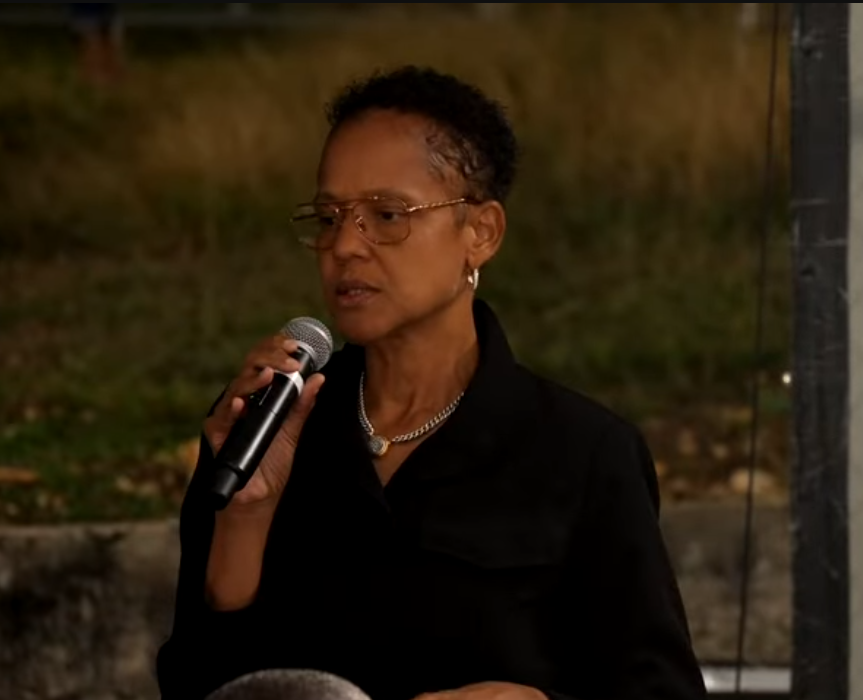
Deputy Prime Minister and Minister of the Environment and National Beautification Santia Bradshaw. (Photo credit: Ricardo Roberts/Barbados TODAY) Barbados risks losing ground in its drive for international climate finance unless it can provide the detailed, reliable data lenders and donors require, Deputy Prime Minister and Minister of Environment, National Beautification and Fisheries Santia Bradshaw has warned. During a high-level site visit to the Fisheries Breakwater and Sugar Berth Works at the Bridgetown Fishing Complex alongside a World Bank technical team, Bradshaw warned that Barbados will find it “increasingly difficult to finance” climate initiatives if it cannot properly measure and present its data to international donors. Without coordinated reporting systems, the country could struggle to turn its recognised climate vulnerability into financial support. Addressing gaps in the country’s current data-collection framework, she said global advocacy led by Prime Minister Mia Mottley had raised awareness of the island’s exposure to extreme weather, but international lenders now require detailed data to justify their investments. “As we try to access financing globally, the prime minister is doing an excellent job making people aware of our vulnerability,” Bradshaw told Barbados TODAY. “But many of the institutions globally, whether it’s banking institutions or other agencies that would want to support us, the first thing they ask for is the data.” Using recent climate disruptions such as Hurricane Beryl as an example, Bradshaw said global donors expect specific, quantified measures of damage, economic loss and long-term effects on society before providing funding. “They want to know, if it’s in relation to Beryl and the impact of Beryl, how many fishing vessels have been lost, the earnings in the fishing sector, and the impact that what we are going to do will have on society, the community, and stakeholders. You Might Be Interested In “You can’t access finance, as simple as it might seem at times, without having the necessary data to provide to the financial institutions from whom you are seeking access to finance.” The environment minister said Barbados did not lack information, but had a fragmented approach to managing the data it already possessed. Decades of research and government reports exist across ministries, but the information remains underused and poorly integrated. “Barbados has a lot of data collected over the years in different reports, but oftentimes I don’t think we’ve been strategic in being able to collate that data consistently to inform a lot of the decisionmaking that international institutions require.” She said recent national workshops and training sessions were meant to help public officers meet international standards. “Instead of having lots of reports which we do nothing with, we need to start to compile statistics that can inform the prime minister and the finance team to help them advance the case of the country as it relates to access to finance.” Asked how long the newly launched Capacity Building Initiative for Transparency (CBIT) project would take to meet standards set by the Paris Agreement, Bradshaw described the change as a long-term shift within the public service rather than a quick fix. “I think the key thing is that it is a work in progress,” Bradshaw said. “The fact that we’re even doing the workshops in the first place to highlight to officers and consultants what is required to change the mindset is the first phase of changing behaviour. If people don’t understand what Prime Minister Mottley is doing in terms of the international climate, then they will not be prepared in compiling their documentation to support the efforts being made.” The CBIT project is intended to strengthen systems needed to measure, verify, report and demonstrate the impact of Barbados’ climate action. According to the deputy prime minister, stronger transparency systems could improve coordination, standardise data collection, strengthen quality assurance, reduce duplication and support evidence-based policymaking. Capacity building must remain a permanent part of government policy as the effects of climate change intensify, Bradshaw added. “The workshop building is not a one-day exercise. It is a continuous programme for capacity building that has now become necessary because our vulnerability isn’t going away—we are actually becoming more vulnerable. That’s why we need to continue to sensitise the stakeholders, the communities that depend on these sectors, and the entire country as to what is now required. “If we are to build better capacity, we have to take a step back and make sure that we are building that capacity with the information necessary for the people we are borrowing money from or who are giving us financing.” Amid concerns that existing international aid or loans could be frozen while the government updates its reporting frameworks, Bradshaw said global funding had not been halted. Rather, she said, disbursement depended on meeting data requirements linked to existing funding agreements. “Usually, the funding is not on pause,” Bradshaw said. “Usually, it is a case where there is a request by funding agencies for funding, and once we meet whatever data is required, they are usually willing to open up that financing to us. So we just need to meet the targets of what is being required on each of the agreements that we may have in place.” The site visit with the World Bank technical team forms part of work to strengthen coastal infrastructure at the Bridgetown Fishing Complex while aligning local marine management with international reporting requirements. Officials say improving data systems is important to securing the resilient infrastructure Barbados needs.
Data gaps ‘threaten’ global climate funding access
Full Article
Original Source
Read the full article at Barbadostoday →KhanList aggregates and links to publicly available news content. We do not host full articles from third-party sources. Always verify important information with original sources.