
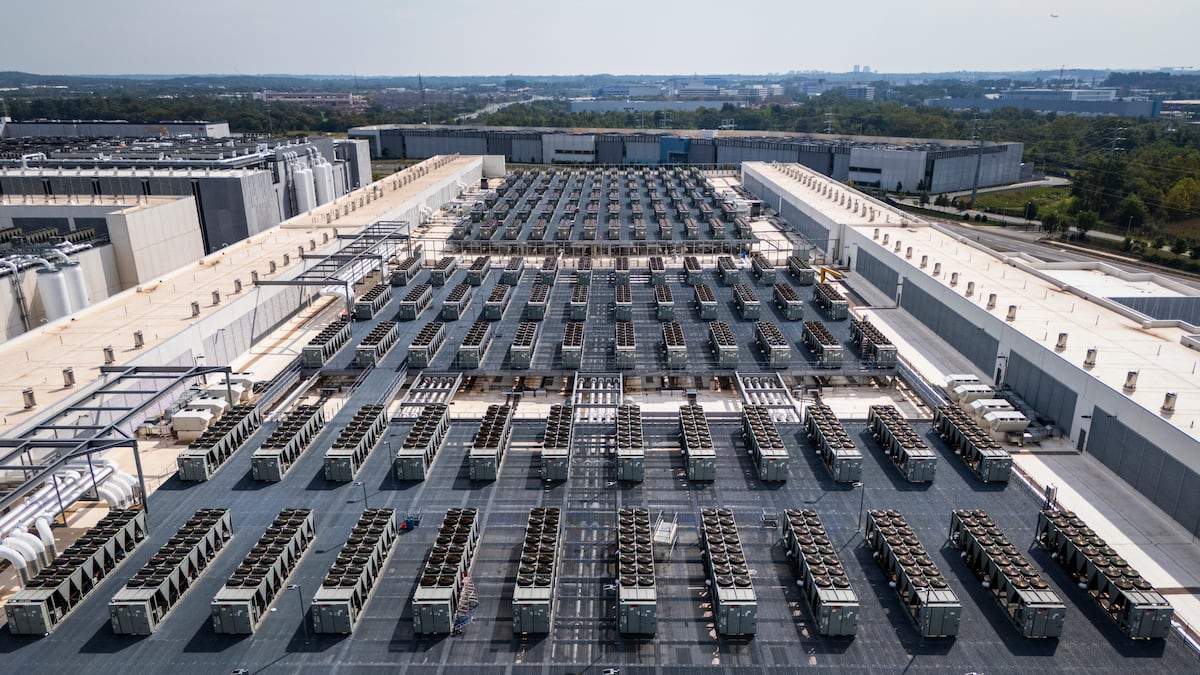
The aftershock of the political earthquake that shook the foundations of U.S. politics with the Republican Party’s crushing defeat in the midterms has hit the artificial intelligence industry. Voters have overwhelmingly decided to put the brakes on the sector’s most visible symbol: data centers.The Democrats’ decisive victory threatens to usher in moratoriums and stricter regulations on these facilities. A growing chorus of critics accuses them of driving up electricity bills in the communities where they are built, consuming excessive amounts of water in drought-prone areas, lacking transparency in permitting processes and tax incentives, and creating other problems that have fueled NIMBY (“Not In My Backyard”) movements.In Tuesday’s midterm elections, voters were not only choosing all 435 members of the House of Representatives and renewing one-third of the Senate’s 100 seats. They also voted on governors, mayors, a host of other public offices, and numerous local measures and ballot initiatives, including several aimed at restricting the development of data centers.Of the 41 votes on data-center projects put to referendum across 10 states, only one passed, according to a Ballotpedia report. That was in Harwood, a town of just over 1,000 residents in North Dakota, where voters rejected a proposal to revisit requirements for industrial projects.The Democrats’ victory gives them control of both chambers of Congress. The electoral shift opens a new chapter for the AI and technology industries, which now face a more challenging landscape in Washington. Technology stocks took a significant hit on Thursday in response.Many companies in the sector invested heavily in supporting Republican candidates. Elon Musk, for example, poured away $474 million backing conservative candidates in Texas.Opposition to data centersVoters in California, Florida, Illinois, Kansas, Maine, New Jersey, Nevada and Wisconsin delivered a strong rebuke at the ballot box to the construction of data centers in their communities. But three states have been particularly affected by the backlash against data centers, which have become a symbol of public anxiety over the rapid expansion of AI: Ohio, Texas and Virginia.Half of the data-center proposals rejected in the midterms were in Ohio, where 21 projects failed to secure approval from local communities. The state’s new governor, Amy Acton, a physician, defeated Republican businessman Vivek Ramaswamy.Acton, who faced intense personal attacks during the campaign, supports a moratorium on new data-center developments until operators commit to covering the full cost of the public services they consume and allow workers hired to build these vast server-filled facilities to unionize.Alongside Virginia and Texas, Ohio has become one of the industry’s main hubs. OpenAI has planned what would be the world’s largest AI data-center campus there, backed by a consortium of investment banks and Nvidia. According to CNBC, the project could ultimately exceed $500 billion in investment.Newly elected Democratic Senator Sherrod Brown of Ohio was among the most outspoken critics of data centers during the campaign. “I will always be on your side — always. I do not work for the utility companies. I do not work for data centers. I do not work for Wall Street. I work for you. I work for Ohio,” he said in his victory speech last Tuesday.“With the continued contentiousness surrounding data centers, it is likely both legal and political action will continue in future years,” researcher Nicol Turner Lee wrote in a report for the Brookings Institution. “Organizers across the country have turned to ballot referenda, campaigns for public office, and protests designed to slow or stop data center development.”This expert also pointed to the lack of transparency surrounding some of the agreements local governments have signed with data-center companies, concealing local or state tax exemptions, subsidies and other benefits from taxpayers.“The widespread use of nondisclosure agreements between data center developers and local officials has fueled public opposition to data centers and encouraged suspicions of private deals benefitting insiders,” he said.Coco Zhang, a researcher at ING Research, reflected on the impact that the Democrats’ landslide midterm victory could have on the expansion of data centers. “The data center industry is facing heightened local opposition. Recent polls suggest that around one in seven Americans is concerned about or opposes data centre development in their neighbourhoods,” she said in an ING report released Thursday.UBS estimates that as much as 30% of the additional data-center capacity planned in the United States by 2028 could be at risk because of potential construction delays or disruptions.Texas has become a magnet for technology companies and data centers relocating from California, attracted by lower taxes and generous incentives. The state hopes to become the world’s largest data-center market by 2030.Musk, the founder of Tesla and SpaceX, moved the headquarters of his companies to Texas, a shift that other Silicon Valley firms have increasingly followed. But frustration over data centers, combined with growing concerns about the risks posed by AI, has fueled public discontent.Republican Texas Governor Greg Abbott went so far as to block the construction of data centers in an attempt to slow the rise of his Democratic rival, Gina Hinojosa, who ultimately won the governorship.According to Zhang, “There is likely to be tighter data centre regulation. State-level policy will be more important to watch, as action is politically and practically easier at this level. The most likely approach is targeted regulation, much of which is already emerging. This includes data center-related taxes, reduced tax incentives, environmental standards, and requirements for developers to bear relevant cost increases.”Darrell West, a senior fellow at the Brookings Institution, agreed: “Public policy is going to reflect public opinion, and there’s been a very substantial change in public opinion just over the last year.”But the ING Research analyst argues that federal legislation targeting these facilities may prove difficult because U.S. President Donald Trump could use his veto power to block any such measures passed by Congress. Sign up for our weekly newsletter to get more English-language news coverage from EL PAÍS USA Edition
Data centers also lost at the ballot box in the United States
Full Article
Original Source
Read the full article at English →KhanList aggregates and links to publicly available news content. We do not host full articles from third-party sources. Always verify important information with original sources.