
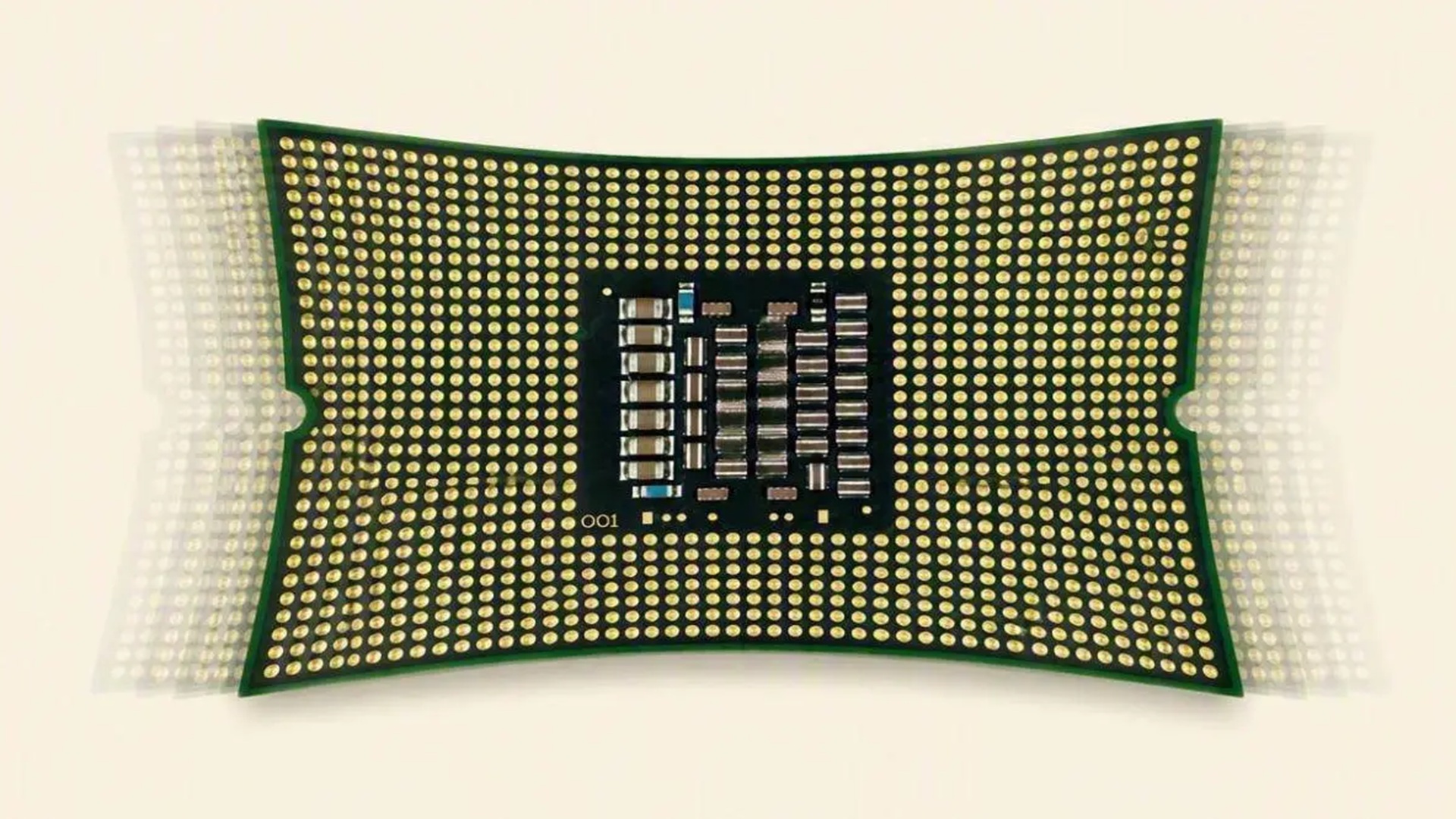
Applying mechanical strain to semiconductor devices can improve the flow of electrons, enabling faster and more energy-efficient computing.Georgia Tech US researchers have been developing a novel computer logic that uses nanoscale mechanical strain to process information and could eventually be 100 times more energy efficient than current technologies. Backed by USD 10.6 million from the Defense Advanced Research Projects Agency (DARPA), the method uses nanoscale mechanical strain alongside electrical signals to perform logic operations. It is led by Asif Khan, PhD, an associate professor at Georgia Tech’s School of Electrical and Computer Engineering, and his team. The funding comes through the Fast and Curious program. It aims to create logic circuits that are at least 100 times more energy efficient than today’s state-of-the-art technologies. “Whether it’s charge, light, magnetism, or strain, computing doesn’t care how information is transported as long as it reliably represents a one and a zero,” Khan said. “Our approach explores a different path by blending multiple information-carrying modalities together.” Making chips more efficient Conventional computers process information by moving electrical charge through billions of transistors. These transistors act as tiny switches, turning on and off to represent binary ones (1s) and zeros (0s). The research team, however, believes that mechanical strain could offer another way to handle data. Their technology is called Mechanically Amplified Ferroic-Actuated (MEFA) Logic. It uses ferroic materials that slightly expand or contract when voltage is applied. This movement is amplified and sent to a nearby semiconductor channel, where it controls current flow and switches between logic states. Asif Khan, PhD, an associate professor at Georgia Tech and project leader. Credit: Georgia Tech “A new computing technology only becomes useful if it can ultimately fit into the broader semiconductor ecosystem,” Khan pointed out. “We’re thinking about manufacturability and integration from the beginning.” According to Khan, the approach could significantly reduce the energy needed for computing. At the same time, it could maintain the speed and functionality required for practical systems. Moving beyond CMOS The project is part of DARPA’s initiative to explore new approaches to computing. The goal is to explore technologies that could move computing beyond today’s complementary metal-oxide-semiconductor (CMOS) systems. Meanwhile, CMOS forms the foundation of virtually every modern computer chip, from smartphone processors to powerful computing hardware used for artificial intelligence. It is a tiny chunk of battery-powered memory that stores key system information such as the date, time, and hardware configuration. It keeps track of the BIOS (Basic Input/Output System) settings, which control how the computer interacts with its hardware components. DARPA’s Fast and Curious program is challenging scientists to create new devices, materials, and computing architectures that could operate much more efficiently and remain compatible with advanced semiconductor manufacturing. The Georgia Tech-led effort also includes researchers from Rice University and the University of Southern California, along with scientists from Northrop Grumman’s Space Park Foundry. The group intends to advance the MEFA technology from individual devices toward increasingly sophisticated circuits. Ultimately, they hope to demonstrate a practical computing platform that can significantly reduce energy requirements. “The exciting part isn’t just the device physics,” Khan concluded in a press statement. “It’s the possibility of combining extremely low energy consumption with the speed and functionality required for real computing systems.”Get the latest in engineering, tech, space & science - delivered daily to your inbox.Based in Skopje, North Macedonia. Her work has appeared in Daily Mail, Mirror, Daily Star, Yahoo, NationalWorld, Newsweek, Press Gazette and others. She covers stories on batteries, wind energy, sustainable shipping and new discoveries. When she's not chasing the next big science story, she's traveling, exploring new cultures, or enjoying good food with even better wine.
DARPA-funded $10.6 million project could make computer chips 100x more efficient
Full Article
Original Source
Read the full article at Interestingengineering →KhanList aggregates and links to publicly available news content. We do not host full articles from third-party sources. Always verify important information with original sources.