
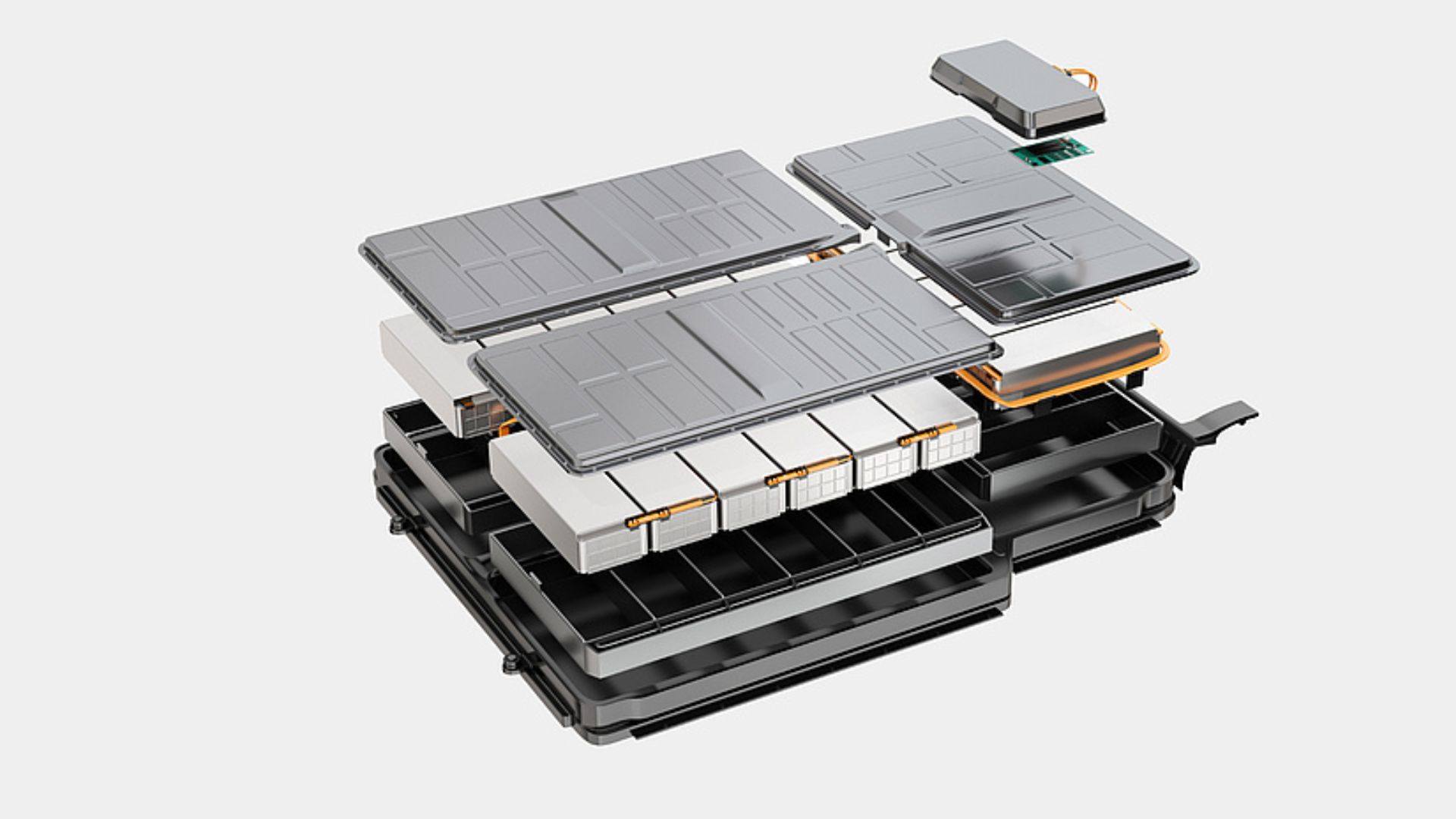
A research initiative called the E-Track project has published new design guidelines to standardize electric vehicle batteries. When an electric vehicle crashes, firefighters face a dangerous guessing game. The lack of standardized battery design across automakers leaves emergency crews guessing when faced with a smoking vehicle. Even when an EV appears to be turned off or inactive after a crash, damaged packs can still hold high levels of dangerous electrical energy. To make matters worse, most manufacturers glue their battery housings together with heavy thermal pastes. The design makes production cheap. It makes repairs nearly impossible. A single dent often forces mechanics to throw away the entire unit. This practice of replacing entire units may soon come to an end. Led by the Graz University of Technology (TU Graz) alongside the University of Graz and industry leaders, the project delivers an interesting finding: saving just 8 percent of a damaged battery’s cells makes a repair-friendly design economically and environmentally worthwhile. “Our work shows that safety, efficiency and recyclability can be improved together through well-thought-out design,” said Markus Fasching, project manager from the Vehicle Safety Institute at TU Graz. Alternative architectures The increasingly complex interactions among electrical performance, thermal behavior, and mechanical safety in EV traction batteries have long suffered from a lack of uniform design standards. It complicates recycling efforts. Battery cells make up roughly 75 percent of a pack’s total weight. These cells account for most of the battery‘s financial and environmental value. However, current manufacturing methods treat these massive, resource-heavy components as single-use items. To fix this, the E-Track team analyzed two alternative architectures: modular covers with heat pads and liquid-cooled sealed enclosures. In the first case, replacing permanent adhesive with detachable covers and dry thermal pads allows technicians to open the unit without destroying it. Then, using an electrically insulating oil for heat dissipation inside a screwed housing. Technicians can easily unbolt the casing, isolate damaged cells, and swap them out safely. Advanced safety diagnostics Dismantling a damaged battery is only half the battle; knowing which cells are safe to keep is the real challenge. A minor crash can cause internal micro-shorts. These tiny flaws show no immediate outer damage, yet they can trigger delayed fires days after an accident. To catch these hidden threats, the researchers developed diagnostic tools using electrochemical impedance spectroscopy paired with virtual multiphysical models. The technology acts like an X-ray, letting technicians spot internal defects early and safely salvage healthy cells. Several automotive manufacturers are already exploring follow-up projects. As regulatory bodies push for stricter circular-economy laws, these guidelines could soon serve as the foundation for global battery standards, transforming a major fire hazard into a repairable asset. The need for recovering cells Funded by the Austrian Research Promotion Agency (FFG), the E-Track guidelines were initially tested on electric two-wheelers. However, the core physics and diagnostic models apply directly to passenger cars and commercial trucks. In today’s time of massive material demand, cell reuse is key because discarding an entire battery pack wastes massive amounts of essential raw materials like lithium, cobalt, nickel, manganese, copper, and aluminum. These are both ecologically damaging to extract and economically costly to refine. In some cases, non-damaged cells salvaged from crashes could be used in second-life applications. For instance, it can be repurposed for stationary grid energy storage, renewable energy backup, or industrial equipment, extending their useful lifespan and reducing overall environmental impact. Get the latest in engineering, tech, space & science - delivered daily to your inbox.Mrigakshi is a science journalist who enjoys writing about space exploration, biology, and technological innovations. Her work has been featured in well-known publications including Nature India, Supercluster, The Weather Channel and Astronomy magazine. If you have pitches in mind, please do not hesitate to email her.
Damaged EV battery repair made safer with replaceable covers and oil cooling
Full Article
Original Source
Read the full article at Interestingengineering →KhanList aggregates and links to publicly available news content. We do not host full articles from third-party sources. Always verify important information with original sources.