
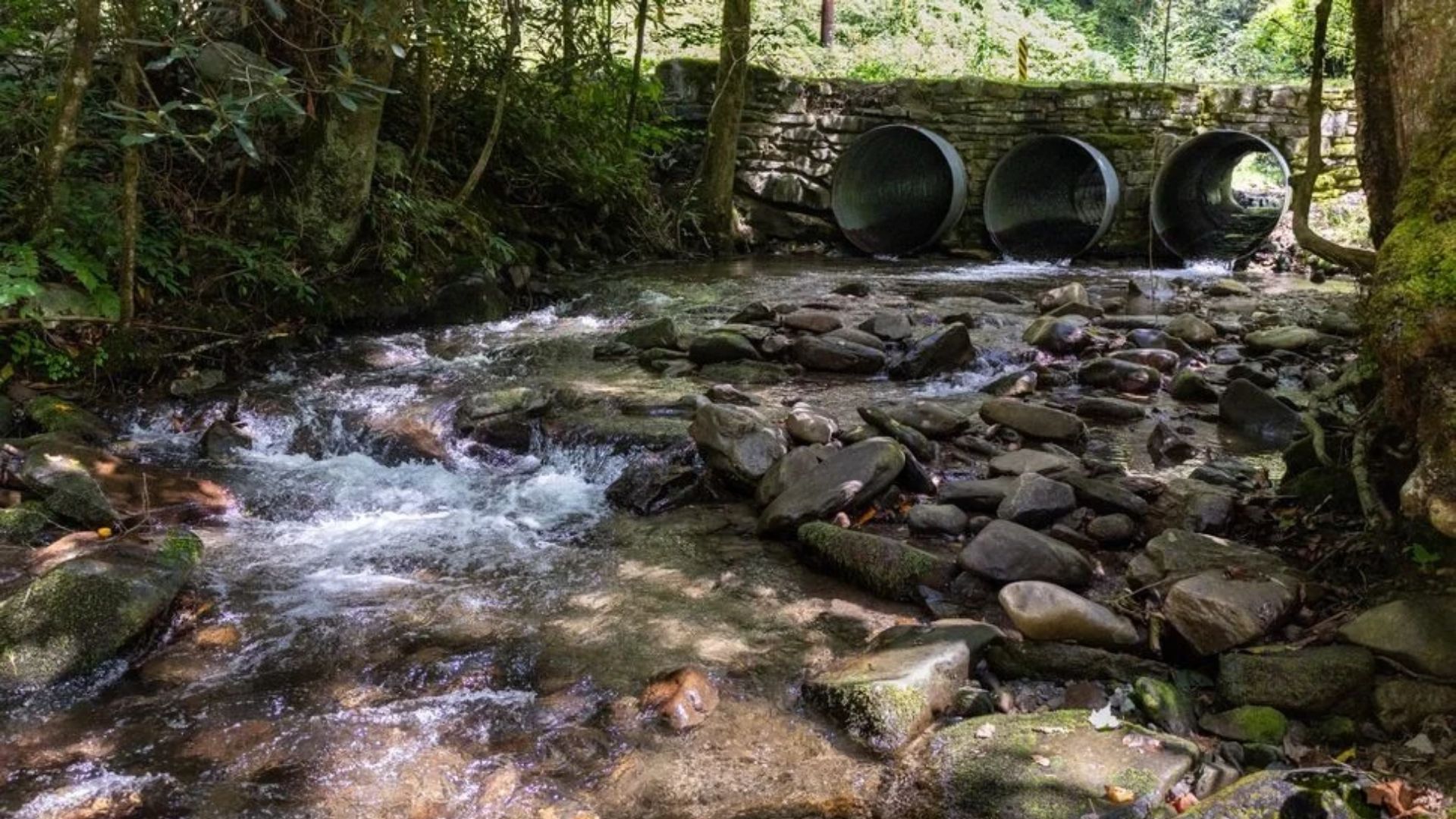
Key TakeawaysThe Eastern Band of Cherokee Indians is a federally recognized Native American tribe.The research team built a detailed 3D model of the landscape and analyzed more than 1,500 stream sites.Researchers mapped 1,533 human-made barriers that currently block fish migration. A new study found that small, dam-less micro-hydropower systems could generate up to 22.6 megawatts of electricity across the Tribe’s 83-square-mile Qualla Boundary in western North Carolina. As per the team from the Department of Energy’s Oak Ridge National Laboratory (ORNL) and the Eastern Band of Cherokee Indians (EBCI), this power is enough for 5,000 homes. Based in Cherokee, North Carolina, the Eastern Band of Cherokee Indians is a federally recognized Native American tribe. Its members descend from the Cherokee people who stayed in their ancestral Appalachian homelands during the forced Trail of Tears removals of the 1830s. At present, steep terrain in the Blue Ridge Mountains complicates power line maintenance, causing frequent blackouts and forcing residents to use diesel generators. “This project is assisting in assessing our full range of options to harness the energy available in natural Earth systems and contribute to long-term environmental and economic sustainability,” said Mike LaVoie, director of EBCI Natural Resources. 3D mapping and modeling About 15,000 EBCI members live across the Blue Ridge Mountains. Conventional power lines are hard to build and maintain on such uneven terrain. Hence, this leaves remote pockets vulnerable to severe weather and frequent, prolonged blackouts. Many isolated families have had little choice but to depend on noisy, expensive diesel generators for days at a time. The Oconaluftee River basin runs straight through the Qualla Boundary with fast-moving, well-fed streams. But the Tribe has long rejected hydropower dams, which slice up river systems and block the movement of fish and other aquatic wildlife. To find a middle ground, ORNL ecologist Evin Carter teamed up with the Tribe’s Natural Resources Department to explore “hidden hydro.” Using satellite imagery, machine learning, and LiDAR mapping, the research team built a detailed 3D model of the landscape and analyzed more than 1,500 stream sites. The strategy targeted existing obstacles. Tracking native brook trout, researchers mapped 1,533 barriers, such as aging dams and road culverts, that block fish migration. Removing these obstacles and installing fish-friendly micro-hydropower devices achieves two goals at once. It reconnects fragmented waterways and generates steady, local power. Serving remote communities Researchers evaluated two fish-friendly hydropower options for the area. Compact micro-turbines generate over 1 kilowatt to power single homes or small businesses, while larger vortex generators produce up to 100 kilowatts for offices, health centers, or groups of houses. Out of 533 viable locations identified in the study, 366 sites could produce at least 2 kilowatts, easily supporting individual households. Researchers even discovered several high-elevation spots above 3,900 feet capable of generating more than 100 kilowatts each. The implications go beyond North Carolina. Carter noted that the Qualla Boundary acts as a microcosm of Southern Appalachia, capturing everything from high mountain forests to developed valley towns. What works here could serve as a blueprint for remote mountain communities across the entire region. Next, researchers and biologists will head into the field to survey brook trout populations and test water flows at the most promising locations, paving the way for the first pilot installations. Get the latest in engineering, tech, space & science - delivered daily to your inbox.Mrigakshi is a science journalist who enjoys writing about space exploration, biology, and technological innovations. Her work has been featured in well-known publications including Nature India, Supercluster, The Weather Channel and Astronomy magazine. If you have pitches in mind, please do not hesitate to email her.
Dam-less US hydropower systems could generate 22.6 MW electricity to power 5,000 homes
Full Article
Original Source
Read the full article at Interestingengineering →KhanList aggregates and links to publicly available news content. We do not host full articles from third-party sources. Always verify important information with original sources.