
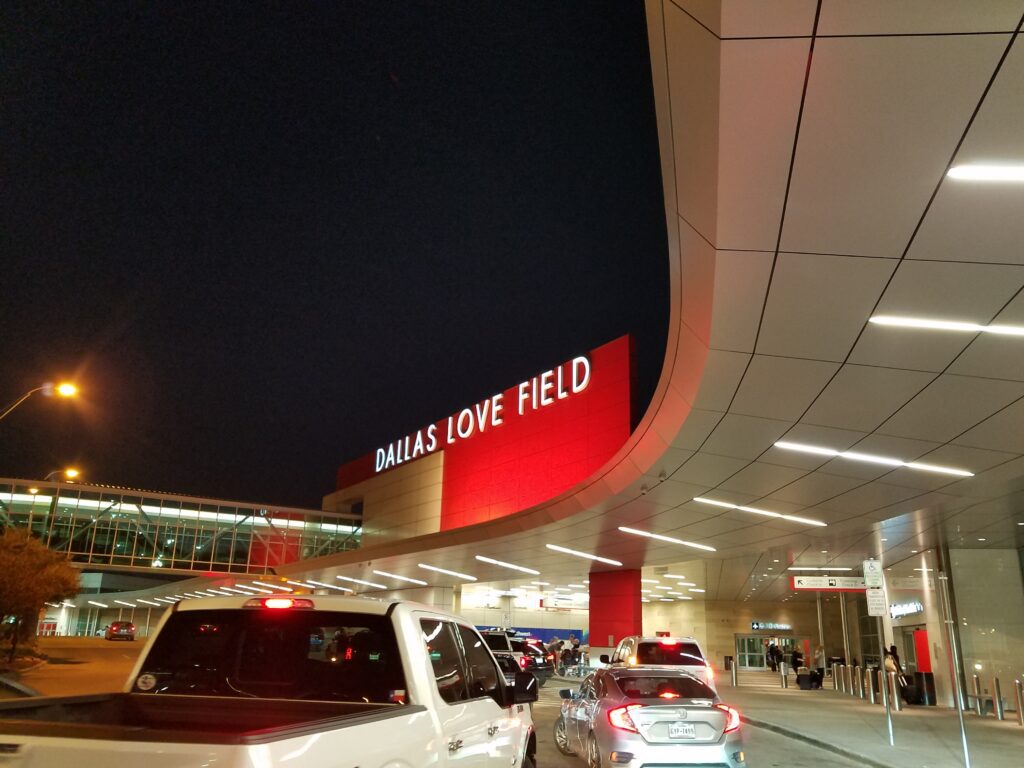
Dallas is opening the door to more gates at Love Field airport. Two things stand in the way. Federal law caps the airport at 20 gates, and Dallas has already negotiated a lease that would offer most of the additional gates to Southwest Airlines if the law were to change. Southwest already controls nearly all of the gates there. More room for adding Southwest flights is different than more competition for Southwest. Dallas needs a larger airport and to open itself to competition. The Dallas City Manager raised the prospect of additional gates at an aviation event last week. The airport is undergoing a $2.5 billion redevelopment that doesn’t include more gates. Former American Airlines Chairman and CEO Doug Parker defended the existing arrangement on this week’s Airlines Confidential podcast. His argument rests on the existing five-party agreement, federal law and investments made in reliance on both: “agreements are agreements.” That’s only why changing the rules will be difficult, not a reason to keep limits on competition forever. Why Dallas Can’t Just Build More Love Field Gates Southwest Airlines had to fight to operate from Dallas Love Field when it first launched. It flew its first flight in 1971 after being tied up in the courts. Existing airlines agreed to leave Love Field for DFW airport. Southwest wasn’t a party to that agreement. In 1979, the Wright Amendment was passed to limit competition from Southwest Airlines. Deregulation meant that Southwest could fy beyond the state of Texas, and other carriers feared that the close-in airport they operated from would be more desirable than DFW. The upstart Southwest that fought for the right to fly was mature and pivoted to using government to its own advantage by the time they succeeded in securing the Wright Amendment Reform Act of 2006. It was a compromise among Dallas, Fort Worth, DFW Airport, American Airlines and Southwest Airlines. Southwest gained the ability to sell connecting service beyond the old geographic limits, followed by nationwide domestic nonstop service in October 2014. Love Field’s gate count had to be reduced from 32 to 20. Southwest kept most of the gates. The airport couldn’t offer nonstop international passenger service. Basically Southwest got more flying from Love Field and a monopoly there, while American Airlines got a monopoly on international service from Dallas and a cap on how much service could compete from Love Field. Initially, Southwest effectively couldn’t even fly out of Dallas – Fort Worth offering direct competition with American. The five party agreement specified that any gate Southwest operates at DFW (or another airport within 80 miles) would require giving up a Love Field gate, up to 8 total gates. That restriction ended in 2025. The provision even covered affiliates and flights carrying Southwest’s code, with exceptions for existing DFW–Midway codeshare service. Southwest couldn’t even codeshare with partners who flew to DFW, and could set up a regional affiliate to operate there. Dallas Already Gate Southwest An Option On More Love Field Gates The city council approved Southwest’s October 1, 2028 – September 30, 2040 Love Field lease covering 18 of the existing 20 gates. One gate is under Delta’s control and the final gate is under city control and can (theoretically) be used for new service. Delta Air Lines Gate At Dallas Love Field Delta Air Lines Gate At Dallas Love Field The lease anticipates what happens with a change in federal law: Southwest and the airport both agree not to oppose an increase in gates at the airport. Dallas can then seek or support the effort. If the law changes, Dallas can pursue four, eight or twelve additional gates without the usual review by major incument airlines (‘majority-in-interest’ airline review, effectively Southwest) as long as each new gate won’t cost more than $50 million in 2025 dollars. Southwest receives an option on three of four, five of eight, or eight of twelve new gates. Even after changing a law that protects incumbents, Dallas would offer most new gates to its dominant airline. Parker Explains Why American Would Fight This Parker attributed two percentage points of Delta’s margin advantage, in an internal analysis from his American tenure, to Atlanta’s lack of a competing airport like Love Field or Midway. American has a lot to lose if some Dallas travelers gain better alternatives to DFW. Parker acknowledges his bias. American has made enormous investments at DFW, and predictable rules matter when financing airports. But I’d note: The agreement is more than 20 years old. Investors who bet on government keeping out competition also take the risk that the government changes its mind. Twenty years of protection is a substantial benefit, not a guarantee of protection in perpetuity. American hsa benefited from other subsidies, too. Parker was a prime mover behind American’s receipt of $12.8 billion in pandemic payroll support, the vast majority of the second and third tranches displacing payroll the airline was going to pay anyway. American chose not to fly from Love Field. American ended service in 2009 and subleased its gates to Delta. Its later merger settlement required divestiture of the gates, but American had already stopped operating. American preferred concentrating its network at DFW but that shouldn’t give them a permanent veto over competitors serving a different airport. The Government Destroyed Gates To Make This Deal Work Parker correctly recalls the demolition of six gates at the former Legend Airlines terminal. The overall reduction was twelve gates from 32 to 20. Six of those were at the separate Lemmon Avenue facility. I covered the litigation over that terminal and its leases. The Court of Federal Claims awarded the owners $133.5 million when the city took it back through eminent domain. The Federal Circuit reversed in 2018 arguing that the fact the gates couldn’t legally be used meant it had no value. It might soon have had value. The terminal was turned into a Lincoln dealership. North Texas Has Outgrown This Bargain DFW is growing. Its new Terminal F is planned for 31 gates, all serving American, with the first 15 expected to open in 2027. Meanwhile, McKinney is preparing to launch scheduled commercial service on November 11. Different parts of the Metroplex support different airport choices. DFW, Love Field and McKinney aren’t interchangeable for a passenger near downtown Dallas. Noise and road access are real though anyone living near the airport knew there was an airport there. Additional gate construction would necessarily involve an operational, environmental and access plan. American Airlines certainly didn’t walk away from the Naples, Florida airport just because residents there don’t like commercial air service! Love Field should be allowed to grow. The additional preferential gates should be open to airlines that bring new competition, rather than committing ex ante to enlarging Southwest’s existing control. These lease commitment is an impediment to that, and actually gives American Airlines its strongest argument against expansion. Southwest built its business by fighting attempts to keep it out. American chose to leave Love Field. Neither of those things justifies keeping other competitors out of the Dallas market, or serving each of the local markets in North Texas separately. Topics on this page
Dallas Wants More Gates At Love Field—And To Give Southwest Airlines A Bigger Monopoly
Full Article
Original Source
Read the full article at Viewfromthewing →KhanList aggregates and links to publicly available news content. We do not host full articles from third-party sources. Always verify important information with original sources.