
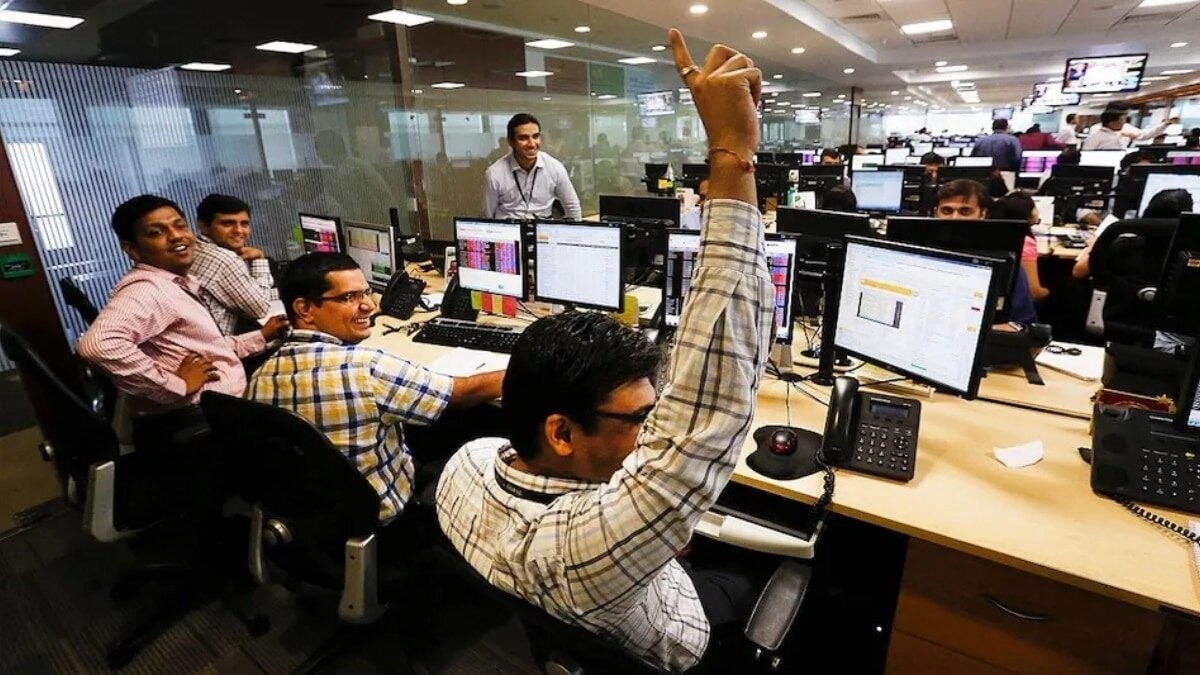
Dalal Street is finally giving investors something to smile about. After months of selling pressure, cautious bets and market jitters, domestic equities are back in the spotlight and how! November has brought a sharp turnaround, with the Nifty 50 gaining around 10% in the first 15 days of the month and moving closer to its record high. The Sensex, too, is back above 82,000.The mood on Dalal Street has changed dramatically. Not long ago, investors were fretting over mounting losses. Today, many are watching the rally with renewed excitement. Foreign investors are returning, heavyweight stocks are climbing and the market is showing signs of getting back on its feet.On Monday, November 16, the Sensex rose over 600 points in early trade, while the Nifty moved above 25,300. And there's more to this rally than just rising indices. Money is flowing back into the market.Foreign portfolio investors (FPIs), who had been pulling money out of domestic equities for months, bought shares worth Rs 84,290 crore between November 2 and 13. That's across just nine trading sessions. In comparison, they withdrew nearly Rs 70,704 crore in September and October combined. Here's another striking number. Foreign investors have bought nearly $9 billion worth of domestic shares in November so far, the largest monthly net inflow in Reuters' data going back to 2002.That's quite a turnaround, isn't it? But the big question is whether this is more than just a short-lived rally. Has Dalal Street finally turned a corner? And, more importantly, is this the right time for investors to put their money back into stocks? Let's look at what's driving the optimism, what's still giving the market a reason to worry, and what investors should keep in mind before making their next move.THE RETURN OF FOREIGN INVESTORSFor months, foreign investors were among the biggest reasons Dalal Street struggled. Now, they are among the biggest reasons it is rising.So, what changed?For starters, some large-cap stocks have become more attractive after months of underperformance. Falling crude oil prices have also improved sentiment towards India, which imports a substantial portion of its energy requirements.Then there's the global tech shuffle. The AI frenzy is showing signs of cooling, with even Nvidia making headlines for reasons beyond its chips. As investors take a fresh look at their expensive tech bets, some of that money is finding its way into markets such as India.You can see the impact on heavyweight stocks. Reliance Industries, HDFC Bank, ICICI Bank and State Bank of India have gained between 12% and 16% during November, according to market data.Dr VK Vijayakumar, Chief Investment Strategist at Geojit Investments Limited, says the return of foreign investors has changed the mood dramatically. "The sustained aggressive buying by the FIIs has dramatically transformed the sentiments and mood in the Indian market," he said.He also pointed to India's recent outperformance against major global markets. "In the last one month India is the best performing large market with returns of 9.4% eclipsing other large markets like the US, Japan and South Korea which delivered negative returns."Vijayakumar expects more foreign money to chase this momentum. But hold on. Does a few weeks of heavy buying mean foreign investors are back for the long haul?Not necessarily.Vedant Gupte, Co-founder and CEO of Trackk, told news agency PTI that the latest buying as a tactical shift rather than a structural return. Falling crude prices and a rotation away from crowded AI trades are among the factors behind the change.Foreign investors can return when the opportunity looks attractive. But that doesn't mean they won't sell again if global conditions change. The real test will be whether this buying continues in the months ahead.Q2 EARNINGS BOOST ADDS TO RALLYForeign money can push the market higher. But what happens if companies fail to deliver? That's where the latest earnings season becomes important. A rally supported only by foreign inflows can be fragile. Investors also need companies to make more money and justify the prices their shares command.Vijayakumar believes the current rally has that support. "It is important to note that the capital inflows have the fundamental support from earnings growth which have come much better-than-expected," he said.According to his analysis, the Q2 results of 2,979 companies showed sales growth of 22.3% and earnings growth of 29.8%. "The Q2 results of 2979 companies that declared earnings indicate impressive sales growth of 22.3% and excellent earnings growth of 29.8%," he said.Those are encouraging numbers. But the real test will be whether companies can sustain this growth over the next few quarters.And foreign investors aren't the only ones putting money into the market.It is worth noting that domestic mutual funds received net equity inflows of Rs 32,994 crore in October, according to the Association of Mutual Funds in India (AMFI). It was the 68th consecutive month of positive inflows. Monthly SIP contributions stood at Rs 32,160 crore.MARKETS RISING. SHOULD YOU JUMP IN?Now comes the tricky bit. Just because the market has recovered doesn't mean every stock is a bargain. And just because a stock has fallen doesn't mean it is worth buying.Some large-cap stocks have become more attractive after months of selling. But valuations in parts of the mid-cap and small-cap space remain a concern.So, if you're planning to return to the market, don't simply look at the Sensex or Nifty and assume that everything is now looking good.A stock that has already rallied sharply may leave little room for further gains. If its earnings don't keep pace with its price, investors could be left holding an expensive stock.The question isn't whether the market is rising. It is whether the stock you're buying is worth the price you're paying.DON'T FORGET ABOUT THE RISKSThe mood has improved. But have all the risks disappeared? Far from it.Start with crude oil. India imports a large share of its oil requirements. If international prices rise sharply again, the impact could be felt in the import bill, inflation, the rupee and corporate margins.Brent crude has fallen significantly since the beginning of November, providing some relief. But geopolitical tensions, including the US-Iran conflict and uncertainty around a possible agreement, could quickly change the picture.Then there are interest rates. Higher US bond yields can make American bonds more attractive to global investors, potentially drawing money away from emerging-market equities.Vijayakumar believes these pressures could be offset, at least partly, by stronger corporate earnings. "This tailwind from earnings growth has the potential to counter the headwinds from high US bond yields and the expected rate hikes from the Fed and the RBI in December," he said.But he isn't suggesting that the rally will be smooth. "Profit booking by the DIIs and concerns surrounding the rising inflation are likely to constrain the rally," he cautioned.So, yes, the market has reasons to be optimistic. But don't expect every trading session from here to be a green one.HOW SHOULD YOU INVEST?Let's get to the question you probably came here for. If you have been sitting on cash, should you finally put it into stocks? And if you are already invested, should you stay put or book profits?There isn't a one-size-fits-all answer. But there are a few things worth remembering.First, don't buy simply because the market is rising. A sharp rally can create the fear of missing out, but that is rarely a good reason to make an investment.It is pretty much clear that corporate earnings, domestic investments and the improving global investment environment as factors supporting the market. But investors also need to be cautious about the vulnerability of mid-cap and small-cap stocks, where valuations leave little room for disappointment.If you are investing for the long term, focus on companies with sound businesses, manageable debt, healthy cash flows and the ability to grow earnings. Already investing through SIPs? A market rally alone isn't a reason to abandon a long-term investment plan. Have a sizeable amount of cash waiting to be invested? Consider staggering your investments rather than putting everything into the market at one level.And if you're picking individual stocks, look beyond their recent performance. Check their earnings, debt and valuations. A stock going up doesn't automatically make it a good investment.Vijayakumar, meanwhile, remains positive about the near-term direction of the market. "But in the near-term, the direction of the market appears to be north-bound," he said.To sum it up, Dalal Street has given investors plenty to cheer about after months of disappointment. Foreign money is returning, earnings are improving and domestic investors continue to provide support. There is a case for optimism. But there is also a case for being selective.If you missed the rally, don't rush to make up for lost time. If you're already invested, don't let every market rise or fall dictate your next move. The biggest mistake now may not be missing another 500-point jump in the Sensex. It could be buying an overpriced stock simply because everyone else seems to be making money.Enjoy the comeback. Just make sure your investment decisions are driven by the numbers, not the excitement.- Ends
Dalal Street's great comeback. Is this the right time to put your money in stocks?
Full Article
Original Source
Read the full article at Indiatoday →KhanList aggregates and links to publicly available news content. We do not host full articles from third-party sources. Always verify important information with original sources.