
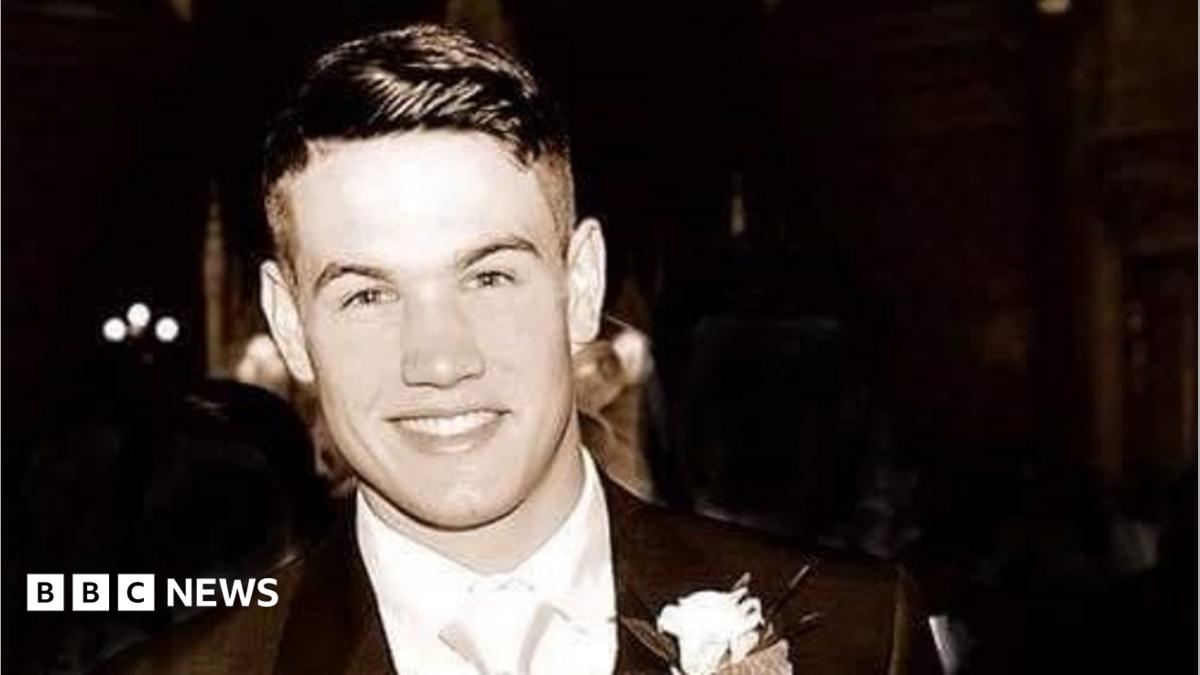
Dad calls for 'crisis' education to reduce suicideImage source, Family photoImage caption, Thomas Waites, 22, was found dead hours after celebrating his birthday with friendsByEimear FlanaganBBC News NIA father whose son died by suicide on the day after his 22nd birthday has called for more education on how men and boys can seek help during a mental health crisis. Seamus Waites said there was "no warning sign whatsoever" before his son Thomas took his own life in May 2016, just hours after he went out to celebrate with friends.Waites, who has since become a grief counsellor, said when men reach crisis point they "do not understand the emotions that they're feeling, they become totally overwhelmed and don't know where to go".Suicide remains the leading cause of death for men and boys aged under 50 in Northern Ireland - of the 262 people who took their own lives last year, 203 were male. This article contains details which some readers may find distressing.Thomas Waites was a talented young athlete from Magherafelt, County Londonderry, who had represented Ireland in amateur boxing and had a promising career outside the ring ahead of him."He had just landed himself a great job, he had bought the car he had always wanted," his father recalled, adding that "from the outside" nothing appeared to be wrong.Waites went to the gym with his son on the morning of his birthday and said "everything was normal" when Thomas went out that night to celebrate.The following day, when Thomas did not return home for a barbeque organised in his honour, his father went to check on him at a friend's house.It was believed Thomas was upstairs listening to music, but when Seamus Waites went into the bedroom, he discovered his son's body. "You can imagine the shock that it had on us," he said, adding that moment changed his family's lives forever. Image source, Family photoImage caption, Thomas had spent time with his father on the day before his death Thomas had no known contact with mental health services and even now, a decade on, his family still does not have a full explanation for his death."Anybody who takes their own life is in intolerable pain," his father said. "I think that there needs to be more education around how men cope and how men can reach out."Waites, who experienced his own mental health struggles after his son's death, now works with an organisation which helps families bereaved by suicide."There is an awful stigma about men and how we regulate our emotions," he told the BBC's Good Morning Ulster programme."We are brought up in such a way where we, our families, prepare us to be mentally strong, to be the person that everybody else leans on."He added the "stigma and shame" associated with not living up to that role meant some men find it difficult to reach out for help when they are in crisis. On Tuesday night, he will join about 130 families in Ballymena, County Antrim, for a Ceremony of Lights event where their loved ones will be remembered.Rising trend of suicidesAlthough suicide figures fluctuate each year, the Northern Ireland Statistics and Research Agency (Nisra), external monitors trends by tracking the average every three years.This method of calculation shows an increasing pattern, with suicides rising by a quarter in less than a decade. In 2017, the average number of registered suicides stood at just over 204 deaths per year (over the three-year reporting period).By last year, that number had risen to average of almost 258 deaths per year.The annual suicide figure for 2025, disregarding averages, stood at a total of 262 deaths, 77.5% of which were men and boys. Mental Health Champion, Prof Siobhan O'Neill, described the latest figures as deeply concerning. "Suicide loss is absolutely devastating," she told Good Morning Ulster."It changes people's lives forever in a way that's very different to any other sort of bereavement or grief."O'Neill said not enough was being done address the issue and that patients must be able to access immediate help from "the first time" they report suicidal thoughts."Sadly, we can see now when we look at those three-year rolling averages, that we're seeing a rise in Northern Ireland. "And that's different from the other UK regions and the Republic of Ireland where they're seeing either a flat line or a trend towards a decrease in suicides."O'Neill said mental health services are underfunded per capita in Northern Ireland compared to England and the Republic of Ireland. She added authorities must examine what is "driving" the rise in Northern Ireland, arguing there has been a failure to tackle poverty, which is linked high suicide rates.Pointing to Nisra's figures, she said that nearly a "third of those deaths are in deprived areas".Image source, Family photoImage caption, Thomas Waites was talented amateur boxer who represented Ireland Waites said people bereaved by suicide are also at higher risk of a mental ill health and it helps to have someone to "navigate you through" those feelings."The pain is indescribable and I basically watched my family go through the most tormented emotional feelings that I've ever seen a human being going through."He said that his initial concern after his son's death was how he was going to support his family."I very much took it upon my own shoulders to do that, but at the same time, I was grieving as well."Waites, originally from London, explained that about a year had passed after his son's death when he "crashed" emotionally. "At one stage I actually thought that I was losing my mind," he recalled."My wife actually turned around and said to me: 'You need help'."Having benefited from counselling, Waites now works with the Bereaved by Suicide service which is run by the Northern Health Trust.It provides one-to-one counselling in Ballymena, Cookstown and Coleraine and group sessions led by trained counsellors who have lost loved ones to suicide."I didn't realise that there was help out there," he said, adding it was important to raise awareness of such services.Waites said although his life will never be the same, he wanted to use his "lived experience" to ease the grief of others and help them "learn to live alongside it". If the issues raised in this article have affected you details of help and support is available at the BBC Action Line. More on this story
Dad calls for 'crisis' education to reduce suicide
Full Article
Original Source
Read the full article at Bbc →KhanList aggregates and links to publicly available news content. We do not host full articles from third-party sources. Always verify important information with original sources.