
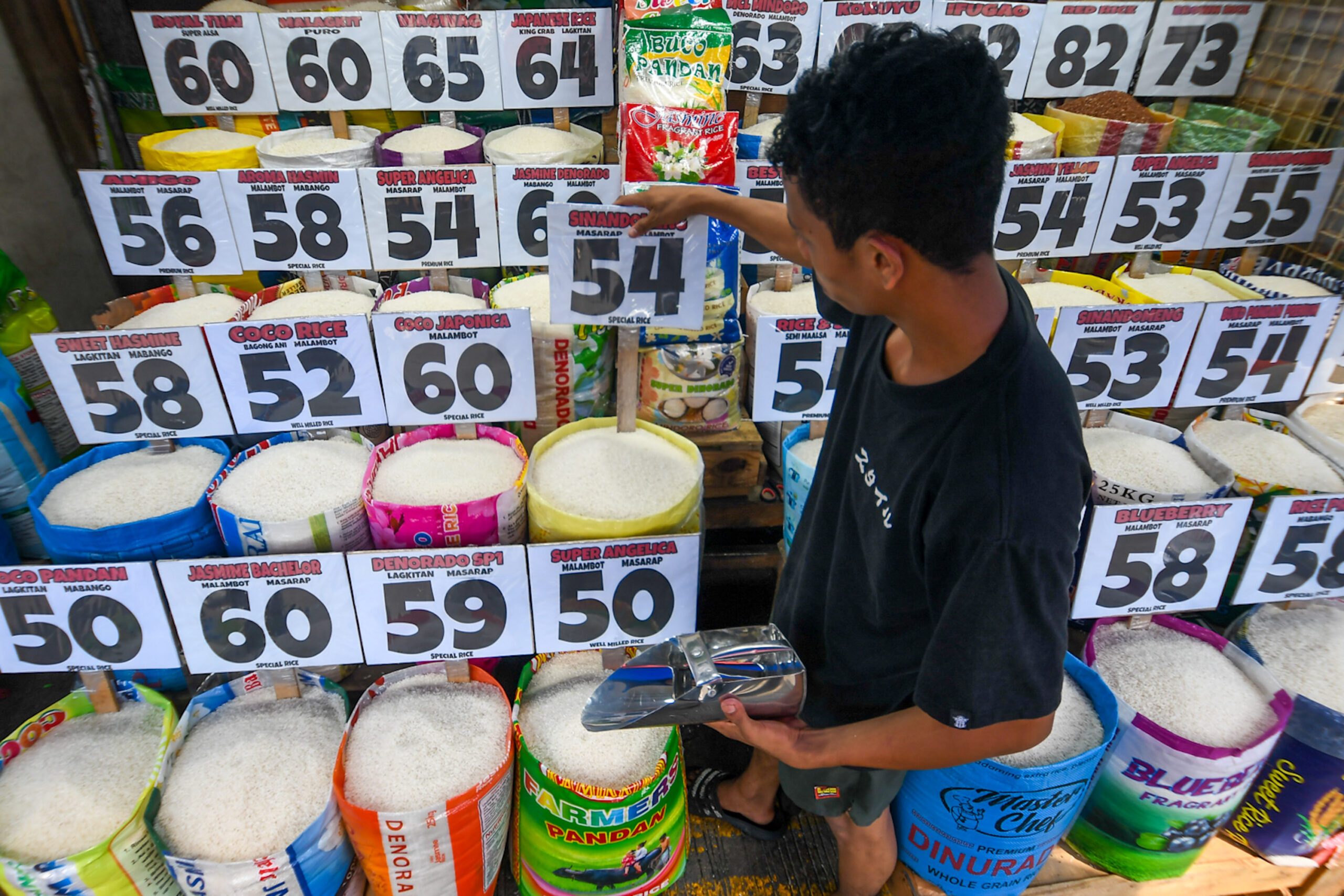
PRICE. A vendor sells imported and local rice at Central Market in Sta. Cruz, Manila, on May 7, 2026. Rappler Meanwhile, the Philippines' rice import volume is expected to increase by November and December in anticipation of severe El Niño The weakening peso is expected to increase prices of imports, particularly rice and fertilizer, with effects likely felt by November. The Philippines is facing a potential rise in rice imports due to severe El Niño, which may also reduce local rice production by up to 1 million metric tons. Despite these challenges, the government reassures the public about food supply adequacy and its commitment to defend the peso. This is AI-generated. Read the article for full context. Report any errors. MANILA, Philippines – The weakening peso will push up prices of imports such as rice, fertilizer, and other farm goods, Department of Agriculture (DA) spokesman Arnel de Mesa told reporters on Thursday, October 29. “It will have an effect on imported items like rice,” said De Mesa in Filipino. De Mesa said the impact on imported rice prices may be felt “possibly by November.” “Of course we need more peso to buy the same volume. For almost all imported items, there will be an impact.” Among the key farm inputs that will take a hit is the country’s fertilizer needs, most of which are imported. The Philippines breached a record low of P64.17 per dollar on October 27. Sonny Africa, executive director of Ibon Foundation, criticized the lack of government support to agriculture and local industries. Africa pointed out the dip in the DA’s proposed 2027 budget, which he described as “chronic neglect.” The DA sought a leaner budget in 2027 – down by 8% compared to the previous year’s allocation. “The peso is weak because the economy is weak – we need more and more dollars to import what we don’t produce, but produce less and less to export and earn dollars from,” Africa said in a social media post. Exacerbated by El Niño Meanwhile, higher rice imports may be expected due to severe El Niño, according to De Mesa. In 2024, an El Niño year, the Philippines reached record-high rice import volume at 4.89 million metric tons (MMT). As of October 21, the Philippines has imported 4.37 MMT of milled rice. This is 62.66% of rice import volume expected to enter the market this year. Most of rice imports came from Vietnam, Thailand, and Myanmar. “We can expect this to increase by November, December in anticipation of El Niño’s effect,” said De Mesa. As rice import prices and volume are expected to increase due to a depreciating peso and the El Niño, Philippines’ local rice output may suffer as well. El Niño may cut down the country’s rice production by 900,000 to a million metric tons, according to DA projections. Rappler’s resident economist JC Punongbayan of the UP School of Economics warned that a strong El Niño is “expected to contribute to inflation even more, on top of everything.” Punongbayan said higher import costs would eventually “feed into transport fares, production costs, and retail prices, squeezing household purchasing power.” In spite of these negative trends, Malacañang assured the public not to panic. President Ferdinand Marcos Jr said on Wednesday, October 28, that “people can take solace in the fact that our policy towards the peso is to continue to defend the peso as hard as we possible can.” “We have all the tools to defend the peso, we have all the means to defend the peso,” he told reporters. The DA also cautioned the public against panicking as food supplies are “adequate” until the end of the year. – Rappler.com How does this make you feel? Loading
DA: Weak peso to push up imported rice, fertilizer prices
Full Article
Original Source
Read the full article at Rappler →KhanList aggregates and links to publicly available news content. We do not host full articles from third-party sources. Always verify important information with original sources.