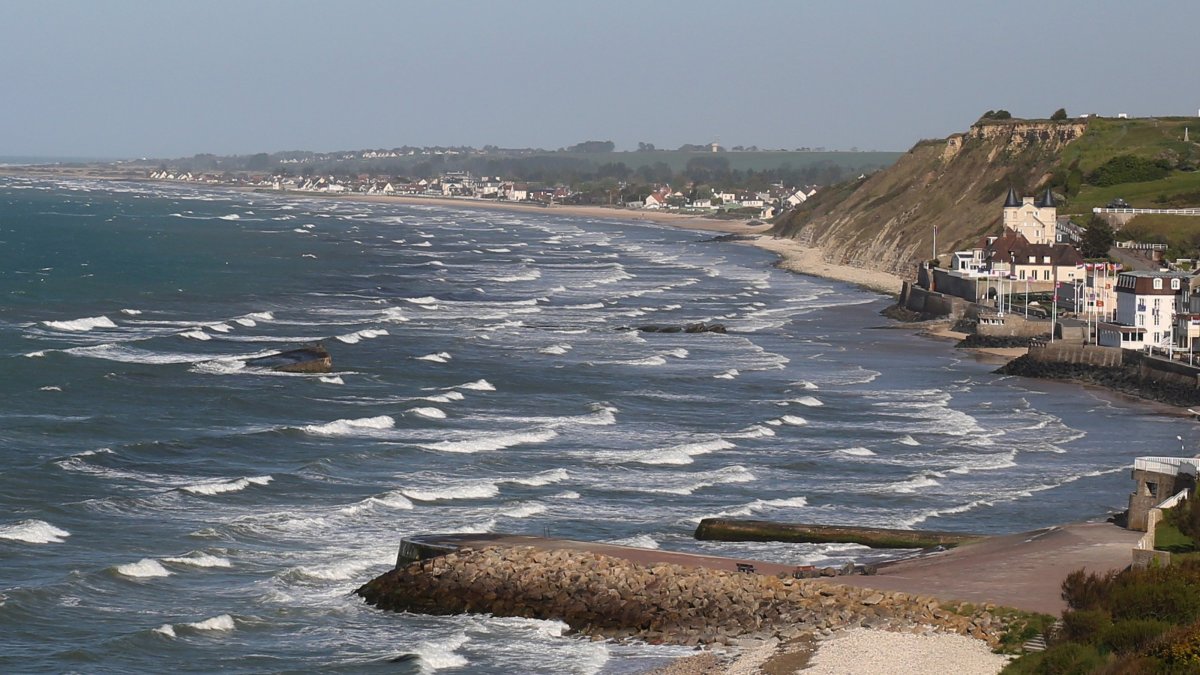
The D-Day landing beaches of Normandy were officially inscribed on UNESCO World Heritage List on July 26, 2026, in recognition of their historic significance during World War II. Stretching more than 80 kilometers along France’s northern coast, the beaches where Allied forces landed on June 6, 1944, were the scene of the military operation that marked the beginning of the liberation of Western Europe from Nazi occupation. The inscription includes the five D-Day landing beaches Utah, Omaha, Gold, Juno and Sword; as well as Pointe du Hoc, where U.S. Army Rangers carried out one of the invasion’s most daring assaults. “This decision places a responsibility upon us,” said Herve Morin, president of the Normandy Region. “It compels us to preserve this property, to protect it, to cherish it even more, and to promote its value,” he added. Beginning of Europe’s liberation On June 6, 1944, more than 156,000 Allied troops from the U.S., the U.K., Canada and other Allied nations crossed the English Channel as part of Operation Neptune, the opening phase of Operation Overlord. Facing fierce German resistance, thousands of Allied soldiers were killed, wounded or reported missing. Despite the heavy losses, the landings established a crucial foothold in Nazi-occupied France. The success of D-Day launched the campaign that ultimately liberated Western Europe and contributed to the defeat of Nazi Germany. Unlike many World Heritage Sites celebrated primarily for their architecture or archaeology, Normandy’s coastline is valued for the events that unfolded there and for the physical traces they left behind. Visitors can still explore remnants of the Atlantic Wall, concrete bunkers overlooking the beaches, shell-scarred terrain and the remains of the Mulberry Harbours, the artificial ports that enabled the Allies to unload troops, vehicles and supplies after the invasion. Military cemeteries, museums and memorials across the region continue to commemorate those who fought. At Pointe du Hoc, visitors can see the dramatic landscape where American Rangers climbed towering cliffs under enemy fire to capture strategic German positions. Together, these locations form one of the world’s best-preserved battlefield landscapes. The beaches and surrounding memorial sites attract millions of visitors each year, while commemorative events are held across Normandy around every D-Day anniversary. Protecting legacy UNESCO’s recognition is more than symbolic. It strengthens long-term efforts to safeguard the Normandy coastline against coastal erosion, climate change, rising sea levels, increasing tourism and development projects that could alter its historic setting. Preservation not only protects bunkers, battlefields and military remains, it also ensures that future generations can understand the scale of the operation and the individual stories connected to it. The Normandy beaches occupy a unique place in global history. UNESCO’s decision recognizes that they are a shared legacy of humanity, places that continue to illustrate the cost of war, the value of freedom and the importance of preserving historical memory. Other sites added to the list Other sites added to UNESCO’s World Heritage List include Mount Olympus in Greece, the ancient Japanese capitals of Asuka and Fujiwara and South Sudan’s Boma-Badingilo Migratory Landscape, home to one of the world’s largest land-mammal migrations.
D-Day beaches receive UNESCO World Heritage status
Full Article
Original Source
Read the full article at Dailysabah →KhanList aggregates and links to publicly available news content. We do not host full articles from third-party sources. Always verify important information with original sources.