
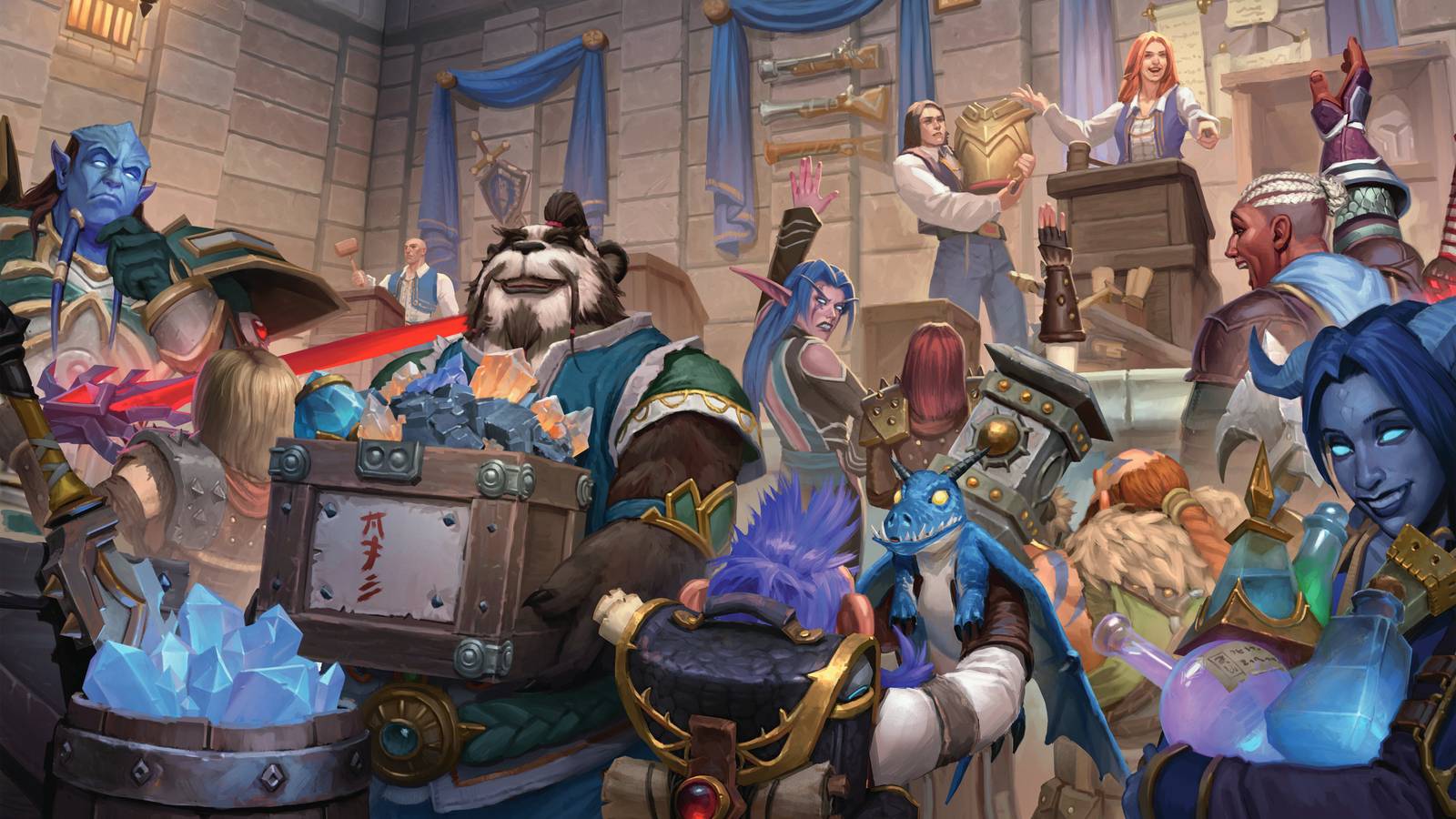
Published Nov 3, 2026, 12:00 PM EST The crossover creates opportunities for more complex characters and fights World of Warcraft gets Dungeons & Dragons to stop playing it safe Image: Wizards of the Coast Wizards of the Coast has been playing things safe since updating the rules of Dungeons & Dragons 5th Edition in 2024. After lead designers Jeremy Crawford and Chris Perkins left Wizards in 2025 to join Critical Role’s Darrington Press, Wizards slowed the pace of new D&D releases. Recent books have focused mostly on updating the lore and rules for the game’s most popular campaign settings and rebalancing previously published character options. D&D’s newest release bucks the trend, delivering an ambitious collection of innovative character options, monsters, and ways to use some of the game’s less developed subsystems. It just requires venturing to a new world. Dungeons & Dragons: World of Warcraft is the first book in the Universes Beyond line, an extension of the controversial Magic: The Gathering strategy that filled the collectible card game with licensed tie-ins. Even though WoW and D&D share many of the same classes and monsters, marrying the two games is a daunting challenge that involves incorporating lore from 22 years of video game releases and 12,000 years of conflict on the planet of Azeroth. But it also provided a unique opportunity to increase D&D’s complexity. A big part of 5E’s appeal is how simple it is to learn and play, especially at low levels. But WoW is a game about big boss fights and characters with a huge array of abilities, and D&D: World of Warcraft reflects that with an emphasis on high-level play and more tactical combat at every level. Sometimes the translation is needlessly confusing. WoW has some heroic classes that don’t start at level 1. D&D: WoW both introduces the term and then tells players they can start at level 1 anyway. Once you can get past the confusing language, the result is a set of rich new character options that DMs might want to consider for any game. For instance, the Death Knight modifies many of the core abilities of a Paladin, going beyond the neat building blocks of a subclass to transform a holy warrior into a necromancy-powered master of the battlefield who can pull foes into melee and charge through walls on a spectral steed. Demon Hunters, a similarly dramatic reimagining of Rangers, utilize Warlock powers and gather souls to heal themselves and harm their enemies. Image: Wizards of the Coast The extra power is necessary when facing the denizens of WoW’s dungeons. Lead designer James Wyatt and his team capture the feel of WoW’s multiphased boss fights with a mix of legendary actions, the bloodied condition that 5.5E brought back from 4E, and the mythic actions introduced in the Magic crossover campaign book Mythic Odysseys of Theros. When bloodied or dropped to zero hit points, many enemies heal and unlock devastating new abilities that can make the fight feel more desperate as it goes on. The book does a solid job of compressing WoW’s extremely convoluted lore and storylines to then transform them into compelling adventure hooks. There are plenty of ideas for campaigns of all levels focused on fighting back the corrupting influence of the Old Gods, the rampaging Scourge horde, or the relentless wrath of the Burning Legion, but this is a book that really shines when it comes to high-level dungeons and enemies. Once D&D characters hit level 10, they gain access to powerful magic that makes travel nearly instantaneous or quickly cures most problems. This disrupts the Tolkien-inspired fantasy most D&D games are built on. But these powers perfectly fit the tone of WoW, where players are zipping across the globe to fight apocalyptic threats before teleporting back to the safety of a cozy inn. Likewise, the newly introduced Potions of Mana, which let characters recover spell slots, would break most games, but they work when parties are expected to undergo a gauntlet of tough battles to clear out a dungeon. D&D’s subsystems get a big boost Image: Wizards of the Coast / Blizzard Entertainment Beyond enhancing combat, the book boosts the utility of some of D&D’s underutilized subsystems to get across the richness of WoW’s gameplay. The Dungeon Master Guide’s Renown system is used to track a character’s reputation with WoW’s many factions so they can earn access to powerful rewards. Crafting gets a huge overhaul as well, allowing characters to use their tool proficiencies to make magical items even if they’re not spellcasters. Likewise, the foraging action taken during exploration expands to represent WoW’s gathering skills by allowing characters to search for rare materials. It’s a shame that this isn’t a bigger book. Wyatt and his team clearly wanted to go further into depth in the crafting and gathering section and create a recipe list where each item has its own components found in certain areas of the world. Instead they mostly abstract it, but then give some specific examples, making the section feel convoluted and far too reliant on external research. Similarly, the enemies are well-crafted and flavorful, but just a bit more text covering the environmental challenges players might face exploring dungeons and the terrain in fights would go a long way to making those adventures more immersive. WoW and D&D have so much in common that this crossover feels natural in a way that’s less likely to be true for the Star Wars Universes Beyond book scheduled for release in 2027. But D&D: WoW gives me hope that the Universes Beyond endeavor can be more than just a business tactic to tap into existing fandom, creating a place where D&D’s designers have room to experiment with mechanics viewed as too complex for the core game. Even if you’ve never played WoW, it’s worth checking out this book for fresh ideas on how to challenge your players, especially at higher levels.
D&D’s World of Warcraft Crossover Is the Bold Shake-Up the Game Needed
Full Article
Original Source
Read the full article at Polygon →KhanList aggregates and links to publicly available news content. We do not host full articles from third-party sources. Always verify important information with original sources.