
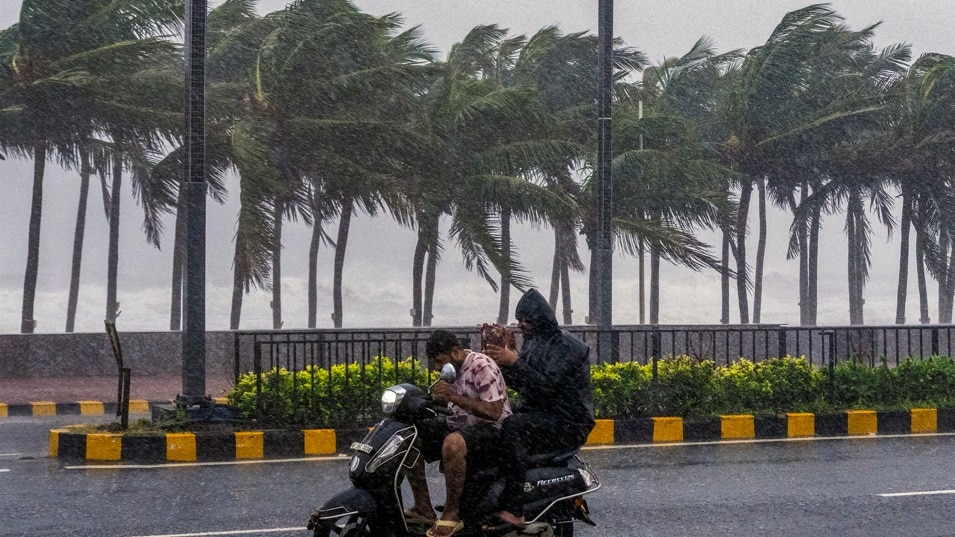
Cyclone Arnab brought powerful winds to the Andhra Pradesh coast on Wednesday, October 28, with gusts reaching 150 kmph as the storm made landfall.The winds threatened buildings, trees and electricity infrastructure, highlighting the destructive force a cyclone can unleash.But what makes a cyclone's winds so powerful, and why can they remain dangerous even after the storm moves over land?The answer to that question is how cyclones draw energy from warm ocean waters and turn differences in air pressure into fast-moving winds. HOW DOES A CYCLONE GENERATE STRONG WINDS?A tropical cyclone develops over warm seawater, which heats the air above it. The warm, moisture-filled air rises, creating an area of low pressure near the sea surface, and then more air rushes towards this area to replace the rising air.As the process continues, the system draws in more warm, moist air. When water vapour cools and condenses into droplets, it releases heat that provides energy to the storm. Earth's rotation also causes the moving air to curve, organising it into a spinning system. An uprooted tree lies on a road during Cyclone Arnab's landfall, in Andhra Pradesh. (Photo: PTI)Â The greater the difference in air pressure between the cyclone's centre and its surroundings, the faster the air tends to move, helping produce the powerful winds associated with intense cyclones.WHAT DO 150 KMPH WINDS REALLY MEAN?According to the India Meteorological Department (IMD), Arnab crossed the Andhra Pradesh and Yanam coasts as a very severe cyclonic storm, packing sustained winds of 125–135 kmph and gusts reaching 150 kmph.These measurements describe different things.Sustained wind speed refers to the wind maintained over a period of time, while a gust is a brief burst of stronger wind.Even a short burst can put enormous pressure on trees, roofs, electricity poles and other structures, while strong winds can also cause greater damage when they strike structures weakened by heavy rain.WHY DO WINDS CONTINUE EVEN AFTER LANDFALL?Arnab's landfall process lasted several hours, from around 2 am to 8 am, before its centre moved entirely over land near Narsapur in Andhra Pradesh, prompting the IMD to subsequently downgrade it to a severe cyclonic storm. A red flag fluttered on a beach as a warning ahead of Arnab's landall in Puri, Odisha. (Photo: PTI) Once a cyclone moves inland, it loses access to the warm ocean waters that supply much of its energy. Friction from land also disrupts its circulation, causing it to weaken.However, weakening does not mean the winds stop immediately. The storm could continue moving inland with strong winds and heavy rain, threatening communities beyond the coastline.- Ends
Cyclone Arnab has arrived: Here's how cyclones unleash 150 kmph winds
Full Article
Original Source
Read the full article at Indiatoday →KhanList aggregates and links to publicly available news content. We do not host full articles from third-party sources. Always verify important information with original sources.