
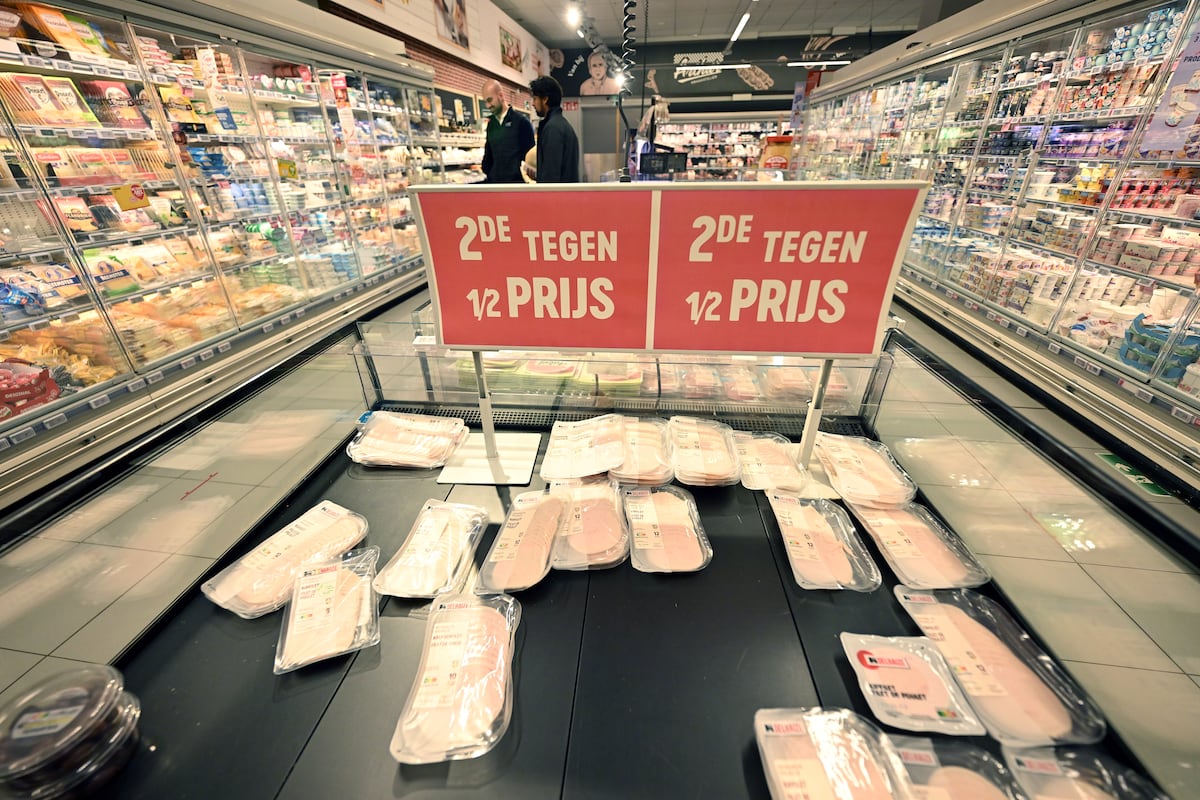
Cyberattacks, emails with false bomb threats, swarms of drones endangering civilian services and infrastructure. This is hybrid warfare. And Europe, which is navigating political and economic turbulence, locked in a tense electoral cycle in several countries and engulfed by an energy crisis that feeds public discontent, is under siege. Attention is focused on the usual suspects: Russia, Iran and even China; but nonstate actors seeking to exploit the situation have not been ruled out as perpetrators of some of the attacks.National and European authorities avoid blaming a single actor after a chain of hybrid operations that is testing public confidence in the system’s ability to function, and instead has shown how easy it is to sow fear and create chaos. To halt food supplies, an airport, even a whole country. “We have to be aware that war takes many forms. And we must be prepared,” a senior EU official warned.In the early hours of October 12, in the empty aisles of dozens of supermarkets across France, the temperature alarms on refrigerated units were triggered. Someone, somewhere, had taken control of the computer system that runs refrigerators and freezers and drove temperatures to impossibly high levels. The result: tens of thousands of euros in spoiled food and IT damage. Three weeks later the same scene played out in Belgium, Ireland, Sweden, Estonia, Luxembourg and Finland. A few days after that, another attack targeted three centers of France’s national blood transfusion service.Then the false bomb threats began. First, over several days, dozens of airplanes across Europe received warnings; some were even escorted in flight to landing by Italian, French, Hungarian and Bulgarian fighter jets. This week, the hoax threats reached thousands of Italian schools. At least 30 had to be evacuated.It is a war fought “below the threshold,” Italian Defence Minister Guido Crosetto stressed, designed to make it hard to point the finger at the perpetrator. “Everything is connected: refrigerators, blood banks in France, drones, aircraft, the threats. This is the era that we live in,” he said this week after the school incidents. “These attacks are part of a strategy to increase chaos,” he added. “We will have to get used to it.”This week France blamed Iran’s Revolutionary Guard for the October attack on its supermarkets, summoned Iran’s ambassador in Paris and said it would seek sanctions against Tehran. In Belgium, Interior Minister Bernard Quintin also pointed to Iran on Thursday. However, Foreign Minister Maxime Prévot corrected him hours later, saying the evidence still does not allow a clear attribution.The tangle becomes more complex. Two Kremlin-linked hacker groups, NoName057(16) and Z-Pentest, claimed responsibility for the attacks on refrigeration units. A misogynistic, white-supremacist Russian group also signed some of the emails with false bomb threats, Italian aviation authorities said. In Spain, nearly a dozen flights were affected by hoax alerts over four days, from Murcia airport to Madrid-Barajas.European Commissioner for Sustainable Transport Apostolos Tzitzikostas speaks of between 40 and 45 bomb threats against flights in a single week. Eurocontrol has counted at least 35 affected aircraft across about 20 airports. National authorities have not formally attributed the chain of messages that caused alarm among hundreds of people in a dozen countries to any group.However, several sources see Russia’s hand behind those alerts, according to European intelligence sources. “If it walks like a duck and quacks like a duck, it’s probably a duck,” says Tim Bosch, a former Dutch intelligence officer who now runs a private security firm. Another expert, now also working in private security, Matthew Borie, notes that Iran should not be ruled out.It’s been building. For months, as its war in Ukraine has stalled, Russia has stepped up its hybrid warfare against Europe. The Kremlin and linked entities have moved from attacking websites to sending explosive drones against airports, as happened at Leipzig this summer.The European cybersecurity agency (ENISA) has urged companies to harden their systems. A report from that agency published in September highlighted vulnerabilities in Europe, where 8,257 incidents occurred in 2025, according to its data. More than half had ideological motives, and the pro‑Russian group NoName057(16) — the same group that has now claimed the attacks on refrigerators across Europe — appeared as the most active actor against transportation, banks and European administrations.ENISA also warns that hacktivist attacks rose 40% last year. The cybersecurity agency paints a worrying picture: criminals, digital activists and state spies are now sharing tools, infrastructure and methods — to the point that it is increasingly difficult to tell them apart. Moreover, state espionage campaigns can take between six months and four years to surface, the report says.Europe’s fragility and vulnerability have been exposed in recent days not only by hybrid operations. A continent that has connected its hospitals, refrigerators, airports and official bodies to the internet has discovered that every connector is a potential security breach. On Thursday, a failure in Microsoft’s servers left hundreds of thousands of people without email, including Dutch municipalities and courts, and British hospitals that had to postpone appointments. On Friday afternoon, the FAA, the U.S. aviation authority, ordered a nationwide ground stop of all flights because of a telecommunications failure. The incident, which affected thousands of flights and hundreds of thousands of people, lasted more than four hours.In the case of hybrid operations, this time it was refrigeration systems. Tomorrow it could be the routers that citizens use to connect to the internet. The day after, household appliances. “Current grey‑zone tactics exploit the way our economies are connected,” warns Elisabeth Braw, a transatlantic security researcher at the Atlantic Council. That premise puts essential services in the line of fire.“It shouldn’t surprise us,” says a European intelligence official speaking on condition of anonymity. “The enemies of the European project dig to find vulnerabilities and exploit them. They don’t even have to create a crack, just exploit those that already exist. And they will do whatever it takes to try to destabilize Europe,” they add.Sign up for our weekly newsletter to get more English-language news coverage from EL PAÍS USA Edition
Cyberattacks on refrigerators and fake bomb threats: The hybrid war in Europe escalates amid a political storm
Full Article
Original Source
Read the full article at English →KhanList aggregates and links to publicly available news content. We do not host full articles from third-party sources. Always verify important information with original sources.