
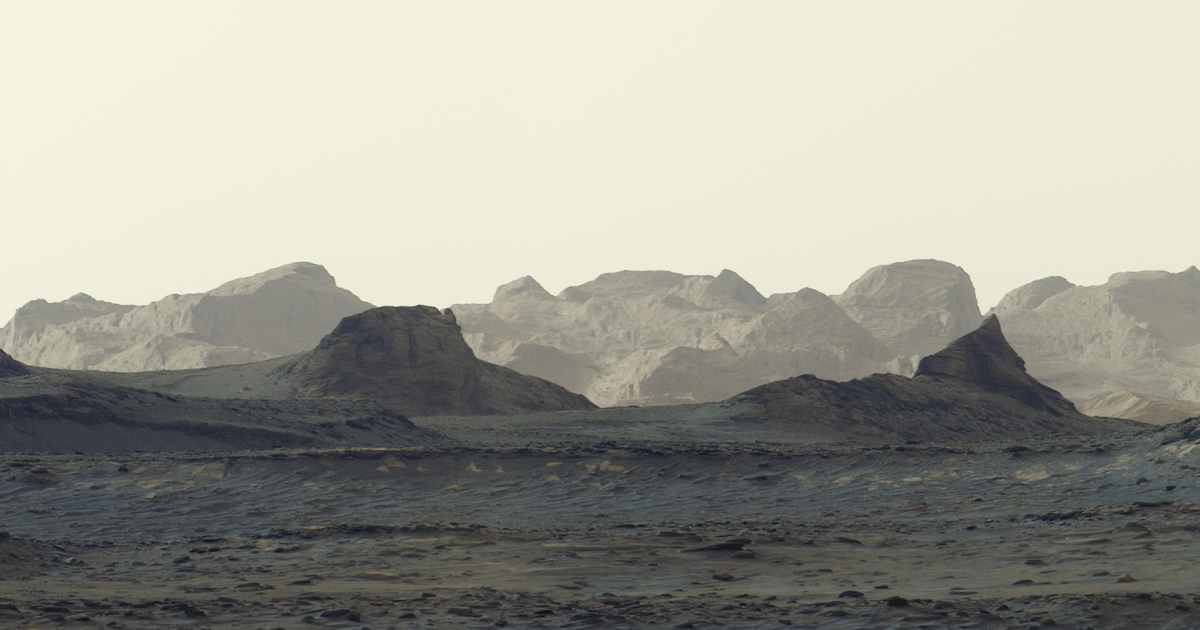
The NASA rover snapped the six images in this panorama of Mount Sharp’s mysterious yardang layer early on the morning of Aug. 11, 2026. | Published: November 5, 2026 Credit: NASA/JPL-Caltech/MSSS The morning Sun casts a hazy glow over Mars’ Mount Sharp, lighting up distant wind-carved rock formations known as yardangs. This scene is cropped from a six-image panorama captured by the Mastcam on NASA’s Curiosity rover at 8:30 a.m. local time on Aug. 11, 2026, the mission’s 4,982nd sol (martian day). Mount Sharp, formally Aeolis Mons, stands 3.4 miles (5.5 km) tall at the center of Mars’ 96-mile-wide (154 km) Gale Crater. Since 2014, Curiosity has climbed roughly 0.6 mile (1 km) up its stratified slopes, reading each new layer like a chapter of martian geology. The mountain’s lowest, oldest layers likely formed from sediment deposited by lakes and streams that have long since vanished. This photo is the most detailed view to date of the much younger yardang layer. Of particular interest is the fact that the color and orientation of the yardangs don’t match the surrounding material. Scientists think these features could have been built up from volcanic ash that settled after a nearby eruption, and was then carved away by the wind. Curiosity should reach the yardangs’ base in 2027, where its instruments will help uncover how the layer formed. Brooks Mendenhall is a staff writer at Astronomy, based in Chattanooga, Tennessee, fueled by an unending curiosity about the universe. A former classroom teacher, he has a knack for breaking down complex concepts for a wide audience.
Curiosity captures a martian dawn
Full Article
Original Source
Read the full article at Astronomy →KhanList aggregates and links to publicly available news content. We do not host full articles from third-party sources. Always verify important information with original sources.