
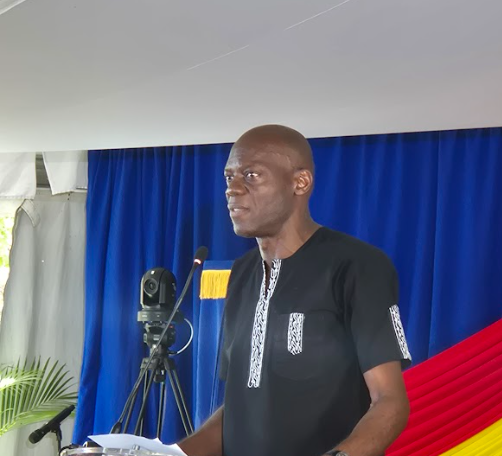
Professor Don Marshall (File Photo) CARICOM’s split over the United Nations vote on Cuba could leave the region vulnerable to accusations of double standards as it seeks international support for reparations and climate justice. That is the concern of Professor Don Marshall, director of the Sir Arthur Lewis Institute of Social and Economic Studies (SALISES) at The University of the West Indies, Cave Hill, following Wednesday’s vote in which Trinidad and Tobago opposed a resolution calling for an end to the United States embargo on Cuba, while Jamaica and Guyana abstained. Barbados maintained its longstanding support for the resolution, which passed with 130 votes in favour, 17 against and 25 abstentions. Last year, 165 countries supported it. Ahead of the vote, Barbados and Belize jointly called for an end to the embargo, warning that restrictions on fuel and humanitarian assistance were worsening conditions in Cuba. Jamaica, however, maintained that the crisis stemmed from both US sanctions and domestic economic policies, and called for reforms and dialogue. Marshall noted that the division in the positions represents an uncomfortable departure from decades of CARICOM solidarity on sovereignty, self-determination and the treatment of the Cuban people. “[CARICOM] has always been consistent… and has never faltered on that position,” he told Barbados TODAY. You Might Be Interested In The contradiction, in his view, lies in CARICOM’s pursuit of reparatory justice for slavery while some of its members take positions that depart from the region’s traditional opposition to the embargo. “We can’t approach him [King Charles] with that position as a united CARICOM,” he said, referring to the region’s reparations campaign, “but choose to tune out of the suffering that the Cuban people are experiencing.” “That’s an inconsistency. And it’s a serious inconsistency because we are a space that upholds human dignity.” The Caribbean’s history of chattel slavery, he said, made social justice and respect for sovereign rights fundamental to its international relations. “We are a space that experienced chattel slavery, and so social justice is a basic operating principle and tenet of our governance,” he said, adding that non-interference and self-determination were equally important. Whether the differing votes will actually weaken CARICOM’s influence remains uncertain. Asked directly about that possibility, Professor Marshall said he did not know, but believed British and European governments would be watching the region’s positions closely. CARICOM intends to advance its case for reparatory justice at the United Nations, and he fears inconsistencies on matters of principle could be used to challenge its credibility. “If there is ambivalence in our foreign policy posture, on key principles to do with justice,” he said, “then I no doubt would feel that moral ambivalence will be highlighted and we could be made to look like we are not serious.” Still, he was unwilling to regard one vote as the end of decades of regional foreign policy cooperation. “It’s a fissure, but I would not say it’s broken.” Jamaica has described its abstention as a considered policy shift, while Trinidad and Tobago has defended its vote against the resolution on democracy and human rights grounds. The academic said the governments concerned should explain their decisions to their regional partners and the public, admitting that he did not know what considerations had informed their positions. Barbados’ vote, meanwhile, was entirely consistent with its foreign policy history, including its establishment of diplomatic relations with Cuba in 1972 and its insistence on protecting national sovereignty during negotiations with Washington over maritime anti-drug operations in the 1990s. “The United States will not be surprised, in other words, by our continued vote,” he said. But the disagreement was more than a matter of diplomatic positioning. Cuba’s continuing fuel shortages and electricity disruptions, he said, should remind Caribbean people of the human cost of international pressure. Asked why ordinary Barbadians should care, Marshall returned to the principles he believes should guide the region. “We do not compromise on principles,” he said. “That’s what ordinary Barbadians need to grasp… and it’s not ideal to be indifferent to injustice.” “If you care about suffering in Ukraine, if you care about suffering in Gaza, you have to care about the suffering in Cuba.” The consequences of pressure on another Caribbean state, he suggested, should not be regarded as somebody else’s problem. “We cannot be indifferent to this because the threat could be right here on our doorstep as well.” Barbados, he added, is itself seeking international support on reparations and climate justice, making regional solidarity and consistency on matters of principle all the more important. (SM)
Cuba vote split could hurt CARICOM’s credibility, says Marshall
Full Article
Original Source
Read the full article at Barbadostoday →KhanList aggregates and links to publicly available news content. We do not host full articles from third-party sources. Always verify important information with original sources.