
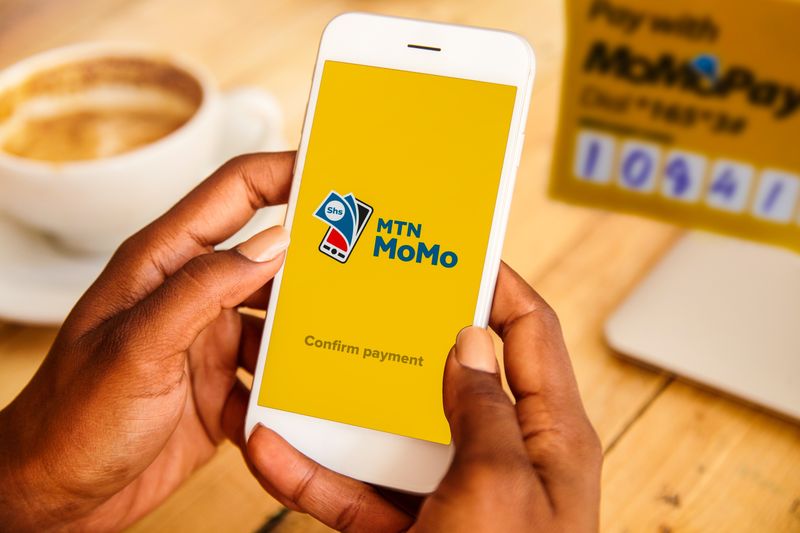
Regulators in Africa are starting to make rules about stablecoins just as the continent’s deep use of mobile money appears to give users a head start in handling new forms of digital currency.Ghana, Mauritius and Uganda are developing rules for stablecoins and other digital assets. Stablecoins are digital tokens designed to maintain a relatively stable value against an asset, usually a national currency such as the US dollar. Unlike bitcoin, a highly volatile cryptocurrency with no peg, stablecoins act more like fiat digital cash.The popularity of these digital coins is prompting regulators in the three countries to work together on shared standards, joint testing and eventually easier movement of licensed firms between markets.The move comes as stablecoins are finding uses in Africa, particularly for moving money across borders where bank transfers can be slow, costly and difficult to access.Stablecoins are part of a shift towards tokenised finance, in which money and other assets are represented as digital tokens that can move on blockchain networks.The technology is new, but the idea of keeping money on a phone and moving it without visiting a bank is already familiar to millions of Africans.Mobile money services processed more than $2-trillion worldwide in 2025, according to the global mobile industry body, GSMA, with registered accounts reaching 2.3 billion. Monthly active accounts rose to 593 million, with most of the growth coming from sub-Saharan Africa.Tellingly, Africa counts more than 1.2 billion registered mobile money accounts and around 347 million active users.The continent accounted for nearly 65% of the world’s mobile money transaction value in 2025, with totals above $1.4-trillion.That experience could give African users and businesses a head start as stablecoins and other forms of tokenised money enter cross-border payments.“Digitally native wallets on phones are not new here. They have existed since the early 2000s,” said Abdallah Mukalled, a senior policy manager at Ripple, during a recent webinar on stablecoins and digital money in Africa. “Africa’s fintech leadership is translating very well into the world of stablecoins.”Unlike a conventional mobile money balance, a stablecoin can be transferred between compatible blockchain wallets without moving through the mobile money provider’s own network.The adoption of cryptocurrencies is growing in Africa. (Photo: Supplied)That difference is already being used by African businesses.Gillian Darko, group vice-president of strategy at Yellow Card, said the largest share of the stablecoin activity her company sees comes from cross-border payments, treasury management and transfers between African countries.Yellow Card began in Nigeria in 2019 and now operates in more than 20 African countries. Darko said the company provides access to dollar-pegged stablecoins that customers can use to hedge against currency swings. She said demand has expanded from early retail use into business payments, remittances and treasury management for banks and telecom firms.Africa remains the world’s most expensive place to move money across borders, according to the World Bank.Darko noted that the cost of moving money is pushing both individuals and companies towards stablecoins, even though most tokens in circulation are pegged to the US dollar rather than African currencies.“My view is dollar rails for cross-border settlement, local-currency stablecoins for domestic use,” she said.Tahiru Alhassan, head of oversight and compliance in the virtual assets department at the Bank of Ghana, said the connection between cross-border and domestic payments would be important.“The benefits of cross-border payments using stablecoins can be maximised only if they are complemented by instant payments on the domestic front,” he said. “Otherwise we reintroduce friction.”Darko said stablecoins would need to be built into systems that already reach customers rather than asking people to move to entirely new platforms.“You cannot think about Africa without thinking about the telcos,” she said.She cited MTN, which has more than 300 million subscribers, as an example of the reach that telecom companies could bring to digital money products.But access to a mobile phone does not automatically mean access to stablecoins.Ivo Jeník, a senior financial sector specialist at CGAP, warned that people outside the formal financial system could be left behind if stablecoin services depend on bank accounts, identity checks, reliable internet and other costly tools.“The current financial system leaves roughly 1.3 billion adults out. Something is fundamentally broken,” he said.That concern is now part of the regulatory debate as central banks consider how stablecoins should fit into financial systems.Ghana, Mauritius and Uganda are each moving to treat stablecoins as a distinct class of digital asset rather than simply folding them into broader crypto rules.Uganda’s Capital Markets Authority is preparing a Virtual Assets Service Providers Bill, now in its first draft.Denis Kizito, the authority’s director of market supervision, explained that the approach follows a “same activity, same risk, same regulation” principle.A token that functions like money, he said, will face the licensing, custody and reserve rules that already apply to other payment instruments.The Bank of Ghana is furthest along on how to price and position local-currency tokens against dollar tokens.The bank is considering a licence for stablecoins issued locally, expected to be denominated mainly in the cedi, alongside a separate framework for foreign-currency tokens already circulating in Ghana.Alhassan said “a cedi-backed stablecoin can be seen as an enabler of monetary policy” and described it as the same currency in a new wrapper.Mauritius has also moved to set specific rules for stablecoins. Its Financial Services Commission issued a guidance note on stablecoins in mid-August, building on a licensing regime for virtual asset service providers in place since 2021.Khonsu Visham, of the commission, said the note sets out expectations on reserves, redemption rights, custody and disclosure, and that supervisors will look past labels.“Our focus is not simply whether a token calls itself a stablecoin,” he said.Regulators will examine the substance of the arrangement instead, including the quality of the assets backing a token and how easily holders can redeem it.Further progress can also be seen between Ghana and Rwanda, which have signed a fintech‑licence passporting deal. Alhassan said the ambition is to pull more countries into that model.But Visham cautioned against rushing towards mutual recognition of licences across borders, insisting supervisors must first build trust through shared data and a joint pilot.“Passporting is a possible later stage of regulatory integration,” he said.Nonetheless, experts note that the coordination could still matter well beyond Africa.Afework Temtime of the UN Economic Commission for Africa told the webinar that the aim is to fit these new instruments into existing plans for regional trade, including the African Continental Free Trade Area and the continent’s cross-border payment system, known as PAPSS.“This conversation comes at a critical moment for Africa’s digital financial transformation,” he said. Bird Story Agency / DM
CRYPTOCURRENCY: African nations move to bring stablecoins into the financial mainstream
Full Article
Original Source
Read the full article at Dailymaverick →KhanList aggregates and links to publicly available news content. We do not host full articles from third-party sources. Always verify important information with original sources.