
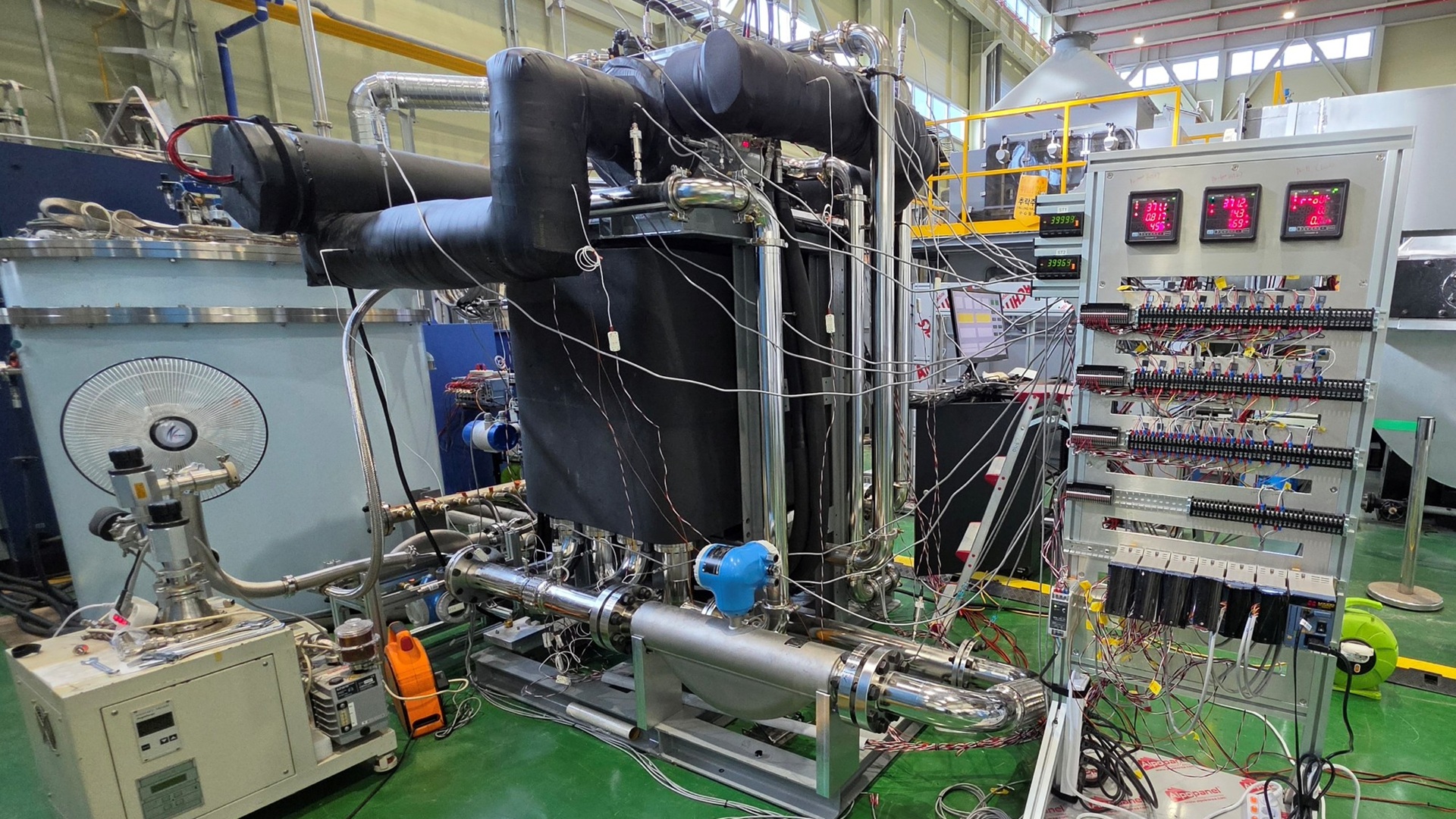
Key TakeawaysSouth Korean researchers developed a semiconductor chiller that reaches -184 degrees Fahrenheit in just 30 minutes using a 60,000-rpm turbine.The chiller delivers 15 kW of cooling capacity within an hour, with commercial production targeted for 2027.The team is working on more advanced cooling systems for future applications in quantum computing, hydrogen research, nuclear fusion, and space exploration. South Korean scientists have recently unveiled a new semiconductor chiller that can reach -184 degrees Fahrenheit in about half an hour and could be used in quantum computing and nuclear fusion. The semiconductor chiller was developed by researchers at the Korea Institute of Machinery and Materials (KIMM). The team was led by Junseok Ko, PhD, head of the institute’s Department of Energy Storage Systems. According to Ko, the chiller relies on a high-speed turbine that rotates at 60,000 revolutions per minute (rpm). It uses nitrogen gas as a refrigerant, which has zero global warming potential (GWP). The system is intended for chip production, which requires precise temperature control. It could enter the market in 2027. “Since setting the goal of developing an industrial chiller in 2024, our researchers have worked to advance the technology to a level suitable for commercialization,” Ko said. Ultra-fast cooling The chiller operates on a Turbo-Brayton refrigeration cycle (also called the reverse turbo-Brayton cycle). It uses compressed and expanded gas to produce extremely low temperatures. According to Ko, the chiller provides 15 kW of cooling capacity at temperatures as low as -184 degrees Fahrenheit (-120 degrees Celsius). It also relies on an oil-free turbomachine that can operate at up to 60,000 revolutions per minute (rpm). Moreover, magnetic bearings support the turbine’s rotating parts in place without physical contact. Junseok Ko, PhD, head of the department of energy storage systems at KIMM. Image credit: Korea Institute of Machinery and Materials (KIMM) As a result, it can operate without lubricating oil and avoid potential freezing and mechanical problems. “In addition, the system was simplified and designed with a compact structure to minimize installation space in industrial facilities,” the team stated. The 5.2 feet wide, 5.2 feet deep, and 6.9 feet tall cooling unit can reach its full 15 kW cooling capacity within an hour. It also operates at pressures of no more than 10 atmospheres (bar). This makes the technology a potential alternative to conventional semiconductor cooling systems that rely on refrigerants with high global warming potential. Preparing for commercial production The cooler comes amid growing demand for advanced chip cooling systems. This is particularly important when etching tiny patterns onto chips, where precise temperatures are essential to avoid errors. By using nitrogen instead of conventional synthetic refrigerants, the new system could reduce the climate impact associated with refrigerant leakage. “Nitrogen, used as the refrigerant, has a global warming potential (GWP) of zero and offers environmental and safety advantages,” the researchers said. KIMM has transferred the technology to Chago Engineering, a South Korean firm which specializes in eco-friendly cooling systems and semiconductor chillers. The institute is meanwhile pursuing even more extreme cryogenic technologies. Frost forms on the KIMM logo during a cooling performance test of the cryogenic chiller developed by KIMM. Image credit: Korea Institute of Machinery and Materials (KIMM) They have so far demonstrated cooling at -328 degrees Fahrenheit (-200 degrees Celsius) with other systems, and are working toward temperatures as low as -418 and -452 degrees Fahrenheit (-250 and -269 degrees Celsius). These could find uses in quantum computing, hydrogen research, nuclear fusion, and space exploration. “Building on this achievement, we will continue developing industrial cryogenic cooling technologies that can be applied not only to semiconductor manufacturing but also to a wide range of promising future industries,” Ko concluded in a press release. Get the latest in engineering, tech, space & science - delivered daily to your inbox.Based in Skopje, North Macedonia. Her work has appeared in Daily Mail, Mirror, Daily Star, Yahoo, NationalWorld, Newsweek, Press Gazette and others. She covers stories on batteries, wind energy, sustainable shipping and new discoveries. When she's not chasing the next big science story, she's traveling, exploring new cultures, or enjoying good food with even better wine.
Cryogenic semiconductor chiller reaches -184°F in 30 minutes with nitrogen gas
Full Article
Original Source
Read the full article at Interestingengineering →KhanList aggregates and links to publicly available news content. We do not host full articles from third-party sources. Always verify important information with original sources.