
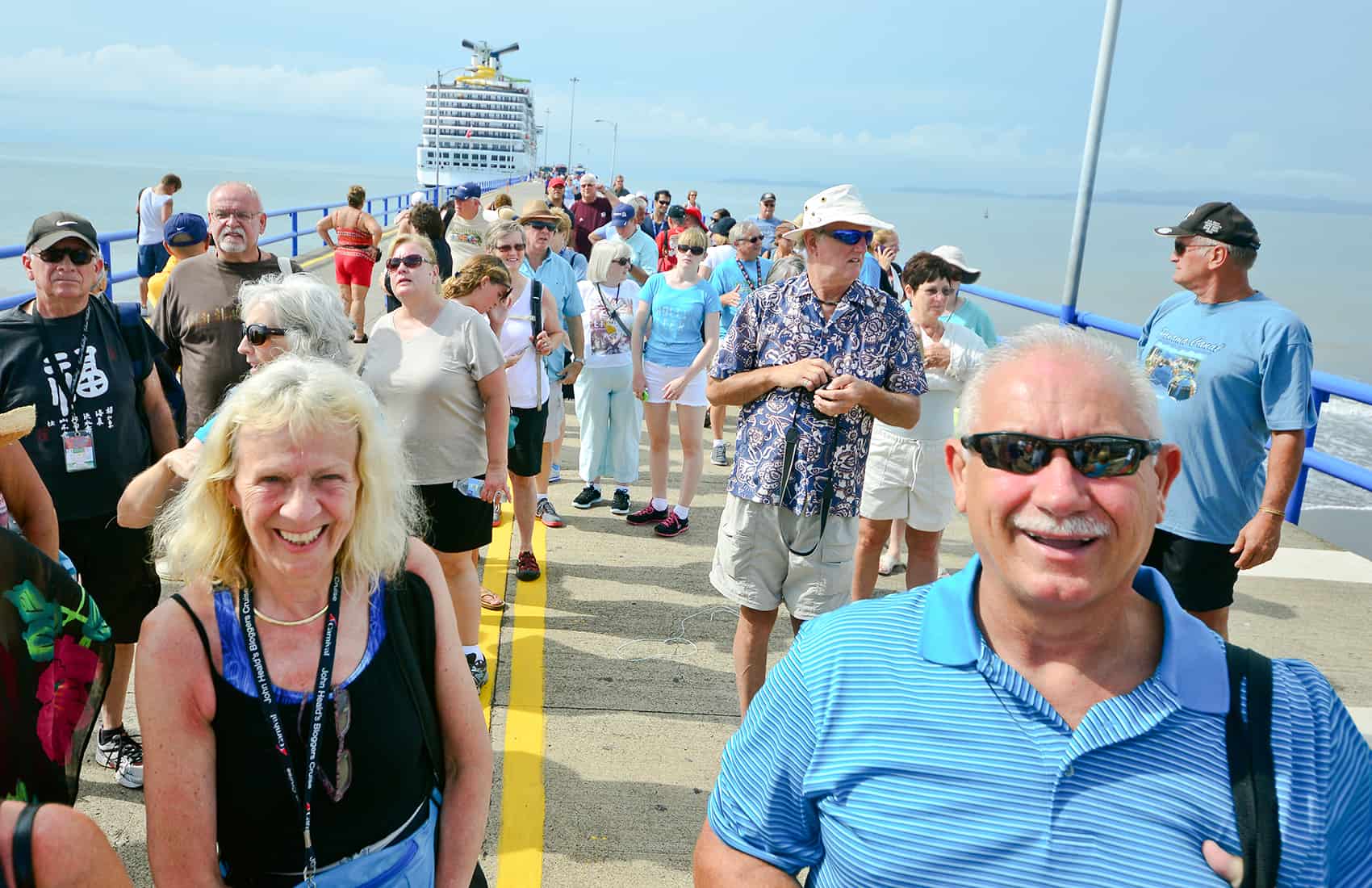
When a cruise ship ties up at Puntarenas or Limón, thousands of passengers stream ashore for a few hours. What they spend in town and what the ship does with its sewage and garbage after it sails away are two sides of the same question, namely what Costa Rica actually gets from cruise tourism and what it puts up with in return. Start with the money. The most detailed measure is an economic impact study of the 2023/2024 season by the consultancy Business Research and Economic Advisors. It was commissioned by the Florida-Caribbean Cruise Association together with participating destinations, including the Costa Rican Tourism Institute (ICT). The study found that the average passenger who goes ashore in Costa Rica spends $72.74 (about 33,100 colones). Most of that goes to tours. Roughly 80 percent of passengers bought a shore excursion, and 85 percent of those excursions were sold by the cruise lines on board the ship. Only 4 percent were booked directly with an operator on shore. The lines keep a share of every tour they sell before the local company sees a colón. Take the tours out and the figure drops to about $20 (9,100 colones) per passenger. Local crafts and souvenirs account for roughly $6.25 (2,840 colones), clothing about $5.25 (2,390 colones) and food and drinks in restaurants and bars about $2.55 (1,160 colones). Only about one in six groups bought food or drink on shore, which makes sense when every meal is already paid for back on the ship. Passengers spent an average of 5.1 hours on land. Across the season, about 228,000 passenger visits produced $16.6 million (7.6 billion colones) in spending. Outside of tours, that comes to roughly $4.7 million (2.1 billion colones) for the entire country, including about $1.4 million (637 million colones) on crafts and souvenirs and less than $600,000 (273 million colones) at local restaurants and bars. Crew members added another $1.7 million (773 million colones). Counting port fees and services paid by the cruise lines, the study puts total spending at $32.2 million (14.7 billion colones) and credits the industry with 852 jobs. Official figures have often painted a brighter picture. For years the ICT has said each cruise passenger spends about $137 (62,300 colones) a day, nearly double what the survey measured. Passengers are also less impressed than they used to be. Their overall rating of a Costa Rica stop slipped to 7.8 out of 10 from 8.2 in 2018. The weakest scores were for how likely they were to return for a land vacation, at 4.5, and to recommend the country to others, at 5.3. Then there is what the ships leave behind offshore. A large cruise ship produces huge volumes of sewage every week, along with even more graywater from sinks, showers, laundries and galleys. Under the international convention known as MARPOL, ships may release treated sewage close to shore, ground and disinfected sewage beyond three nautical miles (5.6 kilometers) and untreated sewage beyond 12 nautical miles (22 kilometers) while underway. Graywater is barely regulated at all. Plastics can never go overboard, but food waste can once a ship is far enough out. The Caribbean coast is better protected because it lies within the Wider Caribbean special area, where food waste is the only garbage allowed over the side and only beyond 12 nautical miles. For decades Costa Rica was not a party to that convention. In 1999 the Constitutional Chamber struck down an earlier attempt to join after concluding that the country lacked the facilities and trained personnel to receive and process waste from ships. A legal gap analysis prepared for the Pacific port authority INCOP later found no Costa Rican rules on where ships may discharge sewage or garbage and no requirement that ports have facilities to receive it. That changed on paper last year. The Legislative Assembly approved joining MARPOL on June 24, 2025, and Law 10738 was published in La Gaceta on July 23. In November 2025, however, Roger Ríos, a sociologist at the State Distance University (UNED) who follows the issue, wrote that the final step was still pending. That step is the executive branch formally depositing the accession with the International Maritime Organization in London, and the government has not publicly confirmed that it has since been completed. The Atlantic port authority JAPDEVA already treats the convention as in force. On January 13 its board updated the rules for private contractors working in its terminals, including those that pump oily waste and remove garbage and graywater from ships. What those rules do not describe is a public facility to receive any of it. Contractors must show that the waste goes to a receiving facility authorized by the Environment Ministry. JAPDEVA warned lawmakers in 2024 that complying with MARPOL would strain its finances and suggested charging vessels to pay for it. On the Pacific side, Puerto Caldera has been run by private concession holders since 2006. Those contracts were due to expire in August 2026 and have been extended to August 31, 2027, while a new 30-year concession awarded in March was still held up in court in September over an environmental challenge. Ríos has urged that the new contract require proper waste reception. In the meantime, he wrote, shipping companies report adding stops in Panama or Colombia for those services. Without a public reception facility in port, a cruise ship calling in Costa Rica can hire a private contractor or hold its waste and release it at sea where the rules allow, beyond the reach of any Costa Rican inspector. The country collects port fees and about $20 a head from passengers outside of tours, while the question of who checks what goes over the side remains largely unanswered. As Costa Rica pushes to attract more and bigger ships, including long promised new terminals in Limón and Puntarenas, both the value of each visit and its cost to the country’s waters deserve a much closer look.
Cruise Ships Leave Their Waste Off Costa Rica and Take Most of the Money With Them
Full Article
Original Source
Read the full article at Ticotimes →KhanList aggregates and links to publicly available news content. We do not host full articles from third-party sources. Always verify important information with original sources.