
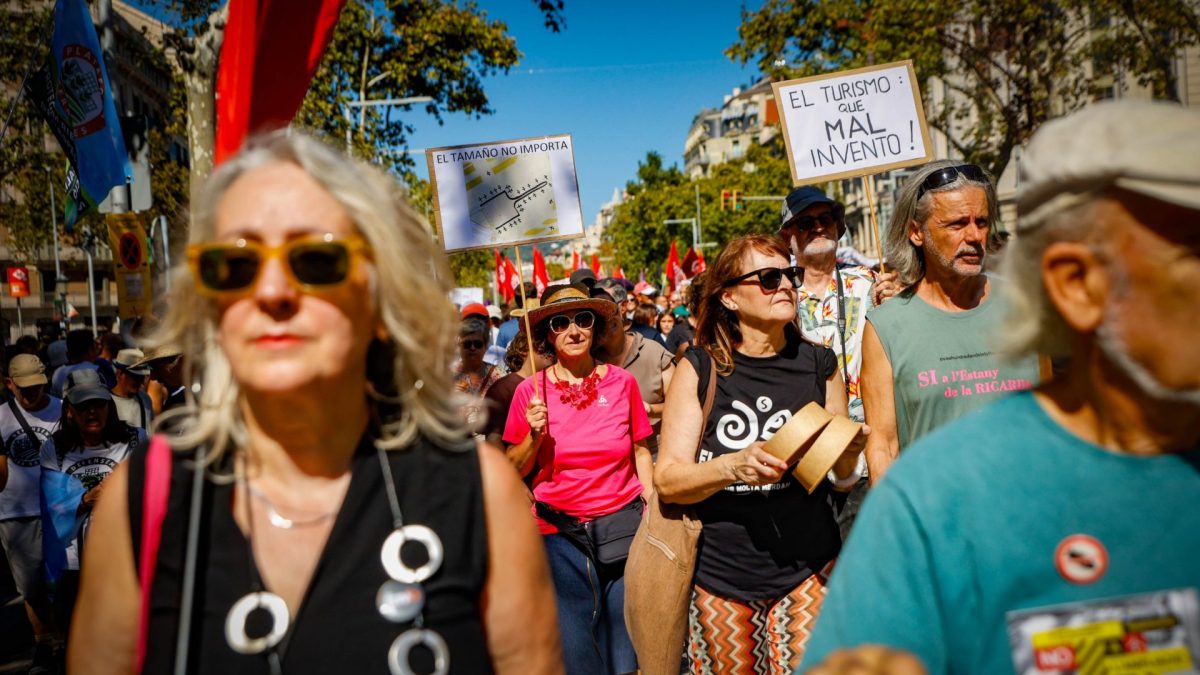
Spanish authorities are resorting to ever more measures in their battle against soaring tourist numbers as the country looks set to overtake France as the world’s most popular holiday destination. Between January and August, more than 70.3 million international tourists visited Spain (including 11.5 million Brits), a rise of 5.4 per cent year-on-year, according to data from the Spanish National Statistics Institute (INE). If this rate continues, the number of foreign visitors could reach 102 million by the end of the year, meaning Spain may outdo France as the world’s most popular holiday destination. “These figures show that the authorities are not answering our calls to reduce tourism so that it is manageable and residents can live in their own communities,” said Jaume Pujol, of Menys Turisme Mas Vida (Less Tourism, More Life) in Mallorca. Faced with this tide of holidaymakers, authorities across Spain have been forced to act with measures such as hiking tourist taxes, restricting tourist numbers in certain areas, and using AI tools to measure tourist flows so that popular areas are not overcome with people at the same time. But such measures don’t go far enough for protest groups, who say they only serve to control the numbers of holidaymakers without addressing the underlying issues driving overtourism in the first place. Spain has been hit by waves of demonstrations against tourism in cities across the country. This includes the country’s housing crisis, which they say has been made worse by tourists. They claim holidaymakers have helped cause average house prices to rise by 80 per cent since 2015, with rents up by 87 per cent. Meanwhile, salaries have risen by only 28 per cent, according to Idealista.com, an online estate agency, pricing many people out of home ownership. A protester throws a paper plane at tourists during a march against the expansion of Barcelona-El Prat Airport last month (Photo: Javier Mostacero Carrera/Getty Images) Alongside that, the number of new homes built each year has fallen from more than half a million two decades ago to 95,000 today. According to the Bank of Spain, the deficit in homes has reached 750,000. The eviction of an 87-year-old woman from her home in Madrid last month prompted a wave of furious protests over the housing crisis across Spain, prompting the Prime Minister to call an early election. An epicentre for the housing crisis is tourist hotspot Barcelona. Spain’s most popular city for tourists, it attracted 16 million visitors last year, a rise of 2.9 per cent year-on-year, according to the Barcelona Tourism Observatory. A national strike over the issue is planned for 11 November. Cities have tried to take measures to solve the problem. Barcelona city council raised the daily tourist tax, from €12 (£10) for a five-star hotel to €6 (£5) per night at campsites. This raised €148m (£124m), which was ploughed back into reducing the effects of intensive tourism, says José Antonio Donaire, Barcelona’s commissioner of sustainable tourism. “The €148m collected in 2025 was used for two purposes: firstly to fund the maintenance of services used by tourists – services that suffer deterioration due to intensive use – and second to minimise the negative impacts caused in the 15 areas [of the city] which experience high tourist footfall,” he told El Pais newspaper. In 2028, the council will ban the city’s 10,000 tourist flats, which the Socialist mayor Jaume Collboni blames for pushing up housing prices. In the south, Malaga has been hit by protests accusing the owners of tourist flats of pushing out local people who cannot afford the soaring house prices. The city is trying to combat the rise using AI tools to control tourist flows from cruise liners. Some 310,000 cruise passengers visited Malaga between January and August. The city council hired the company Iurban to use AI to manage the flow of these passengers by using sensors linked to the cruise terminal to improve accessibility to the city. Meanwhile, in the centre of the country, Toledo, a city of only 87,000 inhabitants that attracts about four million tourists each year, has been forced to take action. Its popularity has prompted protests against overcrowding in the historical old town, a Unesco World Heritage Site. Anti-tourism protests and graffiti have become common in Palma de Mallorca (Photo: Andrey Rudakov/Getty) “We have brought in measures to controls on the flows of tourists on foot through the historic old town, to limit the size of groups on visits, and rules about the use of megaphones which were banned for guides,” José Manuel Velasco, head of tourism for Toledo city council, told The i Paper. “Group sizes were limited to 30 people. All people on visits should wear headphones to hear the tour guides. Cars or coaches cannot block the walkway for residents.” However, Daniel Pardo, of the Neighbourhood Assembly for Tourism Degrowth, which staged a series of protests in Barcelona against overtourism, said none of these measures tried to tackle the real problem: “The use of AI and other ways to control the flow of tourism are designed for other reasons. These are to perpetuate the current situation and to give the impression that the authorities are doing something about it, which they are not. “These measures are a distraction from the effects of too much tourism,” he added. “A series of studies have shown what is really needed is to reduce the level of tourism and to make it more sustainable.” He pointed out that according to studies, what was needed was to reduce tourist numbers, improve the environment and climate, and to improve pay for tourism workers and access to housing for residents. Rosa Galindo, of Un Techo por Derecho (A Right to a Roof), a protest group in Malaga that staged a demonstration in June, said AI would not tackle underlying problems of rising housing costs for residents which she blames partly on overtourism. “None of the measures will help residents in Malaga. They will just help to continue the same tourist model which has converted the centre of Malaga into a tourist theme park,” she tells The i Paper. “Malaga has become a city in which local people cannot afford to live.” But as Spanish residents get angrier over the ever-increasing numbers, authorities may soon be forced to take more extreme action.
Crowded Spain is losing its battle against tourists – and it’s getting angrier
Full Article
Original Source
Read the full article at Inews →KhanList aggregates and links to publicly available news content. We do not host full articles from third-party sources. Always verify important information with original sources.