
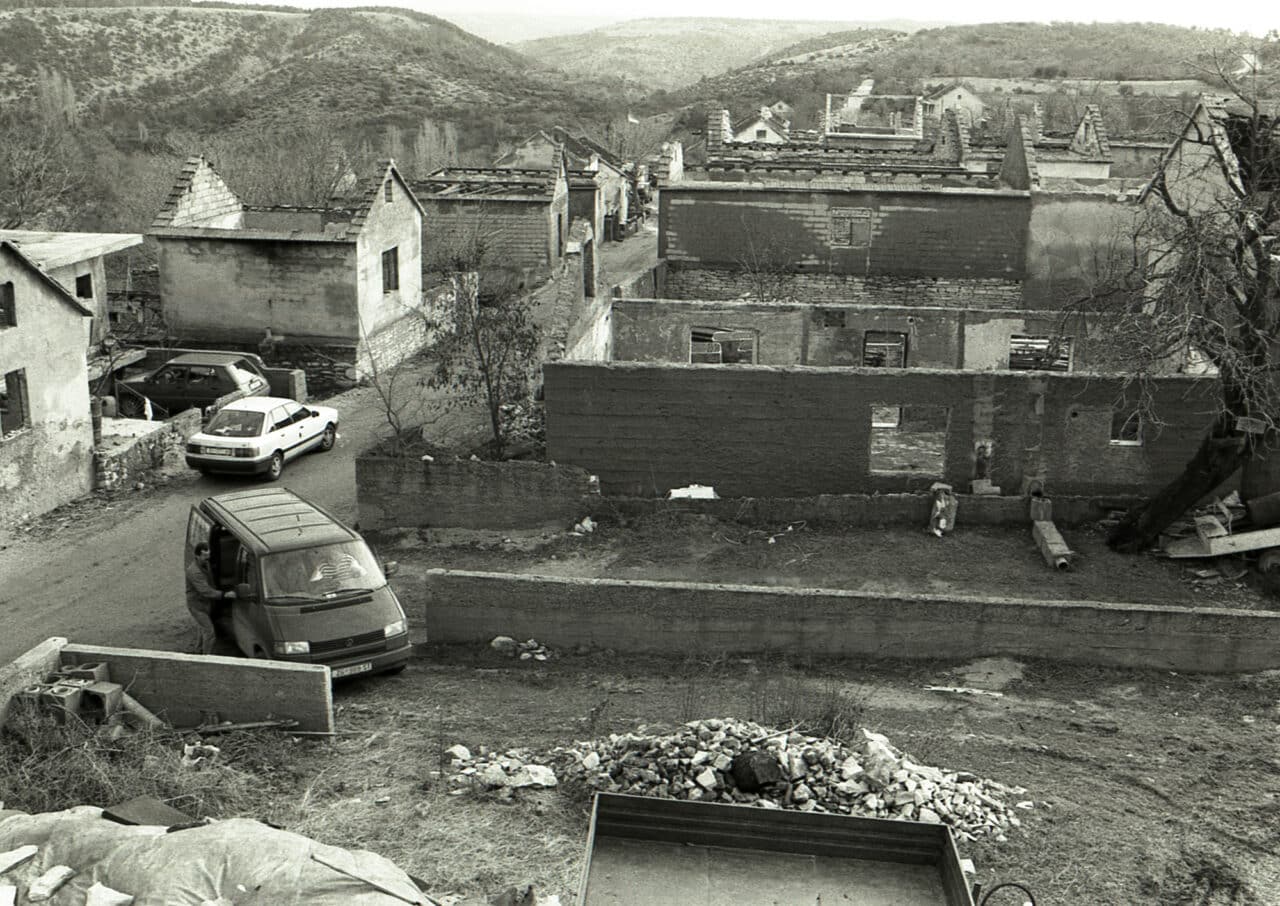
August 5 marks the 31st anniversary of Operation Storm, the lightning Croatian Army offensive that liberated 18.4 per cent of Croatian territory, crushing a Belgrade-backed statelet, the self-proclaimed Republic of Serbian Krajina, RSK. The RSK, which had existed for four years, ceased to exist. Around 200,000 Croatian Serbs fled during and after the operation. Although crimes committed against Serbian civilians in the aftermath of the offensive left a stain on the victory, Operation Storm itself is widely remembered in Croatia as a highly successful operation that paved the way for the restoration of the country’s territorial integrity. Storm was not only a legitimate liberation operation led by Croatia’s first president, Franjo Tudjman, Prime Minister Andrej Plenkovic said at the central ceremony marking the anniversary of Operation Storm. It was also, he added, an action that saved Bihac in northwest Bosnia and Herzegovina from a looming humanitarian catastrophe, changed the balance of power in Bosnia and paved the way for peace and the Dayton Agreement, which ended the 1992-5 war in Bosnia. Croatia is neither engaged in an arms race nor threatening anyone, Plenkovic continued. However, “We are not afraid of anyone” and “will know how to respond to any threat” he warned. He stressed that Croatia would never again be unprepared or unprotected, guided by the principle: “If we want peace, we must be able to defend it.” Plenkovic said Croatia was not alone in this effort as it is a member of NATO. He stressed that investing in defence is not preparation for war but an investment in the security of the country, its homes, schools and factories. Such investments, he said, also strengthen investor confidence and make Croatia a more attractive place to live and work. To compare the wartime landscape with the present day, BIRN set out to recreate photographs taken on August 5 and 6, 1995, with the help of two photographers. One of them, artistic and documentary photographer Zeljko Gasparovic, 72, from Novska, volunteered during Croatia’s War of Independence and never parted with his camera. As a result, he built one of the largest private photographic archives documenting the war. All photos can be slid left and right to compare the past and present. Zeljko Gasparovic photographed the collapsed bridge on the Sava River near Jasenovac, in front of which were Croatian Army units, in the first days of Operation Storm. Today, the bridge leading to the border crossing with neighbouring Bosnia and Herzegovina is restored and is fully functional. The railway bridge over the Sava River was destroyed during the war. Today, it is a key piece of transport infrastructure connecting Jasenovac with the Croatian capital, Zagreb.Like most bridges in the area, the bridge over the Una River in Hrvatska Kostajnica was destroyed during the war. Today, it carries traffic to the border crossing and links Croatia with Republika Srpska, the Serb-majority entity of Bosnia and Herzegovina.The intersection in Hrvatska Kostajnica, where the road branches toward Zagreb and Bosnia and Herzegovina. Today, there is no visible trace of the wartime destruction that once marked the site.The police building in Hrvatska Kostajnica was burned down during the war.Today, it is a border police station staffed by police officers who guard the external border of the European Union and the Schengen area.Traces of the withdrawal of civilians in Dvor na Uni. During Operation Storm, around 200,000 Croatian Serbs fled their homes. Today, the place bears few visible traces of the drama that unfolded there 31 years ago.Stanko Feric, 71, was already an experienced journalist when the breakup of former Yugoslavia began. As ethnic tensions escalated in 1990, he began reporting from crisis areas. In 1991, he joined the Croatian forces, working as a reporter and cameraman for the Ministry of Defence. Between 1991 and 1995, he produced more than 2,000 reports and photographs from the front lines. After Serbian forces withdrew from Knin on August 5, Feric entered the town the following day. On August 6, he photographed the police station after it had been taken over by Croatian police. Today, residents queue at the same location to apply for official documents. In August 1995, Knin was deserted, a town abandoned by its inhabitants. Today, the small town in the Dalmatian hinterland is vibrant with life.Croatian soldiers collected licence plates as souvenirs in 1995. Today, Knin shows few visible traces of the war. Each year, the town hosts the main commemoration of Operation Storm, bringing renewed attention to the events of 1995, while everyday life continues normally for the rest of the year.Croatian Army soldiers on the streets of Knin, August 6, 1995. Today, people drink coffee on the terrace of a café at the same location; only older residents of the town remember the war.The village of Rupe was among those most affected by the war. Today, its church and houses have been renovated. But, like many villages and towns in the area affected by Operation Storm, it struggles with depopulation. The Church of St Anthony of Padua in Hrvatska Kostajnica was razed to the ground, as were most Catholic churches in the RSK. Photo: Zeljko Gasparovic The church has been restored and is fully functional. The only reminder of the war is a monument to a fallen Croatian soldier in front of the church. Photo: V.Tesija/BIRN The village of Plastovo, near the town of Sibenik, was razed to the ground. Returnees found it in this condition. Photo: Stanko Feric Today, the village has been completely rebuilt, but unfortunately has never recovered demographically. Photo: V.Tesija/BIRN The town of Dvor na Uni remained empty after Operation Storm, with livestock roaming the town after the people fled. Photo: Zeljko Gasparovic Dvor na Uni has never recovered demographically. The roads are new, but some buildings have never been renovated. Photo: V.Tesija/BIRN The Croatian Army in the hamlet of Zitnic at a railway crossing that led nowhere. Photo: Stanko Feric Today, it is the intersection of a road and a railway that connects the capital, Zagreb, with the country’s largest coastal city, Split, and the south of Croatia. Photo: V.Tesija/BIRN
Croatia’s Operation Storm in Pictures, 31 years on: Homes Restored, Fewer People
Full Article
Original Source
Read the full article at Balkaninsight →KhanList aggregates and links to publicly available news content. We do not host full articles from third-party sources. Always verify important information with original sources.