
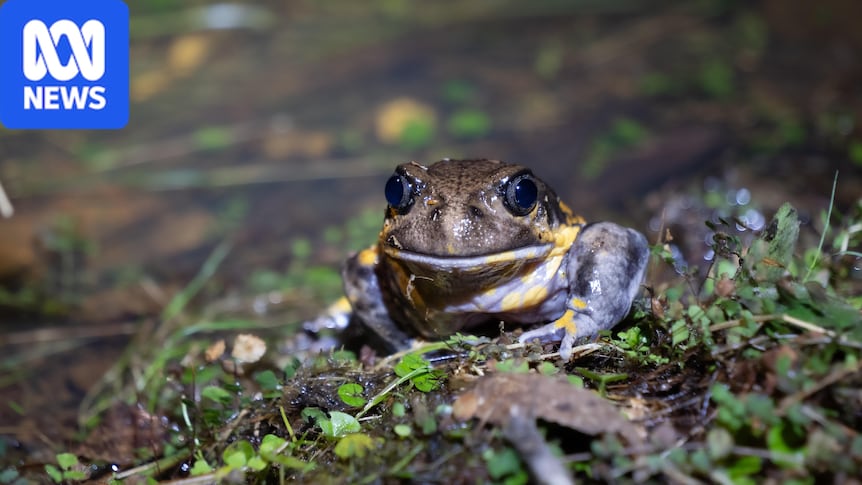
Almost six years after the Black Summer fires tore through their habitat in Victoria's east, an unsuspecting colony of survivors is finally making its way home. Fifty-three critically endangered Southern Giant Burrowing Frogs have been released into the wild after a successful conservation breeding program with Zoos Victoria. The frogs were initially discovered as tadpoles after the 2019/2020 fires destroyed large swathes of their forest habitat in East Gippsland. Specialist amphibian keepers at Melbourne Zoo and Healesville Sanctuary raised the tadpoles before successfully adding to the colony, breeding more southern giant burrowing frogs for the first time in captivity.Snowline Ecology herpetologist Matt Clancy said the discovery of the tadpoles in areas no larger than a puddle was a miracle. Scientists release giant southern burrowing frogs back into the wild. (Supplied: Zoos Victoria)"A lot of those areas were just completely burnt and reduced to no vegetation at all, which we think had quite a severe impact on some of the populations of this species," he said. Scientists are now hopeful the reintroduced frogs will help boost the dwindling wild population. A large but elusive creatureWith large eyes and muscular limbs, the southern giant burrowing frog is roughly the size of a cricket ball. The species is native to south-eastern Australia, with populations stretching from south of Kangaroo Valley in New South Wales through Victoria to Walhalla in central Gippsland. More than 50 frogs have been released back into East Gippsland after the Black Summer fires destroyed their habitat. (Supplied: Zoos Victoria )But bushfires, drought and a widespread amphibian disease called chytridiomycosis have had devastating impacts on wild numbers. There is no total population census for the frog because they are an extremely secretive species, spending most of their time underground until they come up to breed after heavy rainfall. "We've sometimes detected males coming up for only one night, calling, and then disappearing back into the forest and you might not hear them again for a number of years," Mr Clancy said. "So they're very elusive, quite a tricky species to work on — but I think that makes it all the more rewarding when you do finally find one."World firstIn 2021, Mr Clancy worked with other scientists and wildlife experts at Healesville Sanctuary to return the rescued tadpoles to the sanctuary.There, experts worked to raise the tadpoles through to metamorphosis and last year successfully bred the species for the first time in captivity.Scientists and wildlife experts worked to return the rescued tadpoles to the sanctuary. (Supplied: Zoos Victoria )Zoos Victoria threatened species keeper Meagan Lane worked with the frogs.She said scientists have been able to secure the frogs' genetics for future generations, while also gaining valuable insight for the species."This is the first time that this species has been held in any zoo environment and … the first time being able to give breeding a shot with this species and learn everything we can," she said. The frogs have now been returned to the wild, where scientists will continue to monitor their progress.Song meters have also been set up through the forest to detect the frogs' distinct call and help field teams identify potential breeding sites. There are fewer than five known breeding sites in Victoria. "To know the species is going to continue and hopefully breed and persist out in those wild populations is just the best news we could ever hear as keepers," said Ms Lane.
Critically endangered frogs returned six years after Black Summer
Full Article
Original Source
Read the full article at Abc →KhanList aggregates and links to publicly available news content. We do not host full articles from third-party sources. Always verify important information with original sources.