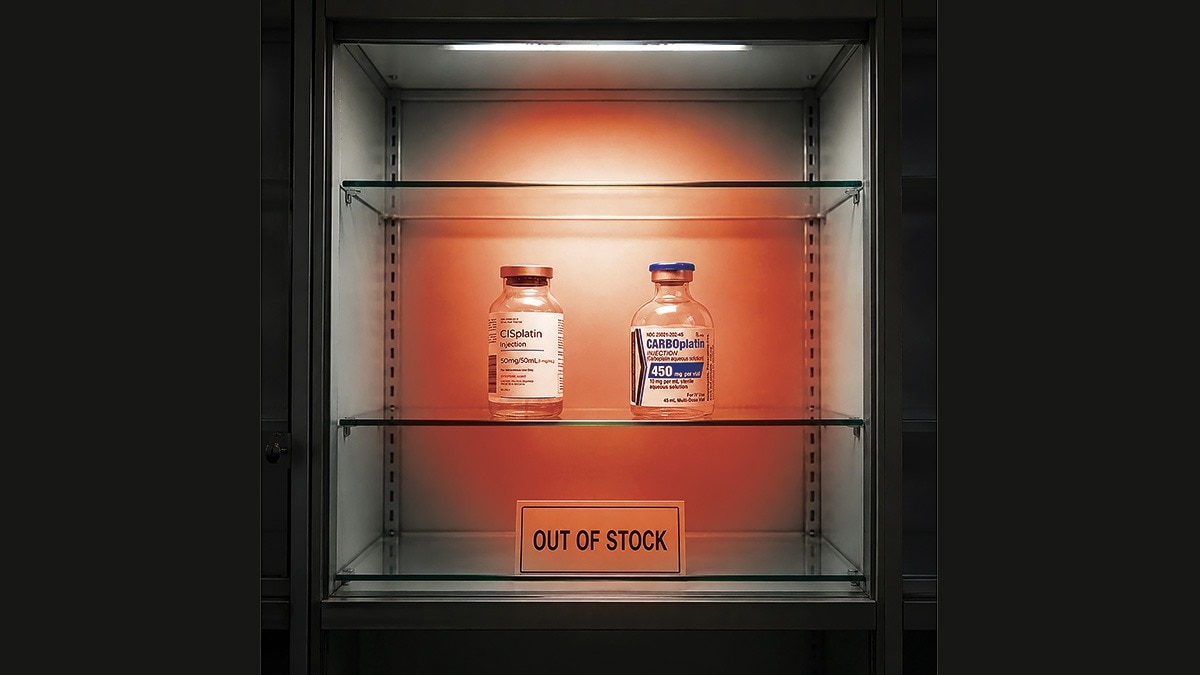
Doctors cautiously deliberate on substitutes and delayed treatment as a shortage of platinum-based chemotherapy drugs triggers a scramble for essential medicines(Illustration by Nilanjan Das / AI)(NOTE: This article was originally published in the India Today issue dated August 3, 2026)A cycle of fear and anxiety is rippling through many cancer patients in India. For 57-year-old Kaashvi Rao, a stage I ovarian cancer patient from Hyderabad, a routine chemotherapy session turned into a frantic search. Visiting her in-laws in Delhi, she had planned to receive her next cycle at Sir Ganga Ram Hospital. But the drug she needed was unavailable. Though advised to switch medicines, Rao chose to fly back to Hyderabad to continue treatment with the prescribed drug. Her experience reflects a shortage of two of India’s most widely used chemotherapy drugs—cisplatin and carboplatin. “India’s cancer centres are grappling with serious shortages of the most widely used chemotherapy medicines. This is not limited to one or two hospitals,” says Dr Bhawana S. Awasthy, director, Medical Oncology, CK Birla Hospital, Gurugram.The two platinum-based medicines are used to treat several cancers, including ovarian, cervical, lung, bladder, head and neck and gastrointestinal. They work by damaging the DNA of cancer cells, preventing them from multiplying. Platinum is the key active ingredient that enables these drugs to bind to cancer-cell DNA. A recent surge in global platinum prices, leading to falling exports from key producers like South Africa, coupled with supply-chain disruptions due to the Middle East war, has had a direct impact on manufacturing costs.The shortage first surfaced in May and worsened through June as soaring prices and government price caps squeezed manufacturers, forcing them to cease production. Hospitals, particularly government-run facilities, have reported dwindling stocks, forcing patients to hunt across pharmacies. Oncologists say that although substitutes exist, platinum-based drugs are essential to treat some cancers. Now, the Centre has moved in to improve supplies. In June, the National Pharmaceutical Pricing Authority (NPPA) approved a one-time 50 per cent increase in the ceiling prices of cisplatin and carboplatin after invoking special provisions under the Drug Price Control Order 2013. The temporary revision was cleared after manufacturers argued that soaring platinum prices had made production commercially unviable. Noting with concern the shortage, the NPPA said their “uninterrupted availability is critical for public health”. The revised prices came into effect on June 11 and will be reviewed after six months. Dr Awasthy, however, cautions, “The government has approved price hikes to encourage manufacturers to resume production, but the impact will take time to filter through.”DOCTORS’ DILEMMAThe shortage has forced oncologists to do a balancing act. Every patient without access to the two medicines is reviewed to determine whether another regimen can offer comparable outcomes or whether treatment should be deferred until the preferred medicine is available. Hospitals are coordinating with distributors, other centres and alternative procurement channels. “When a chemotherapy drug is unavailable, oncologists review national/ international guidelines, assess alternatives and discuss options with the patient,” says Dr Anil Thakwani, director, Radiation Oncology, Sharda Care Healthcity, Greater Noida. “If no acceptable substitute exists, treatment may be rescheduled briefly or the patient referred to a centre where the drug is available. The priority is to aim for the best chance of cure or disease control.”Doctors say the consequences of a shortage are not uniform. Whether a temporary change in chemotherapy affects treatment depends first on the type of cancer being treated and how strongly that particular tumour is treated by platinum-based drugs. For example, in testicular cancer, where cure rates are among the highest, and in several bladder, cervical and head and neck cancers, platinum-based drugs—particularly cisplatin—are the cornerstone of treatment, making substitutions challenging.Again, patients receiving chemotherapy with the aim of curing their cancer are managed differently from those receiving treatment to control advanced disease or improve quality of life. “In highly curable cancers, we have to be careful and rely on scientific evidence while choosing an alternative,” says Dr Vishwanath S., senior consultant, Medical Oncology, Apollo Hospitals, Bengaluru. In advanced cancers where the goal is disease control, an alternative regimen may sometimes have far less impact on overall outcomes.Doctors point out that modern chemotherapy protocols are backed by decades of clinical research. “All chemotherapy drugs are part of highly researched treatment protocols where leaving out even one component can reduce the efficacy of the regimen,” says Dr Deepak Jha, senior consultant, Surgical Oncology, Artemis Hospital, Gurugram. “Drugs like platinum compounds and ifosfamide are widely used in ovarian, breast, mouth and throat, gynaecological and other cancers. A shortage can affect treatment across a wide spectrum of cancers.”Oncologists say that changing chemotherapy drugs often changes the side-effect profile or triggers a whole new set—not necessarily more severe—that requires monitoring, supportive medicines and counselling. For example, cisplatin carries a higher risk of kidney damage, hearing loss and severe nausea and vomiting, while carboplatin is more likely to suppress blood counts, increasing the risk of anaemia, infections and bleeding. Other chemotherapy drugs, such as paclitaxel and docetaxel, are associated with nerve damage in the hands and feet.Alternative drugs, therefore, must be chosen only with utmost caution. “While doctors can often find alternative treatments, they are still alternatives. Whenever we are treating a patient with the hope of curing their cancer, even a small compromise is something we would prefer to avoid. Ensuring a steady supply of essential cancer medicines should be a priority,” adds Dr Vishwanath.MANAGING THE DEFICITThe shortage has prompted hospitals to manage cancer medicines differently. Instead of waiting until stocks run low, they are now tracking inventories closely, coordinating with other hospitals and reaching out to multiple suppliers.Experts say the episode should serve as a wake-up call. Platinum-based drugs have long been used in treating cancer, yet a disruption in raw material supply was enough to trigger a shortage. Better forecasting of demand, stronger coordination between manufacturers, hospitals and regulators and faster procurement mechanisms are essential to prevent such a situation.The crisis has also reinforced the importance of patient counselling. Unlike common illnesses, cancer therapy is planned over months. Doctors say uncertainty over drug availability can heighten anxiety and lead patients to make impulsive decisions, making shared decision-making as important as the medicines themselves. “It is completely understandable for patients and families to feel anxious. However, a shortage does not mean that treatment will be less effective,” says Dr Vishwanath. “Doctors should explain available options and what those choices mean for treatment. Honest conversations help reduce anxiety and allow patients to move forward with confidence.”Doctors are hopeful supplies will gradually improve as manufacturers respond to the revised price ceiling. For now, they agree on one message: patients should remain in close contact with their treatment team and seek help early if they are unable to access prescribed medicines.Subscribe to India Today Magazine- EndsPublished By: Shyam BalasubramanianPublished On: Jul 30, 2026 18:51 IST
Critical drugs scarce, how Indians are fighting cancer
Full Article
Original Source
Read the full article at Indiatoday →KhanList aggregates and links to publicly available news content. We do not host full articles from third-party sources. Always verify important information with original sources.