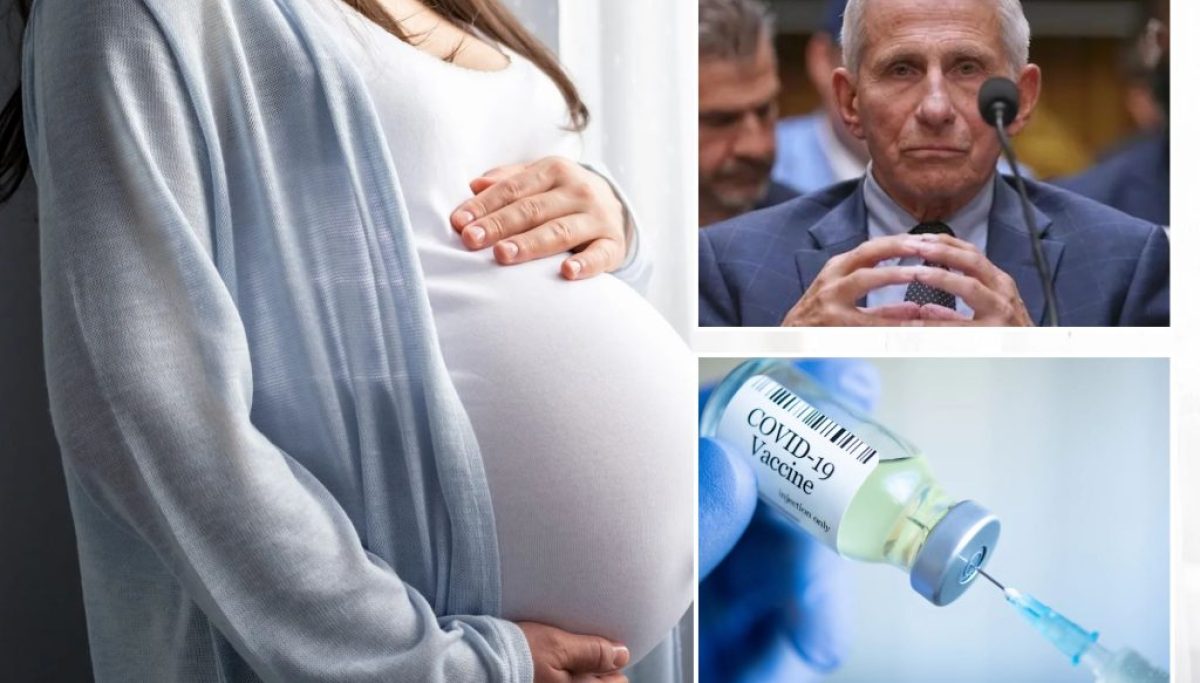
The recent release of text messages from Dr. Anthony Fauci, the face of the federal COVID-19 response, questioning the safety of COVID-19 vaccines has renewed concerns about them increasing miscarriage risk during early pregnancy. Sens. Rand Paul (R-KY) and Ron Johnson (R-WI) this week released never-before-seen texts from Fauci’s government-issued iPhone outlining that the former National Institutes of Allergy and Infectious Diseases director initially expressed worries about the multi-dose vaccine increasing miscarriage risk for expectant mothers in the first trimester of pregnancy. The text messages sparked a fiery online debate this week about how government officials may have withheld critical information from the public and renewed fears that the vaccines could put mothers and babies at risk. But knowledge of the effects of the vaccine today is much different from that of 2021, with the CDC and multiple research studies showing that COVID-19 vaccines do not increase a woman’s miscarriage risk more than the general population.Here is everything to know about the science and the controversy.Where does the claim about higher miscarriage risk come from? Following the release of the Fauci text message, commentators and journalists began sharing the statistic that 82% of pregnant women who received the COVID-19 vaccine during their first trimester of pregnancy miscarried. The claim is based upon a skewed interpretation of an April 2021 study published in the New England Journal of Medicine, which monitored pregnant women in a post-market safety review. The NEJM authors noted at the time of publication that they could not accurately calculate miscarriage risk for early pregnancy patients because 905 of the 1,224 participants lacked follow-up data. The 82% statistic came from a manipulation of the data, dividing the 104 women who miscarried by the 127 pregnancies that ended by the conclusion of the study among women who were vaccinated in the first or second trimester. Once the original researchers were able to follow up on the outcomes of more women, the miscarriage rate was comparable to pre-pandemic levels, which is between 10% and 20% of all pregnancies.What does the science show now about COVID-19 vaccines? The CDC website, updated in February, stresses that COVID-19 vaccines are safe for pregnant women and recommends pregnant mothers talk with their doctors about the risks and benefits of vaccination.“More than a million pregnant women around the world have received an mRNA COVID-19 vaccine, before and during pregnancy,” reads the CDC website. “Studies have shown no increased risk for complications like miscarriage, preterm delivery, stillbirth, or birth defects.”The CDC website also says receiving a COVID-19 vaccine during pregnancy “builds antibodies that can help protect the baby” and reduces hospitalization risk for infants younger than six months, who are not eligible for the vaccine. A CDC study published in March reviewed 23,000 pregnancies among women vaccinated between December 2020 and June 2021 and found that vaccinated pregnant women did not have more preterm births or perinatal deaths compared to the pre-pandemic population. But these studies have been criticized by vaccine skeptics because they were not randomized trials, in which women were assigned to either receive a vaccine or a placebo.Dr. Vinay Prasad, former head of vaccines at the Food and Drug Administration who left the agency this year, wrote in the Free Press following the release of the Fauci texts that the scientific community still does not fully understand the effects of COVID-19 vaccines, or other vaccine products, during early pregnancy. Prasad, while at the FDA, reformed COVID-19 vaccine recommendations to be based on “shared clinical decision-making,” a term for patients making healthcare decisions directly with their doctors.Prasad, who is highly critical of vaccine manufacturers and was an outspoken critic of vaccine mandates during the pandemic, said pharmaceutical companies have not run sufficient trials focusing on pregnant women before 24 weeks of pregnancy.“We altogether lack good evidence about vaccines early in pregnancy,” Prasad said. “It is possible COVID-19 vaccines increase miscarriage when administered early. A good scientist cannot say whether this is true or not. Again, we don’t know.”(iStock, AP) How do COVID-19 vaccines affect menstrual cycles? Reports during the COVID-19 vaccine rollout of the shot changing women’s menstrual cycles added to vaccine hesitancy among pregnant women at the time. Women highlighting changes to their menstrual cycle after getting the vaccine were frequently dismissed at the time, but newer evidence suggests the vaccine contributed to short-term but palpable changes to women’s periods.A 2023 study of nearly 10,000 women found those who received the COVID-19 vaccine were more likely to report heavy bleeding during their first period following the shot.Researchers used patient data from the digital fertility awareness app Natural Cycles, which allows women to record their period length and flow per day. The app asked women to record the timing of their COVID-19 vaccine and boosters, as well as the brand.While vaccinated women did not have a higher number of heavy bleeding days during the cycle immediately following their COVID-19 vaccine, a larger portion of vaccinated individuals reported experiencing an increase in total bleeding quantity after both vaccine doses. Differences between the vaccinated and unvaccinated women dissipated by the start of the second menstrual cycle after taking the vaccine.A separate 2025 study of more than 1,500 women found relatively small increases in cycle length when patients were vaccinated for flu and when they were concurrently vaccinated for flu and COVID-19. Nearly 5% of women who received only the flu vaccine experienced a change in cycle length by at least eight days. Another 6% had a similar cycle change after taking both the flu and COVID-19 vaccines. The authors of the study noted, “While small changes in menstrual health may not seem meaningful to many clinicians and scientists, any perceived impact in a routine bodily function linked to fertility can cause alarm and contribute to vaccine hesitancy.”What are the risks of getting COVID-19 while pregnant? Pregnancy has always been a heightened risk factor for severe disease from COVID-19 infections. In 2020, maternal deaths in the U.S. rose to 861 from 754 the previous year. During the delta variant wave in 2021, maternal deaths increased again to 1,205, according to the CDC. Pregnant women faced a 70% higher risk of death from a COVID-19 infection than non-pregnant women, according to the CDC. Roughly 1 in 3 pregnant women who had COVID-19 from January to June 2020 were hospitalized compared with about 6% of nonpregnant women of the same age. The current CDC website says that getting sick with COVID-19 during pregnancy puts a woman “at increased risk of complications that can affect your health and the health of your baby.”FAUCI APPROVED OF COVID-19 VACCINE STUDY ON PREGNANT WOMEN AFTER HE PRIVATELY THEORIZED INJECTION’S MISCARRIAGE RISKBut the virus has evolved and become less deadly than in the initial years of the outbreak. Prasad said these changes make it even more important to discuss the risks and benefits of vaccination with your physician.“The lethality and severity of COVID-19 in pregnant women is completely diminished,” Prasad wrote. “COVID is not the devastating force it once was. Whether vaccinating a mother close to delivery protects the baby is still a hypothesis in need of study, but the risk to a pregnant woman is not a salient concern.”
COVID-19 vaccines during pregnancy: What we know now
Full Article
Original Source
Read the full article at Washingtonexaminer →KhanList aggregates and links to publicly available news content. We do not host full articles from third-party sources. Always verify important information with original sources.