
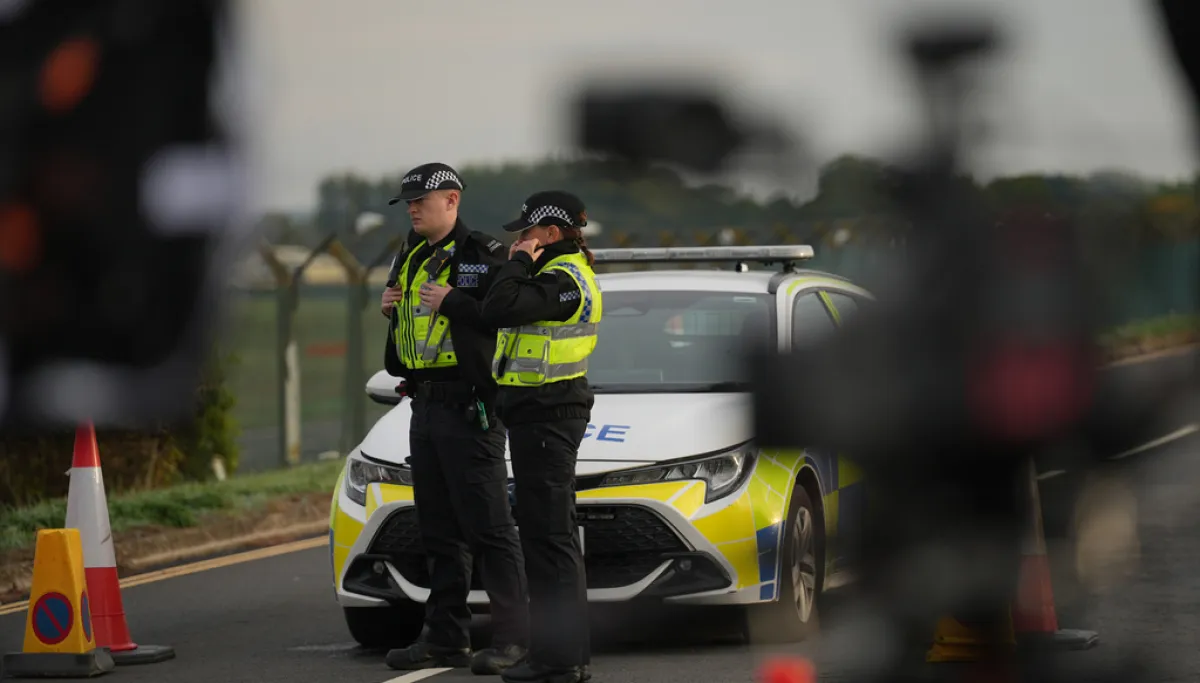
Five suspects believed to have been planning an attack on a U.S. Air Force base in the United Kingdom have been released on bail. The announcement of the men’s release on Monday has sparked raised eyebrows on both sides of the Atlantic.The arrest of the five British men of Middle Eastern or South Asian descent was dramatic. It came late on Saturday night following a call from a member of the public who reported a group of men in masks behaving suspiciously near RAF Fairford. While technically a British Royal Air Force base, RAF Fairford is U.S.-operated and home to heavy bomber aircraft. Some of these aircraft have been involved in the war against Iran.Responding to the emergency call, armed police (most U.K. police are unarmed) detained the men and searched the three vans they had been driving. The men were subsequently arrested on suspicion of explosives offenses. They were then further arrested on suspicion of terrorism offenses. Numerous homes near the arrest site were evacuated over fears related to the apparent explosives. Under U.K. law, terrorism suspects can normally be detained for up to 14 days without being charged. It has surprised many, then, that the men have been released barely 24 hours after their initial arrest. But this most likely theory for why this occurred is an inadvertent collision between covert and overt security operations targeting the men. It seems likely that the plotters were under surveillance by Britain’s MI5 domestic intelligence service and Counter-Terrorism police at all times on Saturday. But that a panicked call by a member of the public then led the local police force near RAF Fairford (Gloucestershire Police) to intervene, unaware of the MI5 operation.That intervention appears to have occurred before MI5/Counter-Terrorism police had gathered sufficient evidence for optimal prosecutions. The suspects have now been released under intensive counterterrorism supervision by the authorities. This quick-release decision allows for the men’s possible 13-day (14-1 day already served) detention at a future point if more evidence is accumulated.The best suggestion of a collision of covert versus overt security operations comes from comments by President Donald Trump and U.K. Defense Secretary Wes Streeting. And by the fact that RAF Fairford was put on higher alert two weeks ago.Shortly after the arrests, Trump referenced RAF Fairford (albeit calling it a “Fort”), and commented that, “The arrest in the U.K. was fantastic. Working with Britain, it was an amazing job. … We had them under investigation. They were looking to do big damage. … We had them under view for a long time, and we got them.”This is a clear suggestion that U.S. authorities were aware of the investigation into the men well in advance of Saturday, and that Trump believed the arrest was pre-planned. Streeting further added that the member of the public who called the police only “had a partial picture” of what happened. He added, “I won’t go beyond that, in terms of commenting on operational security matters.” Again, this is a clear suggestion that the men were under covert surveillance.This leaves us with a few considerations.First, that this threat, at least in the aspiration of the suspects, was likely real. Were the men pranksters or protesters, we wouldn’t have seen Trump’s comments nor U.K. Prime Minister Andy Burnham calling an emergency national security council meeting. Terrorists sometimes use multiple vehicle explosive attacks in succession in an effort to break through security barriers and then conduct further attacks. But it is also inconceivable that U.K. authorities would allow terrorists to make the nearly two-hour drive from London to RAF Fairford while in possession of viable explosives in multiple vans. Even if a contained arrest site was established right outside of RAF Fairford, any improvised explosive devices might have been detonated there or accidentally somewhere else.Second, it’s worth noting that counterterrorism services sometimes clandestinely replace the explosives a terrorist cell is planning to use with inert/otherwise harmless substances. Was the intent thus to arrest the men as they attempted to detonate their explosives in a contained environment at RAF Fairford? Did MI5/Counter-Terrorism police believe this was a dry-run operation late at night to prepare for a daytime attack that would maximize casualties?WHY CHINESE DELEGATIONS ARE SO RUDEThird, there seems to have been a screw-up somewhere along the way. Why didn’t MI5 or Counter-Terrorism police have an officer in the Gloucestershire Police control room to mitigate against the risk of calls from the public, for example?Fourth, authorities will continue to conduct intelligence operations related to this incident over the coming days. Future arrests are probable.While the ultimate culprit of this plot is unclear, Iran is the primary suspect. The country has had success in infiltrating terrorists onto U.K. soil, and has been involved in numerous serious attack plots against the U.K. over the past 18 months.
Covert MI5 vs. overt police: Why did the UK release the US air base terrorism suspects?
Full Article
Original Source
Read the full article at Washingtonexaminer →KhanList aggregates and links to publicly available news content. We do not host full articles from third-party sources. Always verify important information with original sources.