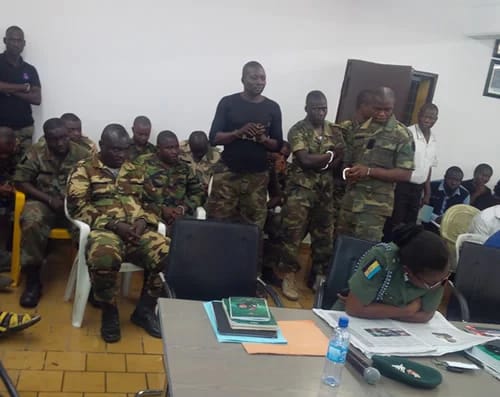
The National Industrial Court of Nigeria (NICN), sitting in Lagos, has ordered the immediate reinstatement of 70 soldiers of the Nigerian Army who were convicted by courts-martial in 2014 but later granted presidential pardon by former President Muhammadu Buhari. The court also directed the Nigerian Army to pay the soldiers all salaries, allowances and other emoluments accruing from July 18, 2022, up to the date of their actual physical reinstatement. According to a press release issued by Tayo Soyemi of Falana & Falana Chambers, in a landmark judgment delivered on July 20, 2026, Justice S.A. Yelwa held that the unconditional presidential pardon granted to the soldiers under Section 175 of the 1999 Constitution completely erased their convictions, sentences and dismissals from the Nigerian Army, thereby restoring their legal status and entitling them to reinstatement. The suit, marked NICN/LA/54/2023, was instituted by the 70 soldiers against the Attorney-General of the Federation and the Chief of Army Staff after the military authorities allegedly failed to act on their request for reinstatement despite the presidential pardon. The claimants, through their legal attorneys, Falana & Falana Chambers, sought declarations that the presidential pardon wiped out their convictions and dismissals, an order compelling their reinstatement into the Nigerian Army, and payment of all outstanding salaries and allowances dating back to December 17, 2014. The soldiers were among Nigerian Army personnel tried before various courts-martial in 2014 over offences bordering on conspiracy and mutiny. They were initially sentenced to death, but following administrative review, their sentences were commuted to ten years’ imprisonment. After serving their prison terms, former President Muhammadu Buhari exercised his constitutional prerogative of mercy under Section 175 of the Constitution by granting them an unconditional presidential pardon through the Instrument of Grant of Pardon, 2022, published in the Federal Republic of Nigeria Official Gazette No. 137, Volume 109, dated July 29, 2022. Armed with the pardon, the soldiers, through Falana & Falana Chambers, wrote to the Chief of Army Staff on November 7, 2022, demanding their reinstatement and payment of outstanding salaries and allowances. The Army Headquarters acknowledged receipt of the letter on November 9, 2022, but allegedly failed to respond, prompting the suit before the National Industrial Court. Counsel to the claimants, Funmi Falana, SAN, leading Chukwuma Onwumene, argued that the presidential pardon completely extinguished every legal consequence of the convictions, including the soldiers’ dismissal from service. Relying on Section 175 of the Constitution, as well as Nigerian, English and American judicial authorities, counsel contended that a full presidential pardon transforms the beneficiaries into “new men” in the eyes of the law, restoring all rights and privileges forfeited by reason of conviction. The claimants maintained that since their dismissal flowed directly from their convictions by courts-martial, the presidential pardon automatically nullified the legal foundation upon which the dismissals were based. They consequently urged the court to order their reinstatement and payment of all salaries and allowances lost since December 2014. However, the Attorney-General of the Federation, represented by Mrs. Omobolanle Aina, opposed the claims. The Federal Government argued that although a presidential pardon forgives the offence and restores civil rights, it does not erase the historical fact that a conviction occurred. Counsel further submitted that reinstatement into employment does not automatically follow a pardon but depends on the applicable service rules governing the employer. She also argued that salary arrears could not be awarded for periods during which the claimants neither worked nor rendered any service to the Nigerian Army. The Chief of Army Staff, however, neither entered appearance nor filed any defence throughout the proceedings. After reviewing the affidavit evidence and legal submissions, Justice Yelwa held that the documentary evidence before the court conclusively established that all 70 claimants were beneficiaries of the presidential pardon granted on July 18, 2022. The judge held that the Official Gazette constituted conclusive proof of the pardon and that the Chief of Army Staff failed to challenge the claimants’ evidence or explain why their request for reinstatement was ignored. Justice Yelwa rejected the argument that the dismissals could survive the presidential pardon. According to the court, the dismissals were direct penal consequences of the courts-martial convictions and not independent administrative decisions. The judge ruled that once the President exercised his constitutional power of mercy under Section 175, the legal foundation upon which the dismissals rested ceased to exist. The court stated that allowing the dismissals to remain effective despite the unconditional pardon would amount to subordinating the President’s constitutional powers to administrative decisions of the military authorities. Justice Yelwa further held that although reinstatement requires an administrative process by the Nigerian Army, the claimants had acquired an enforceable legal right to be restored to service because the constitutional barrier to their employment had been completely removed. The judge described the Army’s failure to act on the soldiers’ demand for reinstatement as an administrative omission capable of judicial correction. On the salary claim, the court declined the claimants’ request for salaries and allowances covering the period between December 17, 2014, and July 17, 2022. Justice Yelwa held that although the pardon erased the legal consequences of the convictions, it did not retrospectively create an entitlement to salaries for years during which the claimants neither served in the military nor performed official duties because they were incarcerated. The judge observed that the Instrument of Grant of Pardon did not direct payment of retrospective salaries and that the claimants also failed to produce any contractual provision or condition of service supporting such entitlement. Accordingly, the court held that their entitlement to salaries and other emoluments could only commence from July 18, 2022, the effective date of the presidential pardon. In its final orders, the National Industrial Court declared that the presidential pardon completely wiped out the claimants’ convictions, sentences and dismissals from the Nigerian Army and that the soldiers are legally entitled to reinstatement. Justice Yelwa consequently ordered the Chief of Army Staff to immediately reinstate all 70 soldiers with effect from July 18, 2022. The court also directed the defendants to pay the claimants all salaries, allowances and other emoluments accruing from July 18, 2022, up to the date of their actual physical reinstatement. However, the claim for salaries and allowances covering December 17, 2014, to July 17, 2022, was dismissed. The court made no order as to costs. The decision is regarded as one of the most significant judicial pronouncements on the constitutional scope and legal consequences of the President’s prerogative of mercy under Section 175 of the Constitution, particularly regarding its impact on the employment rights of members of the Armed Forces convicted by courts-martial.
Court Orders Reinstatement of 70 Pardoned Soldiers, Directs Army to Pay Salaries from July 2022
Full Article
Original Source
Read the full article at Thisdaylive →KhanList aggregates and links to publicly available news content. We do not host full articles from third-party sources. Always verify important information with original sources.