
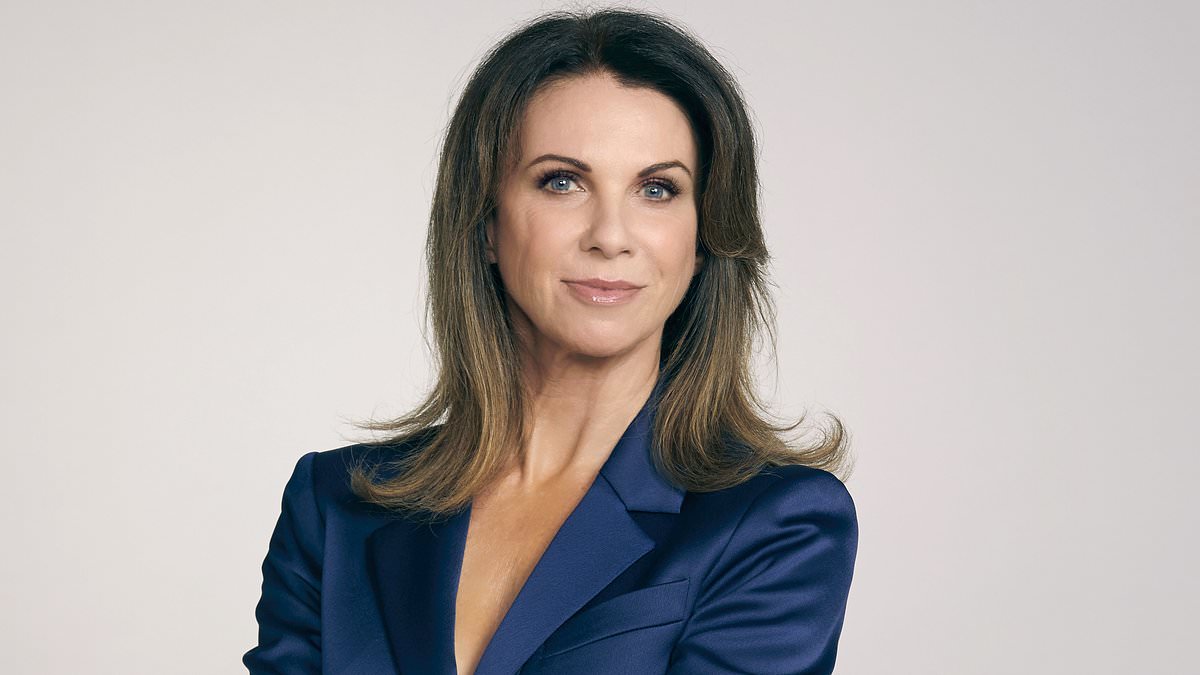
Anyone who has ever had couples therapy will have wondered, ‘What’s he/she really thinking?’.You’re sitting on the sofa, they’re in their chair looking unreadable and serene, even when you’re shouting into your partner’s face. What’s really going on behind that calm façade?I found a female therapist who agreed to tell all. She has to remain anonymous, but is 45 and married, with more than 20 years’ experience in counselling couples. These are the thoughts that are running through her head while you’re sitting in front of her. British relationship expert Tracey Cox (pictured) has chatted to a couples therapistWhich one of you wants to be here?I can usually tell within minutes which partner was dragged in and who booked the appointment. Their body language gives it away. One person is leaning forward and listening intently, the other is looking at the clock, with their body turned slightly towards the door.How have you lasted this long?Some couples are so ill suited, I wonder how they ever got together in the first place. Asking how a couple met is a quick way to sum up what hope there is. If their face softens when they tell their story, it’s a good sign.Working out why they’ve stayed in a terrible situation – love, habit, kids, fear, money – is crucial to being able to give the right steer. Some couples arrive with ultimatums that are completely unworkable, but they won’t budge an inch. They expect you to dissolve decades of silent resentment in one or two sessions.What aren’t you telling me?Affairs, secret debts, a partner who has already quietly left the relationship and going through the motions to help ease the blow. The most important information can be the thing that isn’t said. I’m constantly looking in the gaps to attempt to make sense of their words.Stop interrupting each otherEveryone’s on best behaviour to start with. But their usual patterns quickly reveal themselves.I feel like an air-traffic controller sometimes. Couples get stuck in a loop of blaming and defending. They’ll replay the same fight over and over while you desperately try to find a way to derail the circular thinking. They don’t listen when the other speaks. They spend the time rehearsing their rebuttal.That’s not what you’re really arguing aboutNo-one is that fussed about bins and dishwashers. They’re arguing about feeling ignored, underappreciated or unimportant. I keep them talking and let the room be silent for a little while. That’s often when the magic happens: they’re forced to think of something they haven’t already said. What’s the real fight?God, this is hard workWe might look like we’re calm and detached but it’s an intense balancing act. You’re not just monitoring one person’s needs and emotions; you’re watching two, often emotional people simultaneously, on full alert for points when they could connect. You’re using clinical strategy but always trying to remain empathetic. I’ll often feel compassion for both partners simultaneously, even when they’re at war. It’s obvious to me that they’re both desperate for love and acceptance but fighting like dogs isn’t going to get it.Flirting with me isn’t going to workI've had more than a few men flirt with me in sessions. Some do it to try to win you over, so you’ll be sympathetic to them. Others do it to try to discredit you. They’re aware they’ve been manipulating their partner and are about to get found out: Don’t listen to her! Look, she’s flirting with me! You aren’t allowed to have a sexual or romantic relationship with a current client, for obvious reasons. It’s frowned on after therapy is over, as well.Don’t waste the session trying to figure out whose side I’m onMost people assume their partner is the one with the problem and think all they have to do is turn up and the therapist will tell them they’re in the wrong.In nearly all cases, both parties contribute to the problem – even if one is clearly ‘bad’, the other might be an enabler.Did I just say the wrong thing?Even experienced therapists have that moment when you think, ‘Holy s***. Did I play that wrong?’. Someone goes really quiet or gets super defensive. Did it sound like I was taking his side then? You have to push people sometimes to get them to see through all the stuff they’ve been believing that isn’t helping them. I’m human. Sometimes I get it wrong and push too hard at the wrong time.Knowing when to bite your tongue is also critical. You have to judge when to intervene and when to let them ramble on, even if it’s achieving little.Are you guys ever going to take any of my advice?I have a mix of hope and cynicism. You can have a huge breakthrough and think the couple have really turned the corner and then they’ll walk back in the following session and have reverted straight back to what they were. Change is hard to maintain for people. But sometimes you’re getting through more than you realise.What did you just say? I missed thatTherapists are still people. We have our own problems and issues to deal with in life, too. Sometimes, if a couple are going on and on, my mind will wander and I’ll think about something I need to get on the way home.You can’t say, ‘Sorry, I drifted on just then. Can you repeat all that?’. They’re paying for your full attention. You can usually get out of it by asking, ‘So what are you hearing each other say right now?’. But every therapist occasionally has moments when you realise the couple have stopped talking and are waiting, expectantly, for you to offer insight into something you weren’t paying attention to.It’s too late to save youIf there’s love and affection there and the couple have just lost their way, you can help enormously. Everyone can learn relationship skills like how to argue fairly and better ways to deal with feelings like anger and jealousy. These are the really rewarding cases: when both people are wanting to change and learn.What’s difficult is when there’s so much anger and resentment, neither wants to budge. These are the couples who wait years before coming and they’re already at breaking point. There are so many layers of negative emotions, it’s impossible to get them to the point where they’re able to be vulnerable. Most couples come to counselling in crisis: one has had an affair or wants to leave the relationship. I can help at this point – even if it’s just to make the breakup less traumatic - but it would have been a whole lot easier if they’d come when the problems started.ChatGPT is NOT an objective judgeI don’t mind couples using AI to get insights. But problems arise when it’s seen as a totally impartial judge. AI isn’t objective because it’s usually only hearing one side of the story and the information you feed it is nearly always biased towards you. Also, I’d much prefer the couple to talk to each other than to a bot.Is it my fault that it’s over?I sometimes feel a deep sense of failure when couples can’t move forward. When it’s obvious it’s the end, the therapy changes from fixing to helping the couple to split with the least pain possible. It’s rare for both to agree it’s time to give up trying and these sessions are the most upsetting. It’s awful witnessing someone in so much pain and not being able to prevent it. You’re taught how to disconnect and create boundaries to prevent burnout, but you can’t help but feel disappointed with yourself. We know we’re therapists not magicians but it’s still unpleasant.Visit traceycox.com for more information on Tracey’s books and products.
Couples therapist tells TRACEY COX the exact moment when it's too late to save your relationship - and admits men flirt with her in sessions
Full Article
Original Source
Read the full article at Dailymail →KhanList aggregates and links to publicly available news content. We do not host full articles from third-party sources. Always verify important information with original sources.