
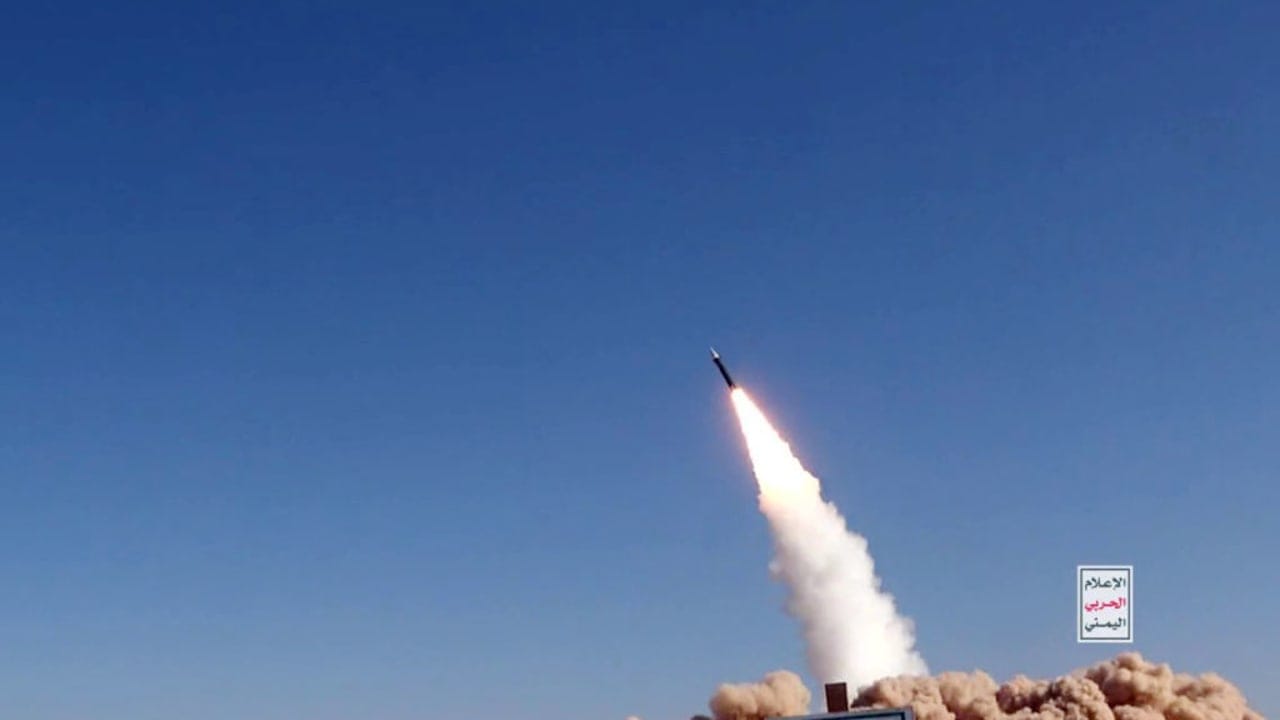
Houthi attacks on Riyadh’s King Khalid International Airport on October 8, 10, and 11 killed at least 16 people. The deadliest strike, on October 10, killed 12 people and injured 309 others. On October 13, another attack damaged an administrative building at Saudi Aramco’s headquarters in Dhahran. Saudi forces have intercepted numerous incoming weapons, but others have reached their targets despite the billions of dollars the kingdom has spent on air defenses.For more stories from The Media Line go to themedialine.orgWhy are missiles and drones still getting through, and could Israeli technology help Saudi Arabia stop them?Israel has spent decades developing defenses against different types of aerial threats. Some have already been supplied to the United Arab Emirates. In May, US Ambassador to Israel Mike Huckabee confirmed that Israel had sent Iron Dome batteries and personnel to help defend the UAE against Iranian attacks.There have also been reports of Saudi-Israeli discussions about sharing intelligence through American military channels. Neither government has confirmed such an arrangement, but it raises the possibility of cooperation that would have been politically difficult to imagine only a few years ago.Why are Saudi defenses struggling?Saudi Arabia operates American-made Patriot missile batteries and Terminal High Altitude Area Defense (THAAD), which is designed to intercept ballistic missiles at high altitude. The kingdom’s first THAAD battery became operational in July 2025, according to the Saudi Press Agency.Illustrative image of Saudi crown prince Mohammed bin Salman (credit: Canva, GoodFon, REUTERS/Nathan Howard/Pool)These systems provide substantial protection, but the Houthis have weapons designed to exploit different weaknesses.Ballistic missiles climb high into the atmosphere before descending at high speed toward their targets. Cruise missiles fly more like pilotless aircraft, sometimes close enough to the ground to escape radar detection until late in their flight. Drones can be smaller, slower, and much less expensive than the missiles used to shoot them down.A defender facing multiple weapon types at once must identify each threat, choose the right interceptor, and respond before the weapons reach their targets.A 2020 study by the Center for Strategic and International Studies, The Missile War in Yemen, documented the Houthis’ growing arsenal of missiles and drones, developed with Iranian assistance, and their repeated attacks on Saudi territory.The Houthis have since improved their capabilities. Regional officials told the Associated Press that investigators believe drones were launched ahead of cruise and ballistic missiles during the recent attack on Riyadh’s airport. If confirmed, the sequence would suggest an attempt to stretch Saudi defenses by presenting several threats in quick succession.The kingdom has faced similar problems before.After the September 2019 attacks on the Abqaiq and Khurais oil facilities, Washington Institute for Near East Policy researchers Michael Knights and Conor Hiney examined gaps in Saudi radar coverage and weaknesses in the coordination of its defenses.The weapons appeared to approach from the north, while much of Saudi Arabia’s defensive posture was oriented toward threats from the east. Low-flying missiles and drones could take advantage of radar blind spots created by terrain, the curvature of the Earth, and the limitations of individual sensors.The researchers recommended better coordination among existing radars, command systems, and interceptors, rather than relying solely on additional missile batteries.Saudi Arabia’s geography presents another problem. The kingdom covers nearly 2.15 million square kilometers, approximately 78 times the combined land area of Israel and the West Bank. Its cities, airports, refineries, oil fields, military bases, and ports are scattered across enormous distances.Israel’s much smaller geographic area lets some defensive systems cover several population centers or installations. Saudi Arabia needs far more widely distributed equipment, even though large stretches of sparsely populated desert do not require the same protection as major cities or oil facilities.Cost is another concern. An inexpensive drone can force defenders to fire an interceptor worth hundreds of thousands or even millions of dollars.A drone is displayed in an exhibition held by the Houthis to mark the 'Martyrs Week' in Sanaa, Yemen November 17, 2024. (credit: KHALED ABDULLAH/REUTERS)Dr. Sidharth Kaushal of Britain’s Royal United Services Institute discussed the depletion of Gulf interceptor stocks and the difficulty of replacing them quickly in an April 2026 BBC interview. The Financial Times reported this week that Saudi Arabia was struggling with interceptor shortages and ongoing gaps in radar coverage.Interception does not always prevent casualties. On October 13, debris from intercepted cruise missiles injured four people and damaged 15 homes in Riyadh, according to Saudi Civil Defense.Which Israeli systems could help?Israel’s air defenses rely on several systems that operate at different ranges and altitudes. Iron Dome is the best known, but other Israeli weapons may be better suited to some of the threats Saudi Arabia faces.Iron Dome was developed to intercept short-range rockets. Its radar tracks incoming projectiles and calculates where they are likely to land, allowing the system to focus on threats to populated areas or key installations.Upgrades have expanded its ability to engage drones and cruise missiles. Iron Dome batteries could protect individual Saudi sites, but their coverage is too limited to defend much of the kingdom’s territory.David’s Sling, developed jointly by Israel and the United States, is designed to intercept cruise missiles, certain ballistic missiles, aircraft, and drones. Tests conducted in February 2026 included improvements intended to address newer aerial threats.Arrow 2 and Arrow 3 are intended mainly for ballistic missiles. Arrow 3 can intercept suitable targets outside the atmosphere, before they descend toward the ground. Israel has used Arrow-family defenses against missiles launched from Iran and Yemen.Such systems could strengthen Saudi Arabia’s ballistic-missile defenses, but they would not solve the problem of detecting and intercepting a small drone approaching an airport at low altitude.Two less familiar Israeli products could be especially useful for defending individual installations.Rafael’s mobile SPYDER system is designed to engage aircraft, drones, and cruise missiles. Israel Aerospace Industries manufactures Barak MX, which uses different interceptors against aircraft, drones, cruise missiles, and some ballistic threats.Either could potentially complement Saudi Arabia’s existing defenses around oil facilities, airports, or military bases, provided the equipment could be integrated into the kingdom’s command and radar networks.Iron Beam offers a different approach. Instead of firing an interceptor missile, it uses a powerful laser to destroy certain short-range threats. Israel delivered its first operational system to the military in December 2025.The attraction is partly financial: Firing a laser can cost far less than using a missile against a relatively inexpensive drone.Its limitations are substantial, particularly in Saudi Arabia. Lasers need a clear line of sight, and dust, haze, clouds, and distance can reduce their effectiveness. They cannot replace longer-range defenses against ballistic missiles.Israel also operates C-Dome, a naval adaptation of Iron Dome that could help protect ships and offshore installations.Which systems would be most useful to Saudi Arabia would depend on the targets it wanted to protect, the weapons it expected to face, and the equipment it already possessed.How has Israel helped defend the UAE?The United Arab Emirates offers the clearest example of Israeli air defense technology being used by an Arab country.After Houthi attacks on Abu Dhabi in early 2022, Israeli defense sources told Breaking Defense that an agreement to supply Rafael’s SPYDER system was nearing completion. The publication subsequently reported that an Israeli-made Barak air defense system had been deployed in the UAE, although the precise model was not identified.The two countries had established diplomatic relations under the 2020 Abraham Accords, removing a major obstacle to military purchases.UAE Ambassador to Israel Mohamed Al Khaja and Israeli President Isaac Herzog at the opening ceremony of the United Arab Emirates embassy in Tel Aviv (credit: MIRIAM ALSTER/FLASH90)Their cooperation reportedly expanded during the 2026 war involving Iran.On May 12, Huckabee publicly confirmed that Israel had sent Iron Dome batteries and personnel to help operate them in the Emirates, according to the defense publication Janes.The Financial Times reported that Israel had supplied additional equipment, including a version of Iron Beam, surveillance technology, and real-time intelligence about Iranian missile launches.Those details have not all been independently confirmed. An October study by the International Institute for Strategic Studies discussed the reported laser and surveillance deployments but did not independently verify that they took place. Janes also noted that Huckabee’s remarks did not confirm those specific transfers.There is no public accounting of how many incoming weapons were intercepted by Israeli systems operating in the UAE.Still, the deployment of Iron Dome batteries and personnel establishes that the Israeli-Emirati defense relationship has moved beyond ordinary equipment sales. That experience may offer lessons for Saudi Arabia, although Riyadh has not normalized relations with Israel.Could Saudi Arabia obtain Israeli assistance without normalizing relations?Intelligence sharing would probably be easier to arrange than a weapons sale.Information about missile launches and flight paths could potentially be relayed through American military channels, giving Saudi crews more time to prepare an interception without requiring Israeli launchers or personnel on Saudi territory.Regional arrangements already support this kind of cooperation. In January 2026, US Central Command announced the establishment of a multinational air- and missile-defense coordination cell at Al Udeid Air Base in Qatar. It aims to improve information sharing, joint planning, and coordination among regional military partners.Israeli media reports suggest that Saudi-Israeli intelligence cooperation may already be taking place.In September, The Jerusalem Post reported, citing a regional diplomat, that the two countries had discussed intelligence assistance through US Central Command. Ynet and Israel Hayom also reported, citing diplomatic and security sources, that Israeli intelligence was reaching Saudi Arabia through American channels.Neither government has publicly confirmed those accounts, and it is unclear what information, if any, is being shared.The Media Line reported in September that senior military commanders from Israel, Saudi Arabia, and six other Middle Eastern countries had attended a US-organized security meeting in Germany. US Central Command confirmed the gathering, but it did not establish a formal military alliance.Saudi political analyst Abdulaziz Alshaabani warned against assuming that such contacts would lead to open military cooperation.“Any intelligence coordination would likely remain limited and pragmatic, while Riyadh continues to rely primarily on its own security mechanisms and broader regional frameworks,” Alshaabani told The Media Line.Purchasing Israeli missile defenses would raise additional problems.Israel would have to authorize the export, and Saudi Arabia would need arrangements for training, maintenance, software, spare parts, and replacement interceptors. Some Israeli systems would also require American approval because of US involvement in their development.Germany’s purchase of Arrow 3, for example, required Washington’s consent.Political considerations could be harder to overcome than the technical requirements.Saudi Arabia has repeatedly insisted that diplomatic relations with Israel depend on the establishment of a Palestinian state. Its Foreign Ministry reiterated in February 2025 that it would not normalize relations without an independent Palestinian state with east Jerusalem as its capital.A publicly acknowledged purchase of Israeli weapons would be considerably more difficult for Riyadh to explain than intelligence cooperation conducted through American military channels.Saudi Arabia has not publicly announced an agreement to purchase Israeli missile defense systems, nor has it officially confirmed that negotiations for such a deal are underway.Would Israeli technology solve the problem?Israeli missile defense systems could strengthen Saudi Arabia’s defenses, but acquiring and deploying them would take time.Saudi Arabia would need its own launchers, radars, trained crews, and interceptor supplies. Iron Dome batteries stationed in Israel are too far away to protect Riyadh. Any new equipment would also have to operate alongside the kingdom’s existing Patriot and THAAD systems.Israel has its own shortages to consider after prolonged fighting with Iran and the Houthis. Its military needs to replenish interceptor stocks, which could limit the equipment available for export.Saudi Arabia is also seeking assistance from established defense partners, including the US, Britain, France, Turkey, and Pakistan. Those relationships offer alternatives without the political complications of buying weapons from Israel.Protecting civilians remains important even when interception fails. Reuters reported that Saudi Arabia stopped issuing public warnings of imminent attacks after September 29, leaving residents without official alerts before the deadly airport strikes. Warnings later resumed, including alerts issued by Saudi Civil Defense for Riyadh and Al-Kharj on October 14.For Saudi Arabia, earlier warning of incoming attacks may be more immediately useful than new missile batteries. Better intelligence could help its existing defenses respond sooner, while new equipment would require procurement, deployment, and training.A Saudi purchase of Israeli missile defenses would be a much bigger step, requiring decisions in Riyadh, Jerusalem, and possibly Washington. In the meantime, Saudi forces must defend widely separated cities and installations against missiles and drones that can approach from different directions, often with little warning.
Could Israeli technology aid Saudi Arabia's struggles to stop Houthi missile attacks? - analysis
Full Article
Original Source
Read the full article at Jpost →KhanList aggregates and links to publicly available news content. We do not host full articles from third-party sources. Always verify important information with original sources.