
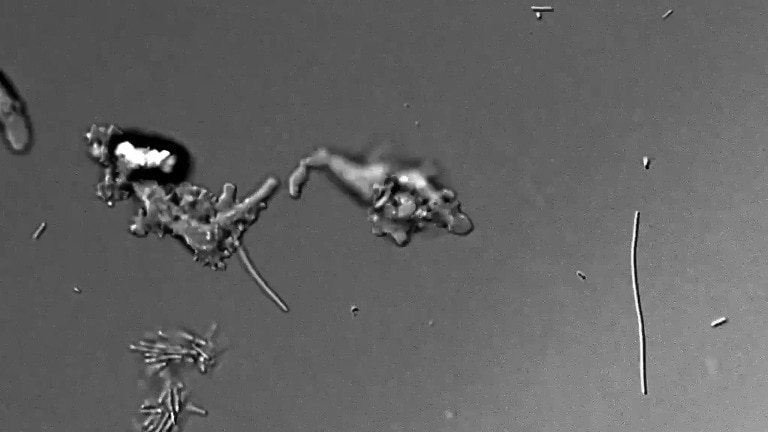
A tiny organism living in a hot spring in California has just pushed back the known limits of how much heat complex life can withstand.Scientists have discovered a previously unknown amoeba, Incendiamoeba cascadensis, that can reproduce at 63°C, marking a temperature previously considered beyond the upper limit for complex cells of 60°C.An amoeba is a microscopic, single-celled living organism that can seamlessly change its shape.The discovery carries significance for humans, as this finding leads to the possibility of them weathering temperatures previously believed to be fatal. A tiny amoeba broke complex life’s heat record and could broaden the search for habitable worlds.NASA-supported researchers found the first known eukaryote able to reproduce at 145°F (63°C), hotter than scientists thought complex cells could withstand. pic.twitter.com/iXDNKhDAIt— NASA Solar System (@NASASolarSystem) September 22, 2026 The Nasa-supported research, published in the journal Cell, sets a new heat-tolerance record for known eukaryotes, organisms whose cells contain a nucleus.The discovery was made in geothermal waters at Lassen Volcanic National Park in California, where researchers collected samples from hot streams. The organism, nicknamed the “fire amoeba”, was able to keep moving and searching for food at 64°C. In laboratory tests, it could also recover after being exposed to 70°C for five minutes, although 80°C was too much for it to survive.WHY IS THIS AMOEBA BEYOND WHAT WE KNOW?It starts with the fact that heat is particularly challenging for complex cells. Lead author Beryl Rappaport collecting samples of Incendiamoeba cascadensis in California. (Photo: Nasa) High temperatures can damage proteins, break down cell membranes and harm genetic material. Unlike simpler organisms such as bacteria and archaea, eukaryotic cells contain several delicate internal structures that can be damaged by extreme conditions.Before this discovery, the known upper temperature limit for eukaryotic life was around 60°C, recorded in a few species of fungi and red algae.The new amoeba has therefore extended that boundary by about 3°C.The researchers also found clues to how it manages the heat.Its genes include mechanisms linked to protecting DNA and maintaining proteins, while the organism can change its shape and form a protective outer layer when temperatures rise.HOW WILL IT HELP DISCOVER LIFE AWAY FROM EARTH?The discovery, however, might carry relevance far and wide, beyond one unusual creature in a California hot spring.Scientists studying “extremophiles”, which are organisms that survive conditions hostile to most life, use them to understand the outer boundaries of life on Earth.That knowledge can also guide the search for life elsewhere, including worlds such as Mars, where conditions are far less hospitable than on Earth.It does not mean a complex life could simply survive anywhere if the temperature is right. The researchers stressed that life also needs suitable water, acidity, oxygen, pressure, food and a supporting ecosystem.But the fire amoeba shows that one of the assumptions about where complex life hits its limits was too restrictive. That finding alone widens the range of environments scientists may need to consider, both on Earth and beyond it.- EndsPublished On: Sep 23, 2026 15:38 IST
Could humans survive 65°C temperature? An amoeba just showed it can
Full Article
Original Source
Read the full article at Indiatoday →KhanList aggregates and links to publicly available news content. We do not host full articles from third-party sources. Always verify important information with original sources.