
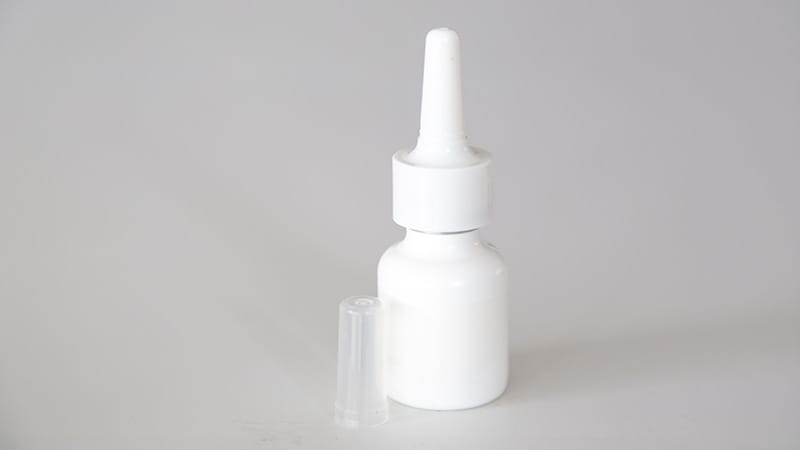
The hardest part of treating central nervous system diseases isn't necessarily the drug — sometimes, it's the administration. Amyotrophic lateral sclerosis (ALS) patients taking tofersen must endure repeated lumbar punctures, having the drug pumped directly into their spinal fluid, with risks of infection, back pain, and persistent headaches.Now, researchers at the University of Georgia and Emory University have demonstrated that a simple puff through the nose might one day do the job. By packaging the gene-silencing therapy inside tiny biological delivery vehicles, the team managed to reach the nervous system noninvasively, staving off symptoms and preserving mobility in mice with a form of inherited ALS."Wouldn't it be better if patients could take a nasal spray home with them?" said Steven Stice, PhD, director of the Regenerative Bioscience Center at the University of Georgia and chief scientific officer at Aruna Bio, which supplied the carrier used in the study. He was not an author.Translating mouse biology to human medicine is never guaranteed, but the research points to a less invasive blueprint for the field.The Fortress Around the Brain The brain is protected by biology's ultimate security checkpoint: the blood-brain barrier. This tightly sealed cellular fortress filters out toxins and pathogens circulating in the bloodstream, but it also relentlessly blocks the very medicines designed to heal it."This is one of the biggest unsolved problems in treating any kind of [central nervous system] disease," said Steven Jay, PhD, a biotherapeutics researcher at the University of Maryland who was not involved in the study.For gene-silencing therapies, breaking through the barrier is only step one; the drug must then pinpoint and enter the exact neurons causing the damage. Among the most promising tools are antisense oligonucleotides (ASOs), synthetic molecules engineered to intercept and silence flawed genetic messages before harmful proteins can form. Tofersen, which takes aim at the mutated SOD1 gene, is the only FDA-approved ASO therapy for ALS. A noninvasive alternative could transform care, provided it delivers enough cargo to the cells that need it.The Workaround: A Drug in a Biological Bubble To ditch the syringe, researchers turned to extracellular vesicles (EVs) — nanosized sacs that are sourced from human neural stem cells and move naturally through tissue. Prior work from Stice suggested they do double duty: They reduce neural inflammation while slipping under the immune system's radar, making regular redosing possible.The team loaded the EVs with tofersen, finding the combination crossed into cultured nerve cells with greater stability and speed than the drug could muster alone. When applied as nasal drops to presymptomatic ALS-model mice, the treatment delayed onset by about 10 days compared to control animals, noticeably outperforming drops of naked tofersen."This combines two very good strategies. One is FDA-approved, but the delivery is a problem," said Yao Yao, PhD, an associate professor at the University of Georgia and corresponding author of the study, which was published in the Journal of Extracellular Vesicles. "Meanwhile the vesicle is already therapeutic, and for delivery it has a lot of advantages for brain-related neurodegeneration. That's why I put the two together."The findings offer a compelling blueprint but carry caveats: The study relied on small groups of just four to six mice, left long-term survival unmeasured, and omitted an isolated vesicle control arm. Above all, routing a drug from the nose to the brain is a far steeper anatomical hurdle in humans than in mice.From Rodent Snout to Human Nose The shortcut from the nostrils to the central nervous system relies on olfactory sensory neurons, which run from the upper nasal cavity to the brain. In theory, medications can hitch a ride along these neural pathways, bypassing the spinal cord entirely.A mouse's nasal landscape is dominated by these olfactory nerves; humans, by comparison, have a far smaller sensory footprint tucked high in the nasal roof, said Maureen Donovan, PhD, a professor of pharmaceutical sciences and experimental therapeutics at the University of Iowa. Donovan, whose lab has investigated nasal drug delivery for years, was not involved in the study."Working out the translation from animal to human is not a small deal, especially in the case of nasal delivery," she said. "How you administer to a mouse is very different than how you'd likely administer to a human."Beyond anatomy, physics creates a scaling problem: Will a high enough concentration of ASOs survive the longer trek to the human brain to produce a benefit?"That's not unique to vesicles," Jay said. "It would apply to any synthetic formulation, any nanoparticle formulation that you might deliver in this way."What's Next "We're looking at a new way to deliver something that's already been proven to be therapeutic," Stice said. He compares the process to the long journey of GLP-1 medications: "They took a long time from discovery to actually getting into patients with those injections, but the timeline from injections to a pill form has been much shorter."Before any nasal spray could win FDA approval, researchers would have to:Figure out what's actually doing the work. The team tested empty EVs in lab dishes, but they didn't do the same in the mice — meaning they can't yet show how much of the benefit comes from the gene-silencing drug versus the stem-cell vesicles. Work out a reliable human dose. Figuring out how much medicine survives the trip to the brain and spinal cord will likely require testing in nonhuman primates first, Stice said. Make sure regular use won't harm the nose. The carriers themselves have already cleared basic safety checks — they're currently being tested in an ongoing clinical trial for stroke patients. Researchers still have to confirm that routine use won't irritate nasal passages or damage the sensitive nerves responsible for smell, Donovan said. Produce identical batches every time. Growing biological materials in large amounts is tricky. Every single bottle that rolls off the line has to contain the exact same amount of drug and carrier particles. "One of the biggest problems in translation from a study in biology to a drug product is reproducibility," Donovan said. Other Ways In Other tactics being explored to bypass the brain's barrier are closer to the finish line, Jay said. Some experimental treatments use harmless viral shells to carry therapeutic genes, while others use tiny fat bubbles — lipid nanoparticles and liposomes — to protect fragile drugs as they travel through the body."These are particle formulations that are in approved products being used to treat human patients, so that inherently is a lot closer than anything involving vesicles," he said. "I'm optimistic about the potential of the technology, but it's a future technology. It's not a right-now technology."Yao, Donovan, and Jay had no relevant disclosures. Stice is a cofounder and chief scientific officer at Aruna Bio, which is developing vesicles for therapeutic uses.
Could a Nasal Spray Replace Lumbar Punctures Someday?
Full Article
Original Source
Read the full article at Medscape →KhanList aggregates and links to publicly available news content. We do not host full articles from third-party sources. Always verify important information with original sources.