
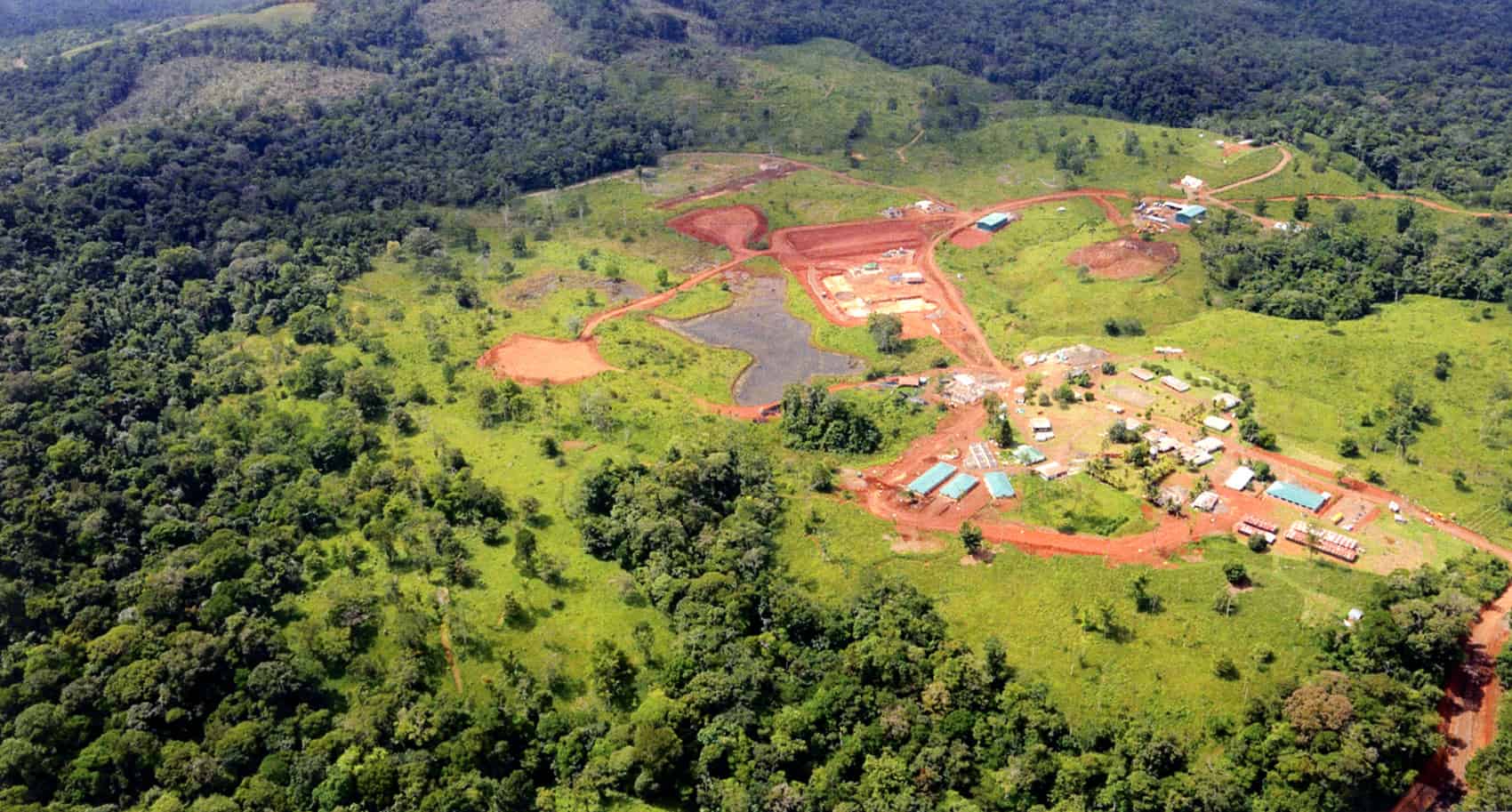
Costa Ricans could be asked to decide at the ballot box whether gold mining returns to Crucitas, after President Laura Fernández confirmed that her government is weighing a national referendum on the troubled northern mining zone. Speaking at her weekly press conference yesterday, Fernández said she has discussed the idea for months with Minister of the Presidency and Finance Rodrigo Chaves, the former president, and other members of her team. She stressed that no decision has been made and said she would tell the country in due course whether she will call a referendum on Crucitas or on another issue. Chaves revived the idea earlier this month, saying he would recommend that Fernández put Crucitas to a public vote, while adding that he did not know whether she would. Fernández first said in July that she was studying a referendum as a way around stalled legislation and named Crucitas among the possible topics. Crucitas, in Cutris de San Carlos near the border with Nicaragua, was the site of an open-pit gold project by Canadian company Infinito Gold that was halted in 2010, the same year Costa Rica banned new open-pit metallic mining. Since then the area has been overrun by illegal miners. Authorities say the mercury and cyanide used to process illegally extracted gold are contaminating water sources and surrounding ecosystems, and they link much of the activity to organized criminal groups. The government has separately moved to treat illegal mining as organized crime. Security Minister Mario Zamora has told lawmakers that about 200 police officers are deployed in the zone at a cost of roughly $1 million, and that the area affected by illegal extraction has grown by more than 200%. The government’s answer is Bill 24.717, which would authorize open-pit gold mining at Crucitas and award concessions through public auctions. The administration argues that regulated mining would cut off illegal extraction and generate revenue it says would go to education, security and health. The bill has been stalled for months in the Legislative Assembly, where opposition lawmakers filed hundreds of motions to amend it. Fernández blamed the National Liberation Party (PLN) and the Broad Front (Frente Amplio) for the delay. Opposition lawmakers favor alternatives centered on cleaning up and restoring the damaged land, and on issuing digital tokens linked to the gold that would stay in the ground. PLN legislator Diana Murillo has filed a proposal that combines remediation, the sale of gold recovered during cleanup and tokens tied to the remaining deposit. Fernández argued that none of these approaches would stop illegal miners from entering the area. Costa Rica’s Constitution allows a referendum to be called in three ways: a citizen petition signed by at least 5% of registered voters, approval by two-thirds of the 57-member Legislative Assembly, or a joint call by the executive branch and an absolute majority of lawmakers. The ruling Pueblo Soberano party holds 31 seats, enough to back a joint call without opposition votes. Opponents say the question cannot legally go to voters at all. Frente Amplio lawmaker Edgardo Araya, an environmental lawyer, has argued that reopening Crucitas to mining would be an environmental rollback, and that such a rollback cannot be decided by referendum. Any consultation would have to meet constitutional and legal requirements, overseen by the Supreme Elections Tribunal, before voters could be called to the polls. Costa Rica has held only one national referendum, the 2007 vote that approved the Central American Free Trade Agreement with the United States. Earlier this year, the country’s geologists also called for a referendum on Crucitas.
Costa Ricans Could Vote on Reopening Crucitas to Gold Mining
Full Article
Original Source
Read the full article at Ticotimes →KhanList aggregates and links to publicly available news content. We do not host full articles from third-party sources. Always verify important information with original sources.