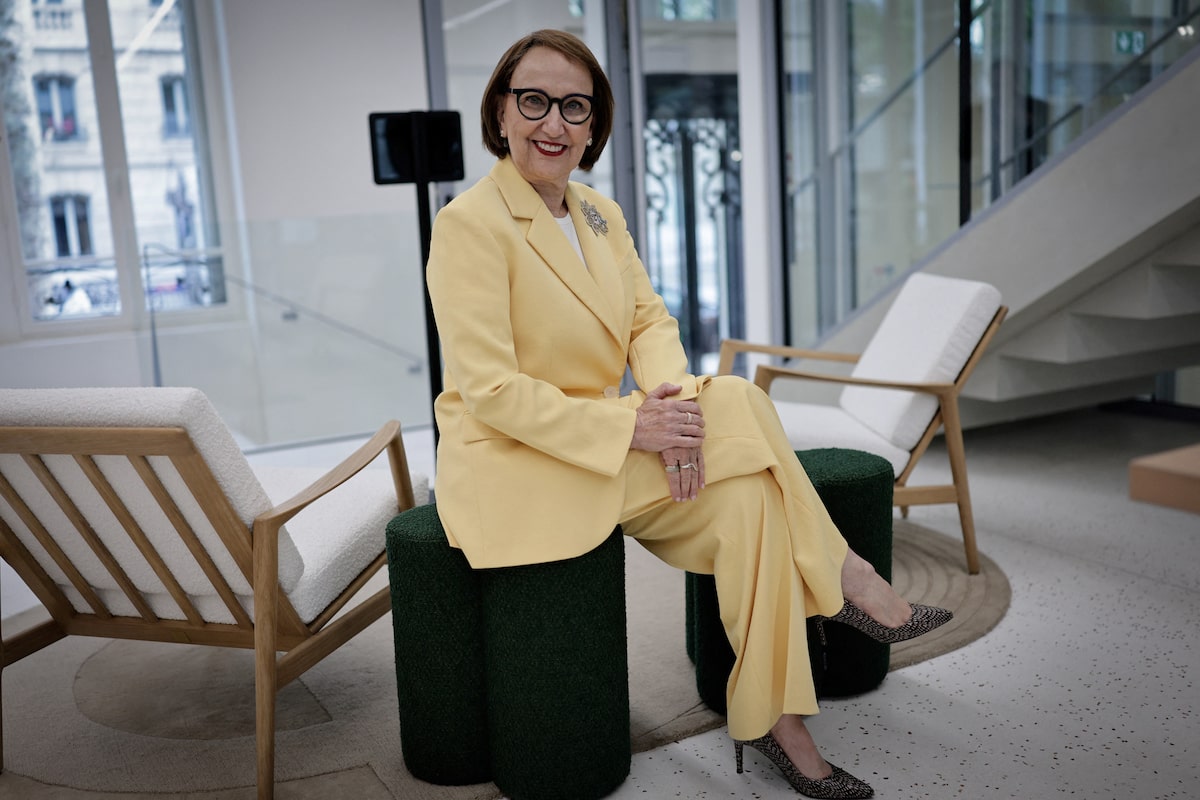
Open this photo in gallery:UN secretary-general candidate Rebeca Grynspan was vice-president of Costa Rica from 1994 to 1998 and has held several other cabinet posts.STEPHANE DE SAKUTIN/AFP/Getty ImagesRebeca Grynspan, an economist and former vice-president of Costa Rica, has jumped into an early lead in the race to become the next United Nations secretary-general after winning a straw vote at the UN Security Council.The top two vote-getters in Thursday’s poll were women candidates, bolstering the hopes of civil-society groups that are pushing for the UN to choose a woman for its top post for the first time in its history.Carolyn Rodrigues-Birkett, a former Guyanese foreign minister, finished second in the Security Council’s confidential vote, according to results disclosed by several independent organizations that monitor UN decisions.A series of straw votes over the coming months is expected to narrow the field and identify a consensus candidate to succeed António Guterres of Portugal, who steps down at the end of December after 10 years in the post.The winning candidate will need the support of at least nine members of the 15-member Security Council and will also need to avoid a veto by any of the council’s five permanent members: Britain, France, China, Russia and the United States. The council’s decision is usually rubber-stamped by the UN General Assembly.Open this photo in gallery:Rebeca Grynspan, Carolyn Rodrigues-Birkett and former Senegal president Macky Sall participate in a debate at the UN General Assembly Hall in New York on July 23.LEONARDO MUNOZ/AFP/Getty ImagesThe new secretary-general will face the difficult task of defending the UN from severe financial pressure, especially from the Trump administration in the United States, which has demanded major cuts in the UN bureaucracy. The UN is also seen as increasingly ineffective because of routine deadlocks at the Security Council.In the straw votes, council members are asked to “encourage” or “discourage” each of the candidates. Ten countries voted “encourage” for Ms. Grynspan and only one country voted against her, while the remaining four countries did not express an opinion, according to the unofficial results.Ms. Grynspan, 70, has been the head of the UN Conference on Trade and Development since 2021. She was vice-president of Costa Rica from 1994 to 1998 and has held several other cabinet posts.In a “vision statement” for her candidacy, Ms. Grynspan said the world’s trust in the UN is waning. “We are falling short,” she said. “Too many think that the UN is absent from negotiations to end wars. It is seen as too distant from the daily needs of people, focused on reports that few read and meetings that few notice.”The UN’s leaders must rise to this “crisis of faith” or be swept aside by it, Ms. Grynspan said. “To defend the UN is to have the courage to change it.”Ms. Rodrigues-Birkett ran second in the straw poll with support from nine countries and opposition from two. The third-place finisher was Rafael Grossi of Argentina, who has headed the UN’s nuclear watchdog, the International Atomic Energy Agency, for the past six years. He was supported by seven countries and opposed by two.Michael Barutciski: The UN’s Refugee Convention finds itself at a crossroads 75 years later – because of how it’s being interpretedThere is a widespread assumption that the UN’s top job this time should go to a candidate from Latin America or the Caribbean, based on an informal rotation among the world’s regions. Five of the seven candidates are from this region.The remaining two candidates are Macky Sall of Senegal and Olara Otunnu of Uganda, but both received more opposition than support in Thursday’s straw vote.The results “confirm conventional wisdom among diplomats that Grynspan is running a strong campaign,” said Daniel Forti, head of UN affairs at the International Crisis Group, in a social-media post after the vote.He noted, however, that the preferences of the Security Council members could change as candidates drop out or new candidates join the race. “Bargaining will intensify later on,” he said.Civil-society groups, seeking to make the selection process more transparent and less subject to backroom deals, have pushed for greater scrutiny of each candidate. Their efforts have led to a series of public dialogues among the candidates, allowing them to face questions. But analysts still warn that the race could be swayed by last-minute candidates who avoided the public process.The next straw vote is expected in August. Mike Waltz, the U.S. ambassador to the UN, told journalists after Thursday’s vote that he expects the Security Council to reach a decision “in the coming months.” He added: “We need a Secretary-General that is going to reform this institution, that is going to make it leaner and more fit for purpose, more relevant on the international stage.”
Costa Rican candidate Rebeca Grynspan wins first vote in race for UN’s top job
Full Article
Original Source
Read the full article at Theglobeandmail →KhanList aggregates and links to publicly available news content. We do not host full articles from third-party sources. Always verify important information with original sources.