
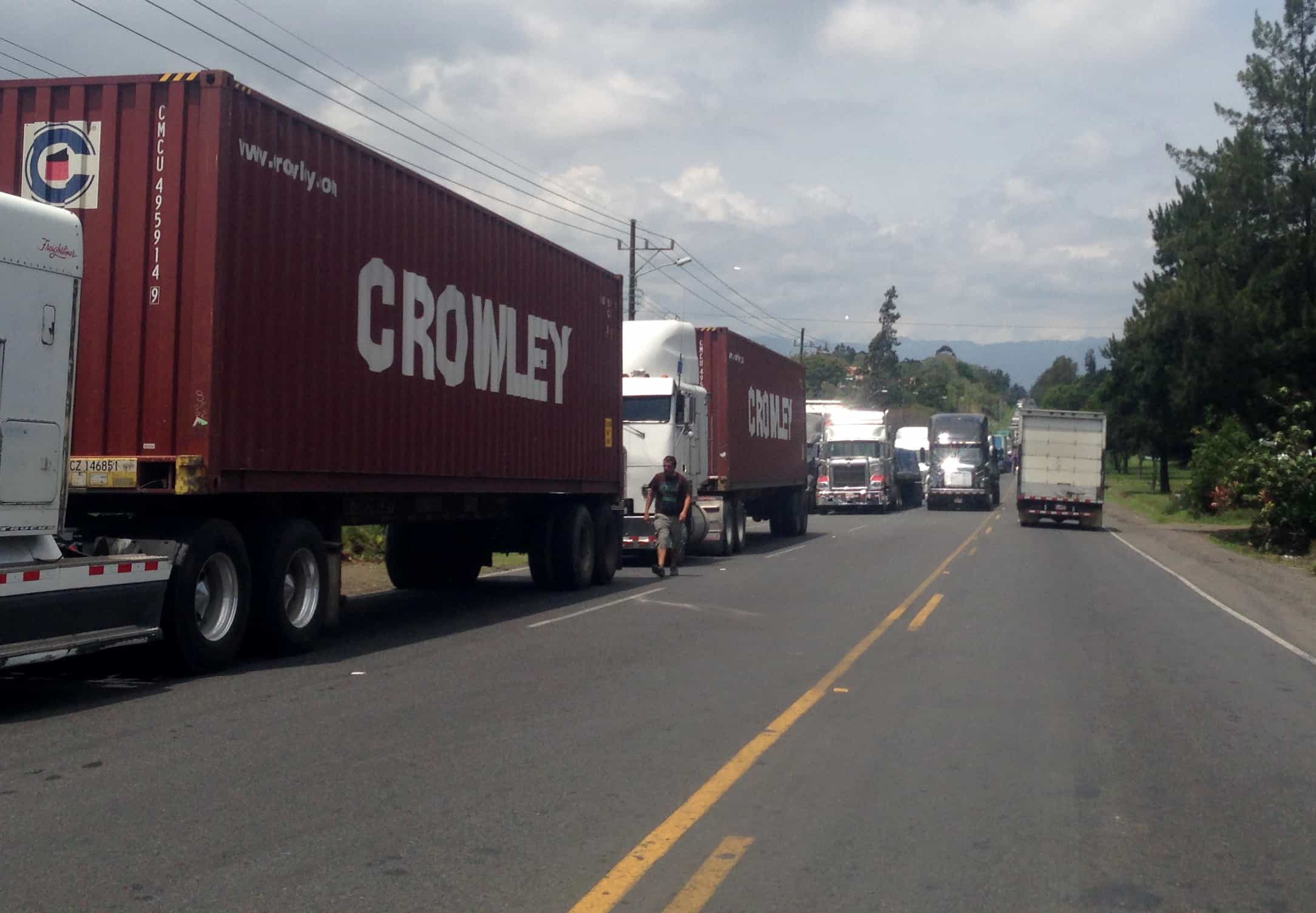
If your drive across the Central Valley feels slower than it did a year ago, the numbers back you up. Traffic jams on Costa Rica’s roads doubled in intensity in 2025, and half of all road segments measured now back up at least once, according to the 2026 National Competitiveness Index. The index, published Nov. 13 by the Council for the Promotion of Competitiveness (CPC), counted 117.6 jam reports for every 100-meter (328-foot) stretch of congested road. The year before, the figure was 57.4. The jam data comes from the State of the Nation Program, which draws on Waze reports shared through the Ministry of Public Works and Transport (MOPT). Of the road segments the index evaluated, 50.1% recorded at least one jam, the highest share since the series began. The waits are getting longer, too. Drivers now lose an average of 207.4 seconds, or about three and a half minutes, on every congested 100-meter segment. CPC economist Andrés Fernández put it in starker terms. He said the average time drivers spend per kilometer (0.62 miles) of jammed road rose from about 30 minutes to about 35 in the latest edition. Taken together, those figures pushed the index’s road connectivity score from 60.7 to 56.6 out of 100. The 4.1-point drop is the steepest since the series began in 2021. The worst-connected areas are mostly in and around the capital. San José, Escazú, Curridabat, Belén, Montes de Oca and Santo Domingo rank among the most congested, along with Corredores in the southern zone. The area of San José scored just 40.9 out of 100 on road connectivity. The longest delays, however, turned up on the central Pacific coast. In Garabito, the area that includes Jacó, drivers lose up to 11.9 minutes for every 100 meters of congested road, the highest figure in the country. Heredia averages 5.9 minutes, while Sarchí has the shortest delays at about two minutes. Fernández said congestion is heaviest in the Greater Metropolitan Area and on the approaches to the ports. Travel times to Puerto Caldera and to Daniel Oduber International Airport in Liberia both reached their highest levels in the index’s history. Over the past five years, 62 of the 82 areas lost ground on road connectivity, while 20 improved. Cartago, Vázquez de Coronado and San Isidro saw the sharpest declines, while Buenos Aires, Carrillo and Guatuso improved the most. The smoothest traffic is found in Turrubares, Puriscal, Bagaces and Acosta. Congestion weighed on an otherwise improving national picture. Costa Rica’s overall competitiveness score rose 2.4 points to 58.6 out of 100, but the CPC identified worsening traffic and a 41.5% drop in real per-student investment in school infrastructure as the main factors limiting further gains. For anyone who drives here, the index puts numbers to what the daily commute already suggests. Jams are more frequent, they cover more of the road network and they last longer than at any point on record.
Costa Rica Traffic Jams Doubled in a Year – Half the Roads Now Back Up
Full Article
Original Source
Read the full article at Ticotimes →KhanList aggregates and links to publicly available news content. We do not host full articles from third-party sources. Always verify important information with original sources.