
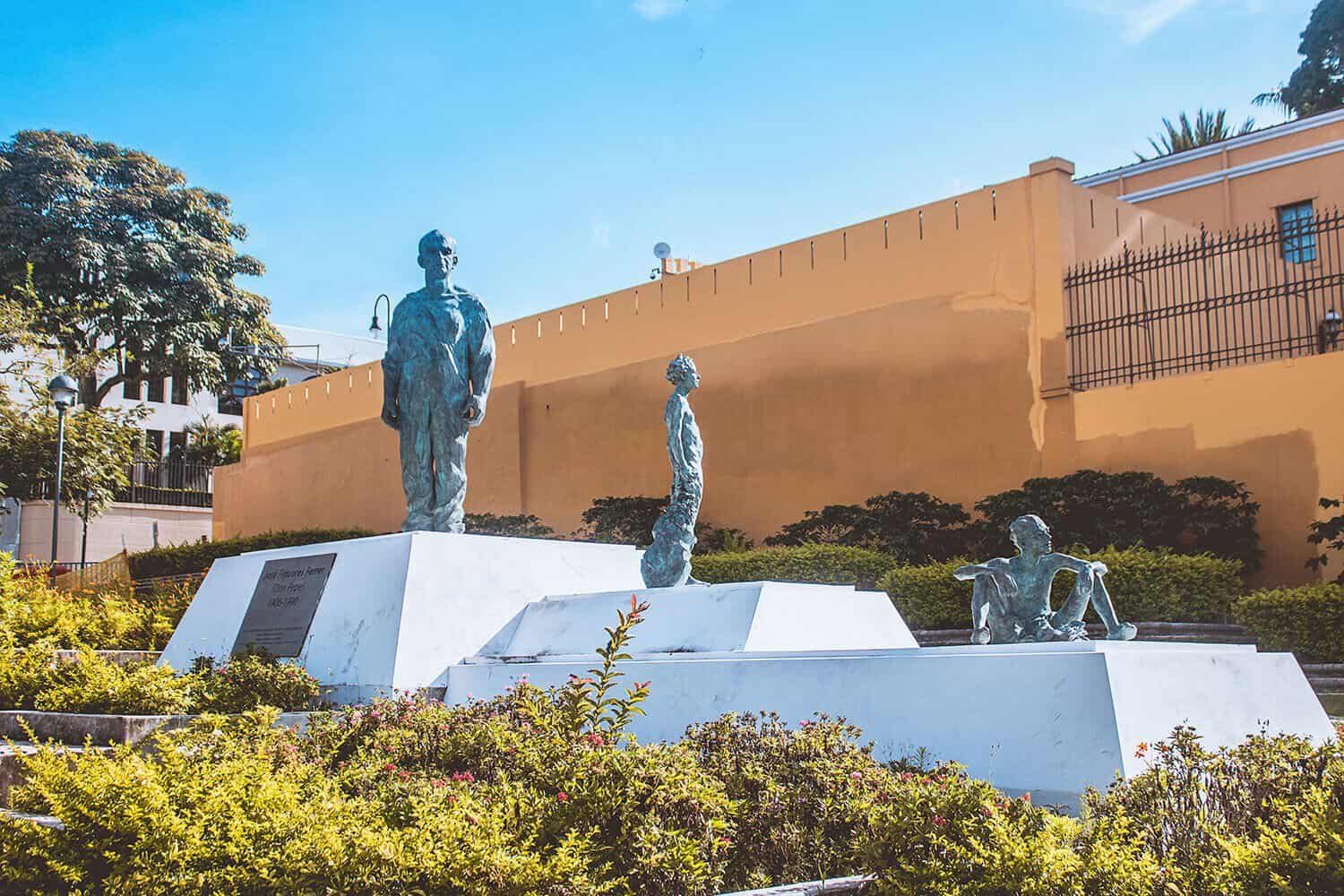
Costa Rica’s Ministry of Culture and Youth removed the bronze monument to former President José Figueres Ferrer from San José’s Plaza de la Democracia on Friday morning, less than four weeks before the country marks the anniversary of the army abolition Figueres declared in 1948. Culture Minister Jorge Rodríguez Vives ordered the temporary removal after the sculpture was defaced during demonstrations in recent weeks. A crew from the state power company CNFL lifted the figures by crane, and the pieces were taken to the National Museum’s José Fabio Góngora facility in Pavas, where specialists will clean and restore them. Rodríguez described the decision as difficult but necessary to protect the ensemble from further damage. He acknowledged freedom of expression and peaceful protest as pillars of Costa Rican democracy but said exercising those rights cannot come at the expense of the nation’s heritage. The minister said he expects those responsible to cover the cost of restoration, subject to the findings of the competent authorities, adding that damage to national heritage should not go without consequences. He also said the figures will not return to the plaza until there are guarantees they will not be vandalized again. The ministry characterized the removal as a temporary conservation measure, not a surrender of public space to vandalism. The National Museum, which administers the plaza, has filed criminal complaints with the Judicial Investigation Agency (OIJ) and the San José prosecutor’s office. According to the museum’s preliminary technical assessment, the latest incident left graffiti, spray paint and scratches on the bronze figures themselves, whereas damage in October mainly affected the monument’s base. The museum has warned it cannot guarantee a full return to the sculpture’s original condition, because the paint penetrated surfaces already worn by age. Specialists expect the work to take several weeks. Rodríguez put the cost of the initial cleaning alone at about 1 million colones (roughly $2,000). The ministry said the total cost will be determined once its technical and economic assessment is complete, and it has not announced a date for the monument’s return. The damage occurred during protests against budget cuts to public education and university funding. The most recent incident followed a student demonstration in the plaza on the night of Monday, Nov. 2. María Ortega Zamora, president of the student federation at the State Distance University (UNED), said four hooded people dressed in black arrived around 1 a.m. and began defacing the monument. She denied that students were responsible. The removal drew a sharp response from the National Liberation Party (PLN), which Figueres founded in 1951. Álvaro Ramírez, head of the PLN’s legislative caucus, likened the move to a dictator’s playbook, writing on social media that it erased memory, disrespected history and removed symbols of the country’s democracy. Ramírez argued that a nation’s historical memory cannot be treated as an obstacle and that defending it is part of defending democracy. He said the PLN will demand that the restored statues be returned to the Plaza de la Democracia as testimony to Costa Rica’s history. The dispute adds to tensions between President Laura Fernández’s administration and opposition parties, including the PLN, as the education budget protests continue. The ensemble, by Costa Rican sculptor Marisel Jiménez Rittner, was unveiled on April 28, 1998. Its four bronze elements depict Figueres, a girl with a violin symbolizing culture, a boy with a book representing education, and a sledgehammer recalling the abolition of the army. This is not the first time the monument has left the plaza. It was moved to the National Museum’s gardens in 2008 during a renovation of the square, and its original sledgehammer had been stolen. After restoration by museum specialists and the sculptor, it was reinstalled in December 2016, when the space was renamed Plaza de la Democracia y de la Abolición del Ejército. The plaza sits beside the National Museum, the former Bellavista barracks where Figueres declared the army abolished on Dec. 1, 1948. Army Abolition Day commemorations have traditionally included a floral offering at the monument, and it remains unclear whether the figures will be back in place for this year’s ceremony. Figueres, popularly known as Don Pepe, led Costa Rica three times and remains one of the defining figures of its modern history, closely tied to the institutions, social reforms and unarmed democracy that shaped the country’s identity.
Costa Rica Removes Don Pepe Figueres Monument After Protest Vandalism
Full Article
Original Source
Read the full article at Ticotimes →KhanList aggregates and links to publicly available news content. We do not host full articles from third-party sources. Always verify important information with original sources.