
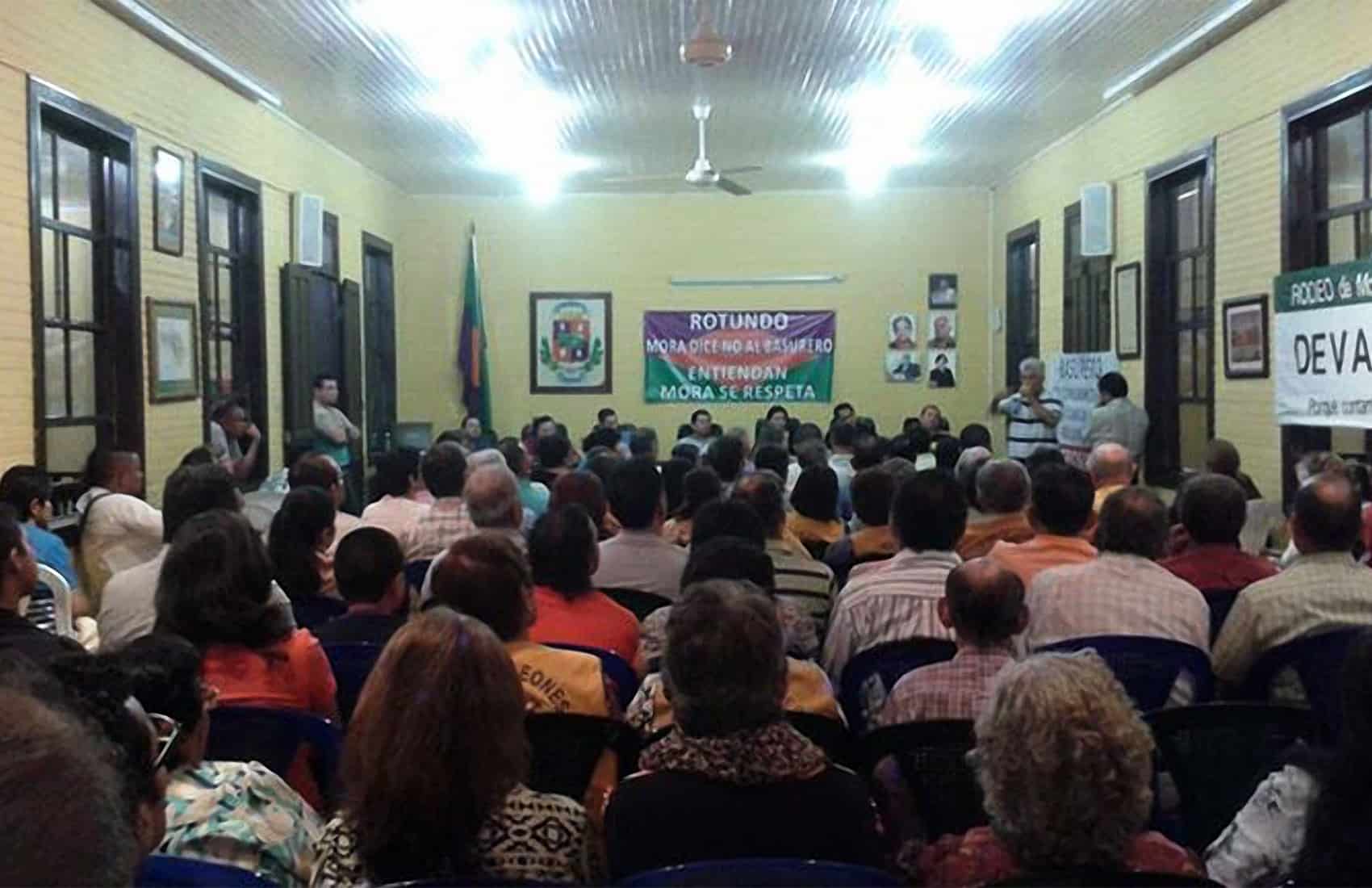
A decades-long fight over a proposed waste project in Picagres has flared again after the Mora municipal administration issued a new land-use certificate for Parque Industrial Jateo, prompting residents, local officials and lawmakers to question whether the project should be allowed to move forward. Residents and members of the Mora Municipal Council toured the area Saturday, Oct. 3, with lawmakers and legislative advisers. The visit focused on the roads that would be used by garbage trucks and the environmental conditions around the proposed site in Cordel, a community in the district of Picagres. Among those joining the visit were Álvaro Ramírez Bogantes, leader of the opposition National Liberation Party in the Legislative Assembly, and Frente Amplio lawmaker Vianey Mora Vega, who represents San José province. Ramírez questioned whether the existing roads could handle the volume and weight of truck traffic associated with the project, while Mora raised concerns about water sources and nearby ecosystems. The controversy was revived after it became known that the municipality had issued a land-use certificate for Parque Industrial Jateo. That certificate does not by itself authorize construction or allow the waste facility to begin operating, but opponents say the decision is significant because the lack of a valid municipal land-use document has been one of the major obstacles facing the project for years. The Mora Municipal Council has called an extraordinary meeting for Monday, Oct. 5, at 6 p.m. to review the file and hear from Mayor Rodrigo Alfonso Jiménez Cascante and municipal staff involved in the process. Council members are expected to examine the technical and legal basis used to issue the certificate. Parque Industrial Jateo is planned for a property of roughly 237 hectares, or about 586 acres, in Picagres. Court records describe the proposal as a complex intended for the treatment and recovery of waste generated in the Greater Metropolitan Area. The project has been debated in Mora since the 1990s and has repeatedly faced opposition over access roads, water, forests and the suitability of the location. The project does have an important approval already in place. Costa Rica’s National Environmental Technical Secretariat, known as SETENA, granted environmental viability in May 2013. Appeals against that decision were rejected by the Environment Ministry in 2015. However, the developer later asked SETENA to suspend the deadline for beginning construction while it worked through municipal and Health Ministry requirements. SETENA subsequently tied that suspension to the resolution of disputes involving municipal land-use authorization. That history makes the newly issued Mora certificate particularly important, although it remains unclear whether the document will be enough to clear other administrative or legal hurdles facing the project. Environmental concerns remain at the center of the opposition. Documents cited by community groups and municipal representatives say the National System of Conservation Areas identified forest cover on the property in 2024. A separate 2025 review by the Water Directorate of the Environment Ministry identified six water sources on the property, including four permanent springs connected with the Mesas and Pacayal streams. The property also sits next to the El Rodeo Protected Zone and within the Garcimuñoz Biological Corridor, according to records cited by opponents. They have also questioned whether an environmental study prepared years ago adequately reflects current conditions on the property. Water has been a recurring issue around the site. An official notice published in La Gaceta in 2023 showed Parque Industrial Jateo seeking water concessions from the Pacayal, Las Mesas and Cacho streams on the Picagres property. The developer has publicly presented Jateo as more than a traditional landfill, describing the concept around waste management, recovery, research and innovation. Court records similarly describe it as an industrial complex for treating and recovering value from waste produced in the Greater Metropolitan Area. The dispute comes as Costa Rica continues looking for additional ways to handle solid waste from the metropolitan region. Health Ministry planning documents have previously listed Jateo among possible projects intended to serve municipalities in the Greater Metropolitan Area. For now, the new land-use certificate has not ended the debate. Instead, it has reopened one of Mora’s longest-running environmental disputes and shifted attention to Monday night’s Municipal Council meeting, where residents are looking for an explanation of why the project received a document it had struggled for years to obtain.
Costa Rica Landfill Plan in Mora Faces New Land-Use Challenge
Full Article
Original Source
Read the full article at Ticotimes →KhanList aggregates and links to publicly available news content. We do not host full articles from third-party sources. Always verify important information with original sources.