
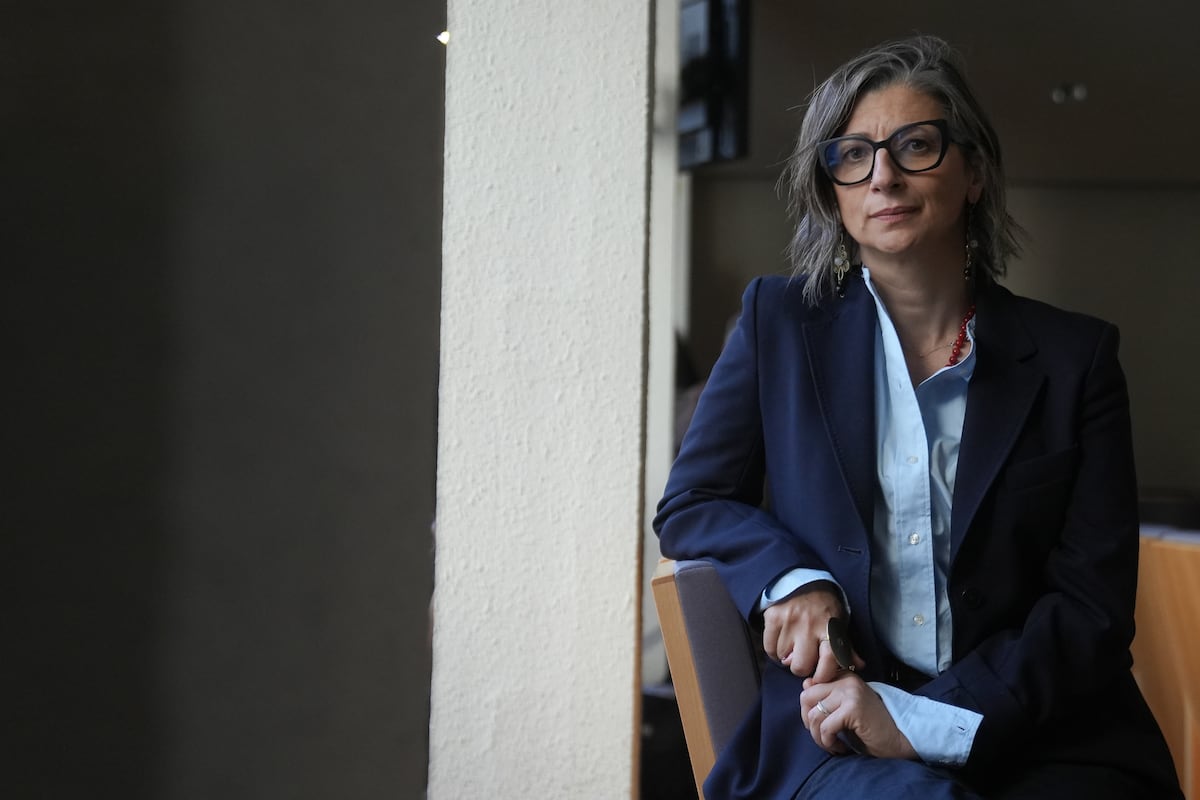
On Thursday, the Costa Rican government denied entry to the country to the UN special rapporteur on human rights in the occupied Palestinian territories, Francesca Albanese of Italy, who was scheduled to receive an honorary doctorate on Friday from the state-run University of Costa Rica (UCR). The rejection of the UN rapporteur reflects the Central American country’s new foreign policy direction, as it has now forged closer ties with Israel and aligned itself with U.S. global policies — to the point of turning its back on a representative of the world body that has traditionally enjoyed strong Costa Rican support, an organization for which it is even promoting Rebeca Grynspan’s official candidacy for the post of secretary-general.Arguing that Albanese “is subject to an international alert due to links to terrorist acts” and that she poses a risk to national security, the government of Laura Fernández barred the diplomat from entering the country; she had been scheduled to receive an honorary doctorate Friday from the UCR — a decision that surprised even those critical of the administration for its pro-Israel stance, as the country is on the verge of signing a bilateral free trade agreement with Israel.Immigration Director Omer Badilla confirmed Thursday that the “Italian woman with the last name Albanese” had been denied entry, citing a security alert the origin of which he did not specify, although the UN official herself speculated that it might have come from Washington, as she told the local publication Semanario Universidad. “I don’t think the problem is Costa Rica. Maybe it has to do with the United States; it’s possible,” Albanese said she told the immigration official who informed her of the issue at the start of a situation she found upsetting and in which she was forced to hand over her passport. She referred to U.S. sanctions imposed against her for her work in defense of Palestine.“I had a very long discussion, surrounded by several immigration agents; it was a rather intimidating situation. Honestly, I’ve never felt so humiliated and threatened in my life,” she told Delfino.com while waiting to find out whether she would return to Paris, where she had come from, or head to Mexico, her next destination. Meanwhile, the Constitutional Chamber issued a preliminary injunction to suspend any deportation of Albanese until the government provides an explanation for the measure within the next 24 hours, the court stated as part of the proceedings for a writ of habeas corpus filed minutes after the delegate’s rejection was made public.The measure sparked widespread reactions from academic circles and left-wing or progressive sectors, but also from one of the ruling party’s leading lawmakers, the jurist José Miguel Villalobos, who has served as personal counsel to former president Rodrigo Chaves and condemned his government’s decision: “I don’t want to hear Ms. Albanese, but I defend her right to come in and say what I don’t want to hear, because that is tolerance. Albanese is not Hamas. She has the right to come, she has the right to enter, whether she is wrong or not,” he told local media. Villalobos chairs the Costa Rican parliament’s Committee on International Relations.In April, the Costa Rican government designated the pro-Palestinian political and paramilitary group Hamas as a terrorist organization, along with other organizations also designated as such by the United States. Since 2023, following Hamas’s attack on Israeli citizens and Israel’s massive military response in Gaza, Costa Rica has aligned itself with the position of the Donald Trump administration, the main ally of Benjamin Netanyahu’s government.In various United Nations votes in recent weeks, Costa Rica adopted a new position by abstaining from voting on issues related to Israel, occupied territories, and refugees — issues it had supported with its vote until last year. In September, the Costa Rican delegation also broke ranks with a majority of 152 countries that supported the Palestinian Authority’s ability to participate remotely in the United Nations General Assembly.In May, President Laura Fernández told Israeli President Isaac Herzog that she intends to carry out the symbolic relocation of the Costa Rican embassy from Tel Aviv to Jerusalem, a decision that has not yet been implemented. Meanwhile, a bill to ratify a bilateral free trade agreement is being processed in the pro-government-majority Legislative Assembly, and Costa Rica is stepping up its campaign in support of Rebeca Grynspan for the position of United Nations secretary-general — a candidacy that takes on sensitive undertones because she is Jewish, even though she does not challenge the organization’s traditional positions regarding Palestine. She has not commented on the incident involving her country and Albanese on her social media accounts.Former president Laura Chinchilla, a critic of her country’s current government, lamented the incident: “Respect for freedom of thought is part of that tradition. A person’s ideas should never be grounds for denying them entry into the country. The decision by immigration authorities and the government is an unjustified snub and a slap in the face to the institutional tradition that once made Costa Rica an exception. It is an action that denies our very essence and brings shame upon us.”Sign up for our weekly newsletter to get more English-language news coverage from EL PAÍS USA Edition
Costa Rica denies entry to UN Special Rapporteur Francesca Albanese
Full Article
Original Source
Read the full article at English →KhanList aggregates and links to publicly available news content. We do not host full articles from third-party sources. Always verify important information with original sources.