
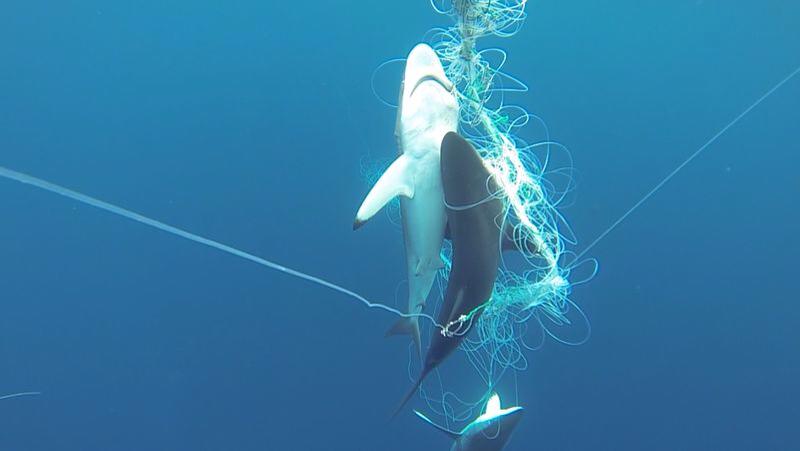
A Costa Rican environmental attorney has asked a court to temporarily prohibit the capture of several types of sharks in waters surrounding Cocos Island, arguing that the government has failed to establish the fishing regulations needed to protect threatened marine species. Attorney Walter Brenes filed the request with Costa Rica’s Administrative Court, seeking an immediate suspension of both intentional shark fishing and the accidental capture of sharks during commercial fishing operations in the Bicentennial Marine Management Area. The protected area surrounds Cocos Island, one of the most important marine conservation sites and a destination internationally known for its large populations of hammerhead sharks and other marine wildlife. At the center of the dispute is the absence of a specific fisheries management plan that would establish how commercial fishing can operate within the protected waters. Brenes argues that without clear rules governing fishing activities, sharks remain vulnerable despite the area’s protected status. The request covers eight categories of sharks, including hammerheads, silky sharks, blue sharks, blacktip sharks, thresher sharks, Galápagos sharks, tiger sharks and shortfin makos. Several of these species face serious conservation threats, particularly from commercial fishing operations that use longlines, which are fishing lines carrying hundreds or sometimes thousands of baited hooks. Although longlines are commonly used to catch tuna and other commercially valuable fish, sharks can also become hooked and brought aboard. Brenes maintains that this type of fishing continues inside the marine management area without adequate safeguards for vulnerable species. He also questions provisions in the area’s general management plan that allow fishing activities in waters extending hundreds of meters below the surface. According to the attorney, those rules fail to adequately protect sharks that regularly swim through the same depths where commercial fishing gear operates. He is also challenging portions of the general management plan, arguing that more of the protected area should be closed to fishing. His proposal calls for substantially expanding the waters where fishing would be prohibited, although that remains part of the legal dispute rather than a requirement already accepted by authorities. Costa Rica Already Faced a Court Order The latest legal action follows a November 2025 ruling by Costa Rica’s Constitutional Chamber (Sala IV), which found that environmental authorities had failed to complete several measures required to manage Cocos Island and the surrounding marine protected area. The court ordered the Ministry of Environment and Energy (MINAE) and the National System of Conservation Areas (SINAC) to complete outstanding management and regulatory measures within 12 months of notification. Those requirements included a fisheries management plan for the Bicentennial Marine Management Area, rules governing public use and improvements to the resources available for conservation. Although a general management plan for the marine area has since been published, Brenes argues that the separate fisheries plan remains unfinished. The distinction is important because the general plan establishes broad conservation objectives and zones where different activities may take place, while the fisheries plan is intended to provide more detailed rules for fishing operations. The new court request seeks immediate protection for sharks while the dispute over those regulations is resolved. A Critical Area for Sharks Cocos Island lies more than 500 kilometers (310 miles) off Costa Rica’s Pacific coast and is considered one of the most important locations in the eastern tropical Pacific for sharks, rays and other migratory marine animals. Its surrounding waters attract large schools of hammerhead sharks, making the island a major destination for scientific research and recreational diving. In 2021, Costa Rica significantly expanded its marine protection around Cocos Island, creating a larger national park and the neighboring Bicentennial Marine Management Area, which covers approximately 106,000 square kilometers (40,900 square miles). The expansion was intended to protect marine biodiversity while allowing regulated activities in designated areas. However, conservation groups have repeatedly raised concerns about how fishing is managed and monitored in those waters. Sharks are particularly vulnerable because many species grow slowly, mature relatively late and produce fewer offspring than other fish. Heavy fishing pressure can therefore take years or even decades to overcome. Their movements also make protection difficult, since sharks regularly travel beyond the boundaries of national parks and other restricted areas. For Costa Rica, the issue goes beyond protecting individual animals. Sharks play an important role in maintaining healthy marine ecosystems, while Cocos Island’s wildlife has become part of the country’s international reputation as a leader in conservation and nature-based tourism. The fishing industry also has an economic stake in the outcome, since restrictions on longline operations could affect access to commercially important fishing grounds. Court Decision Still Pending The new filing does not mean shark fishing has been prohibited in the Bicentennial Marine Management Area. A judge must first consider the request and determine whether temporary restrictions are justified while the underlying legal questions are examined. The outcome could influence how Costa Rica manages commercial fishing around one of its most important marine protected areas, particularly if the court requires additional safeguards before fishing activities can continue. For now, the dispute highlights an unresolved question in Costa Rica’s marine conservation efforts: whether declaring an area protected is enough when the detailed rules governing fishing activities have yet to be completed.
Costa Rica Court Asked to Halt Shark Fishing Near Cocos Island
Full Article
Original Source
Read the full article at Ticotimes →KhanList aggregates and links to publicly available news content. We do not host full articles from third-party sources. Always verify important information with original sources.