
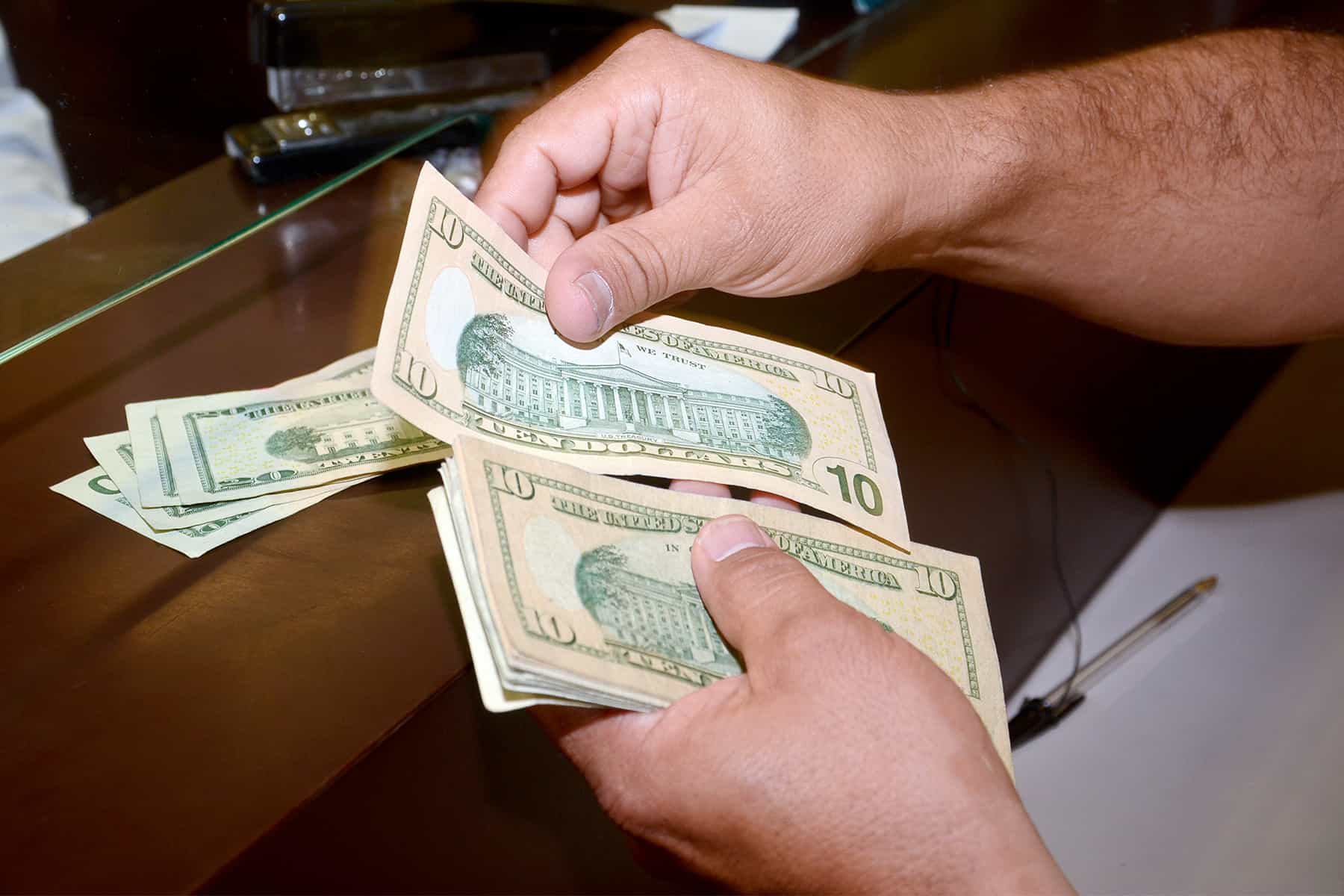
If you are changing dollars into colones, where you do it matters more than ever. With the dollar at a record low, Costa Rica’s banks closed Friday buying dollars for between ₡436 and ₡440 each, according to Central Bank of Costa Rica (BCCR) data compiled by El Observador. On $1,000, the gap between the best and worst of those rates is ₡4,000, or about $9. The dollar closed Friday at a weighted average of ₡446.10 on Monex, the foreign exchange market run by the BCCR, a new record low and the lowest level since Monex began operating in 2006. It was the eighth straight session of declines and broke the previous record of ₡446.80, set on Sept. 17. The dollar has lost 10.3% of its value against the Costa Rican currency so far this year, according to El Observador. Bank counter rates, as reported to the BCCR on Friday, varied by up to ₡4 per dollar. Banco Cathay offered the most, buying dollars at ₡440 and selling them at ₡452.50. Banco Nacional and BAC bought at ₡439 and sold at ₡453. Banco de Costa Rica (BCR) and Banco Popular bought at ₡438 and sold at ₡452. BCT paid the least, buying at ₡436 and selling at ₡454. The BCCR’s official reference rate in effect for the weekend is ₡442.56 for buying and ₡448.34 for selling. Every bank pays less than the market rate when you sell it dollars. At BCT’s ₡436, changing $1,000 brings in ₡10,100 less than the Monex average, about $23. For a retiree converting a $2,000 monthly pension, choosing the best counter rate over the worst is worth about ₡8,000 a month. Changing money twice costs even more. At Banco Nacional’s rates, converting dollars to colones and back again loses ₡14 on every dollar, or roughly $31 on $1,000. The BCCR publishes the buying and selling rate of every bank and exchange house each business day on its website, so you can compare before you go. Rates posted on Friday afternoon generally carry through the weekend, but they will move again when Monex reopens on Monday. If you already bank in Costa Rica, ask whether your bank applies a different rate to conversions made through online banking than at the teller window. If you are paying with a foreign card, choose colones when a card terminal or ATM offers to charge you in dollars instead. That on-the-spot conversion, known as dynamic currency conversion, usually uses a less favorable rate than your card network applies. Shops, restaurants and tour operators that accept cash dollars set their own exchange rate, so it is worth checking it against the bank rate before you pay. The Central Bank has been buying heavily without stopping the slide. On Friday it bought $41.8 million, or 84.8% of the $49.3 million traded on Monex, including $32.3 million in purchases meant to stabilize the market, according to El Observador. Its stabilization purchases total $1.39 billion so far in 2026, with no stabilization sales recorded. Specialists have said the dollar’s decline tends to deepen toward the end of the year, particularly in November, as companies pay year-end aguinaldo bonuses and taxes in colones. For residents whose income arrives in dollars, including retirees, remote workers and landlords who charge rent in dollars, the slide has meant a steady loss of purchasing power. By early November, each $1,000 bought 46,810 fewer colones than in January, and the weak dollar has also hit businesses that earn in foreign currency, from exporters to Costa Rica’s medical tourism industry. With no sign yet that the slide is ending, the few colones you gain by shopping around for a rate are among the only savings within your control.
Costa Rica Banks Pay as Little as 436 Colones per Dollar – Here’s How to Get More
Full Article
Original Source
Read the full article at Ticotimes →KhanList aggregates and links to publicly available news content. We do not host full articles from third-party sources. Always verify important information with original sources.