
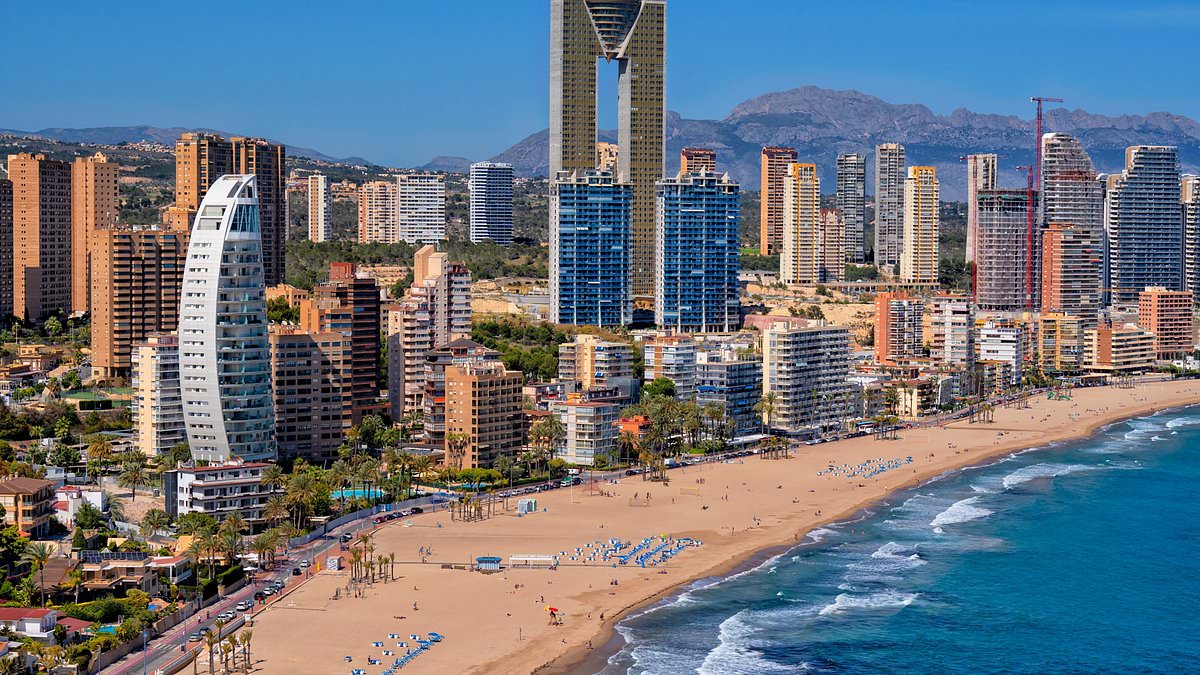
Published: 06:13 EST, 19 November 2026 | Updated: 06:13 EST, 19 November 2026 A new tourism report has revealed how climate change could affect the way we holiday, with severe weather conditions threatening many of the world's popular tourist destinations.New data from Destination Climate RiskScan, published on November 18 – as the COP31 climate conference got underway – details how tourism destinations were being 'squeezed' by extreme weather. Developed by Travel Forward, Risklayer and the Centre of Expertise Leisure, Tourism and Hospitality (CELTH), the data analyses the 'emerging climate pressures on tourism' in 2,588 subnational destinations in 263 countries and territories. In the case of a high-emissions situation, it found that tourism in 62 per cent of holiday destinations across the world could be fundamentally altered by as early as 2050. However, if moderate emissions persist, 36 per cent of destinations could feel the effects.The report revealed that 'climate change could alter the seasonal patterns around which tourism businesses, infrastructure and employment are organised'. Climate change could soon shape the way beach holidays in Mediterranean hotspots workThe number of months that offer suitable weather conditions for tourists to visit could also shift.Under a high emissions scenario in Southeast Asia, the number of months that allow beach and water activities could fall from eight in 2010, to just three by 2080.Similarly, in the Caribbean, this could drop from ten months to six.Hitting the slopes could be affected too, with the number of months suitable for natural skiing plummeting from two in 2010, to none by 2080 under high emissions. In the case of moderate emissions, it could fall to less than one. Holiday hotspots on the Med, such as British favourites Greece, Spain and Italy, could also be affected.High emissions could result in the loss of two months of sightseeing conditions due to unfavourable weather.It's not all bad news, though. As a result of changing climates, there may be as many as 20 extra days a year suitable for swimming by 2080. Indeed, tourism businesses in the affected areas may well be forced to adapt their offerings as a result of changing climate conditions.The report emphasised: 'These results describe changing climatic suitability, not predictions of visitor demand or whether particular activities will remain commercially viable.' While Med destinations may be negatively impacted, the change in climate may be welcomed by Nordic countries who could experience improved conditions for tourismUnder moderate emissions, 75 per cent of its destinations in Nordic countries and Northern Europe could experience improved conditions for tourism.But, as the research explains: 'more favourable climatic conditions for some activities do not necessarily mean lower overall climate risk or improved competitiveness'.As Travel Forward chief executive Jeremy Sampson notes: 'Tourism cannot keep planning for a climate that no longer exists.'These findings challenge some of the basic assumptions about where, when and how tourism can thrive.'Destinations need to think beyond protecting individual hotels and attractions. This is about the resilience of whole communities and economies, and making difficult choices about where to invest, what to adapt and what may need to change fundamentally.'
Costa del...Scandi? Scorching Med beaches could be off limits by 2050, experts warn - with Nordics to become the home of summer holiday escapes
Full Article
Original Source
Read the full article at Dailymail →KhanList aggregates and links to publicly available news content. We do not host full articles from third-party sources. Always verify important information with original sources.