
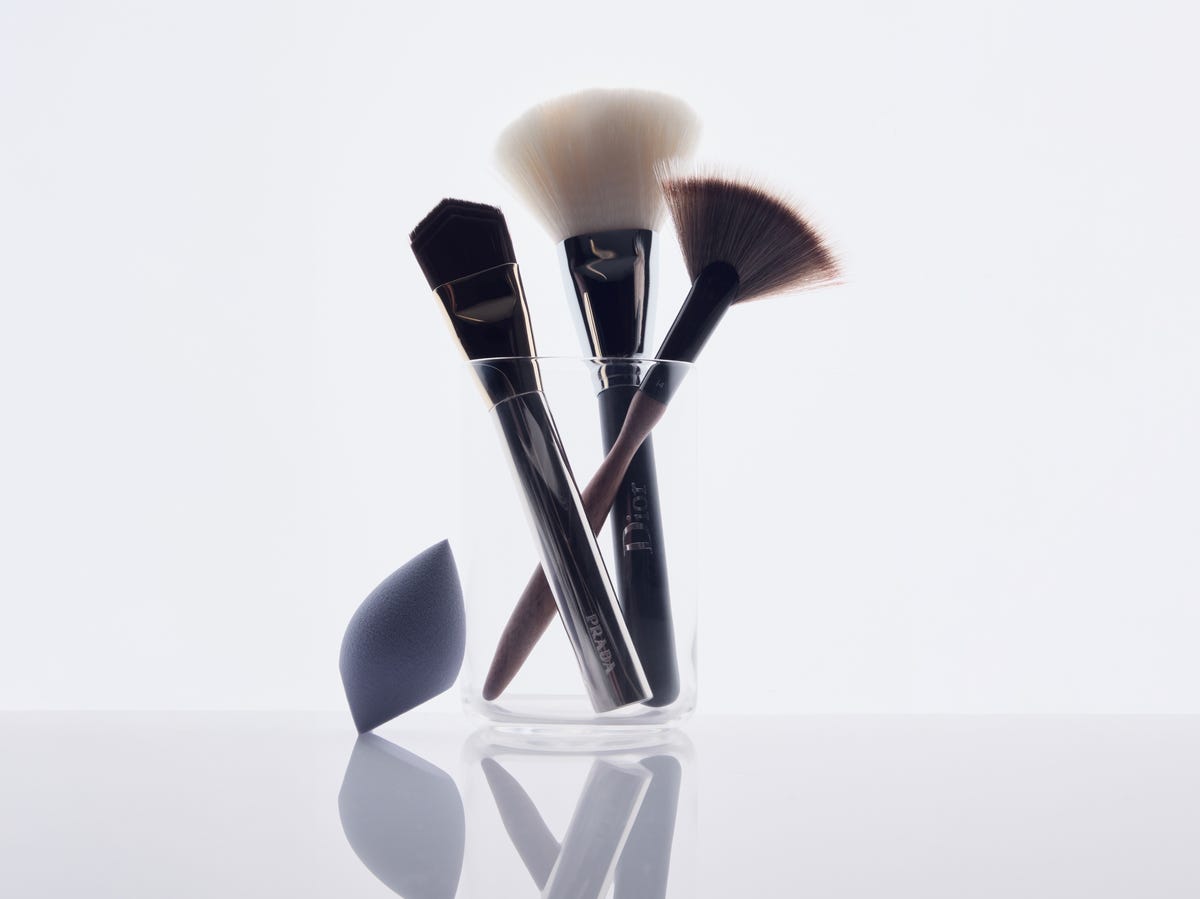
We may earn commission from links on this page, but we only recommend products we love. Promise.Florence SullivanFor the longest time, I blamed my lack of skills as the reason why my makeup consistently looked patchy and cakey. In reality, I was just using all the wrong tools. Turns out blending your concealer, foundation, contour, and blush with the very same sponge isn’t going to create that makeup artist-level face. But once I became well-versed in the world of brushes, like which ones are actually essential and how to properly use them, it made a world of difference in my everyday glam.So, to help you make the most of your makeup (because what’s the point of spending upwards of $50 on a foundation if your application isn’t doing it justice?), I broke down exactly what you need in your brush arsenal. Plus, I spoke with celebrity makeup artists Dani Parkes, Neil Scibelli, and Gabriella Elio for all their professional tips on how to choose the right brushes and how to use each of them. “I love brushes because you can really control the amount of formula that is going on to the skin and blend it accordingly,” explains Scibelli.Ahead, everything you need to know about makeup brushes, where sponges fit into the equation, and advice from MUAs for creating a filter-like finish every single time.The Brush EssentialsFlorence SullivanFoundationEven if you have the best foundation in the world, your base will only look as good as the brush you apply it with. “For foundation, I love using a synthetic bristle brush that’s super lightweight to pack the product in and diffuse in circular motions,” says Parkes. “With foundation, you want to go slow and make sure you’re going in light layers so your base is smooth instead of cakey.”These editor and MUA favorites leave behind flawless and even skin, without any streaks or patchiness. Parkes loves Makeup by Mario’s viral F4 brush “for a flawless look every time, no matter the formula you’re using.”ConcealerArguably the most important step to have a makeup brush handy for is concealer, especially when you need the control to get into all your crevices and precisely camouflage blemishes. “A brush with an angled tip gets into tiny corners, while the density of the bristles helps pick up as much concealer as possible and provide a full-coverage finish that hides dark circles and breakouts,” says Parkes.All of the editor and MUA favorites below work perfectly for under the eyes. Patrick Ta’s is dual-ended, allowing you to pack on product with one side, then gently soften it out with the other.Creams and LiquidsWhen it comes to liquid and cream products, like your beloved blushes and bronzers, you’re going to want something that helps you precisely place the product onto the face without absorbing too much of it. “For creams and liquids, I generally prefer synthetic, denser bristles that allow you to distribute and build product up,” Elio explains.“I use a super light hand so I can layer the product up to the level of pigment I want for something like a blush,” Parkes says. “And I always put the liquid or cream on the back of my hand before going in with a brush, never putting the formulas directly onto the face,” she adds. Warming up the products on the back of your hand before application allows for a more natural and buildable finish (plus, it’s more sanitary).PowdersUnlike its cream and liquid counterparts, powders work best with looser bristles. “ I like softer, fluffier brushes that diffuse the product for a lighter, more natural finish,” says Elio. These can be used to dust on every type of powder, whether you’re applying blush, bronzer, highlighter, or setting powder. “With powder formulas, I like using broader and circular movements with my brush to buff out the product, and make sure it's laying even across the skin,” Scibelli suggests.EyeshadowDepending on if you’re using powder or cream pigments, there are several types of eyeshadow brushes that are worth the investment. A solid brush collection should have “one for the base, one for the crease, and a flat brush for liner touch-ups.” In order to pick up the formula and pack it onto the eye, you’ll want something denser, and for blending out, something dome-shaped and lightweight will make diffusing super seamless.All About SpongesFlorence SullivanAll three of our pros agree: Brushes should be used throughout each step of the glam process, followed by a sponge to top it all off and blend everything together. Parkes says, “some people like applying their products directly with a sponge, but you get a more even and flawless base by applying it with a brush first, then pressing the product in and blending it all together after with a sponge.” You can even spritz setting spray onto the sponge, then dab it gently over your skin to create a smooth effect.“Brushes give you control and coverage,” Elio says, “while a sponge is great for sheering out product and creating a more skin-like finish.” There are tons of different shapes and sizes, too. Some boast sharp corners to get into your under-eyes, while others have a large surface area to allow for all-over diffusing.How to Clean Your Makeup Brushes and Spongesflorence sullivanNow that we have all the tools and tips to create that flawless look, it’s equally important to care for the brushes. “If you don’t clean your brushes often, it can spread germs and lead to breakouts,” Parkes explains. While makeup artists clean their brushes after every use, general makeup users should “wash your makeup brushes weekly, especially your cream formula brushes and sponges,” Scibelli adds. These tend to have the most product buildup.There are a bunch of brush-cleaning formulas on the market designed to remove makeup while simultaneously caring for the bristles. Some of our favorites include KJH and Ogee’s solid soap formulas, which you simply swirl your brushes over with lukewarm water and watch the debris wash away.Once all the makeup is removed from the bristles, “gently squeeze or tap the excess water out, and then set them down horizontally on top of a cloth or towel,” Scibelli says. “If you dry your brushes standing upwards, you can risk too much moisture going down into the casing of the bristles which can cause decaying.”Our Favorite Makeup Brush CleansersFinal thoughtsThere you have it, every type of brush you need for your collection, how to use each one, where sponges come into the picture, and how to clean all of your tools. Of course you can also buy a set from brands like Morphe and Real Techniques that cover all the basics. Happy glamming!Meet the ExpertsDani Parkes is a New York City-based makeup artist. Her clients include Maddie Ziegler, Whitney Leavitt, and Gabby Windey. Neil Scibelli is a New York City-based makeup artist and on-air beauty contributor.Gabriella Elio is the founder of Sweed Beauty and a professional makeup artist. Jasmine Hyman is the Assistant Beauty Editor at Cosmopolitan, where she writes about the latest beauty trends and must-have products. Her most prized beauty possessions are a meticulous skincare routine and salon blowouts. You’ll also likely find her in bed reading a good book or endlessly scrolling TikTok (spoiler: it’s usually the latter) while listening to Harry Styles’ entire discography on repeat. Follow her on Insta to be inundated with pictures of her meals.
Cosmo’s Makeup Brush Guide That’ll Completely Upgrade Your Everyday Glam Routine
Full Article
Original Source
Read the full article at Cosmopolitan →KhanList aggregates and links to publicly available news content. We do not host full articles from third-party sources. Always verify important information with original sources.