
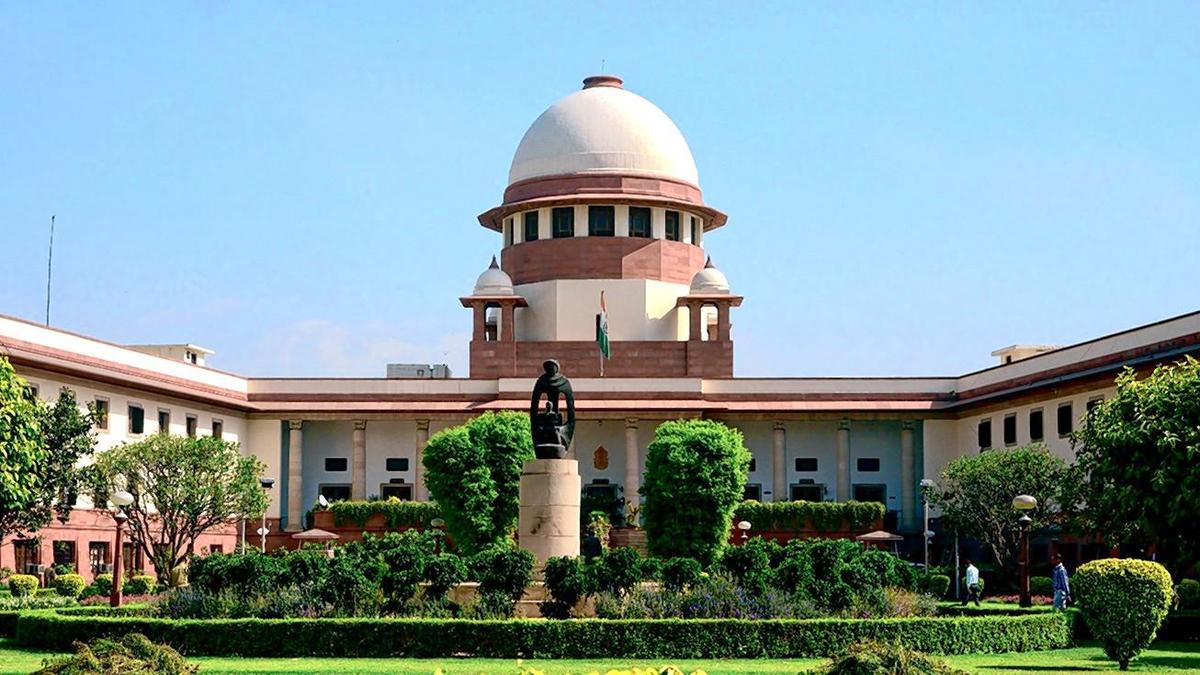
The order came on the Punjab government’s plea seeking a stay on a High Court direction to the CBI to probe corruption allegations against people linked to the State government and submit a report within two months. File | Photo Credit: S. Subramanium The Supreme Court on Monday (October 12, 2026) directed that no coercive action be taken against people linked to the Punjab government by the Central Bureau of Investigation (CBI), which is probing allegations of corruption against high-ranking officials.The order came on the Punjab government's plea seeking a stay on a High Court direction to the CBI to probe corruption allegations against people linked to the State government and submit a report within two months.A Bench of Justices M.M. Sundresh and P.B. Varale issued notice to the Centre, the CBI, the Enforcement Directorate (ED) and others. "We are not staying the FIR. We are saying no coercive steps may be taken," the Bench said.Senior advocates Vikas Singh and Sidharth Luthra appeared for the Punjab government.On October 5, 2026, the State government moved the top court against the Punjab and Haryana High Court's direction on a petition filed by advocate Nikhil Saraf. The allegations include cash for transfers and cash for favourable policies.The petitioner submitted that no action had been taken yet, even after the ED sent communications to the Aam Aadmi Party (AAP) government.It was contended that the allegations warranted an independent investigation, as they raised serious questions about the State government's functioning.The High Court also directed the Punjab Police and the State government to hand over all documents pertaining to the case to the CBI.Assailing the High Court's decision on various grounds, the Punjab government said the impugned judgment suffered from errors, such as treating information shared under Section 66(2) of the Prevention of Money Laundering Act (PMLA) as a direction that makes registration "inevitable," contrary to the 2022 decision of the apex court in Vijay Madanlal Choudhary.The plea said the High Court's judgment directs registration of an FIR into decisions of public servants on transfers, tenders and policy without the previous approval mandated by Section 17A of the Prevention of Corruption Act (PC Act), and faults the CBI for not associating a serving officer whom it could not lawfully enquire into without such approval. Published - October 12, 2026 03:25 pm IST
Corruption case: Supreme Court directs no coercive action be taken against people linked to Punjab govt
Full Article
Original Source
Read the full article at Thehindu →KhanList aggregates and links to publicly available news content. We do not host full articles from third-party sources. Always verify important information with original sources.