
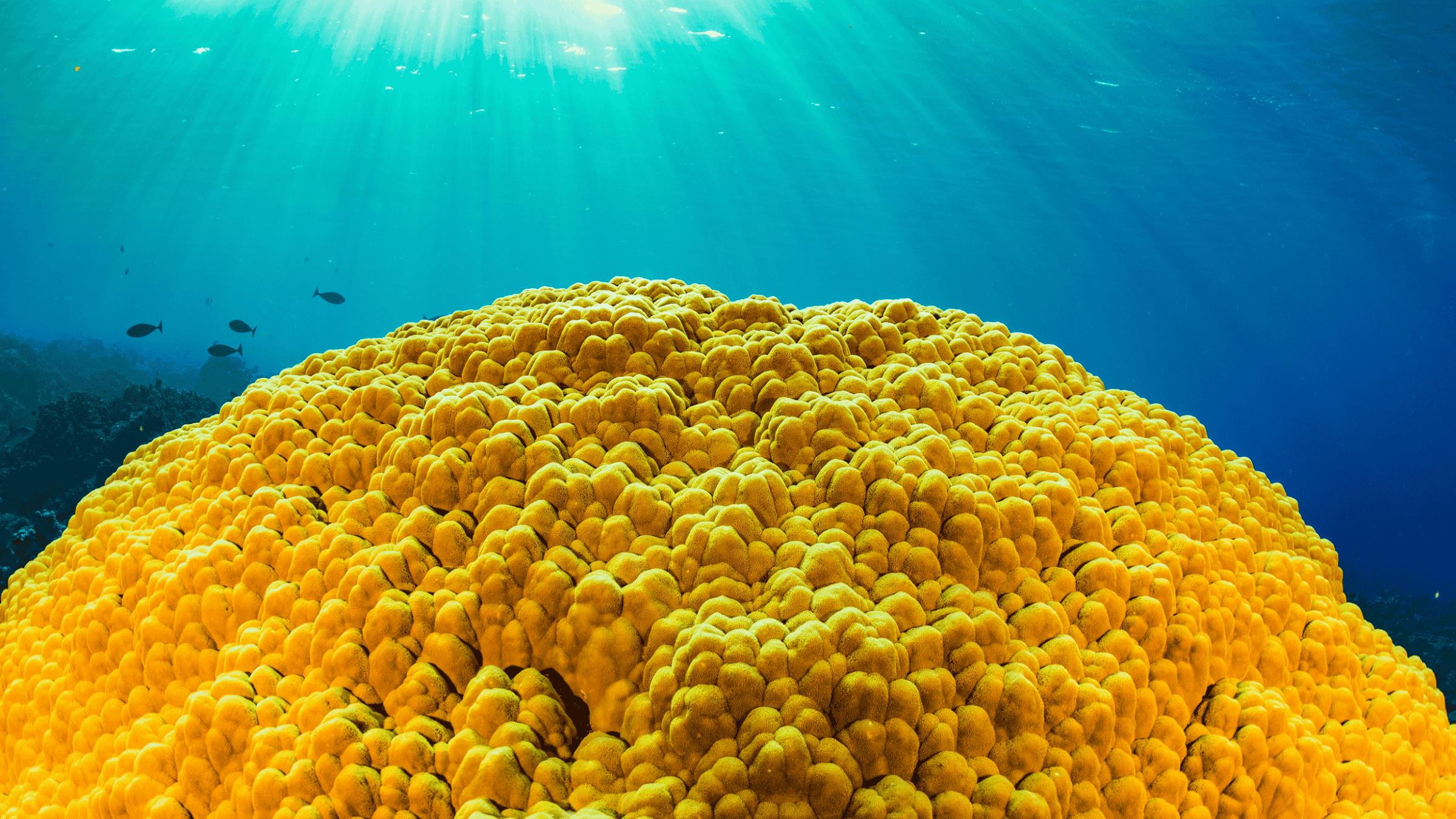
A recent study found 25 contaminants, including from cosmetic products, medicines and agricultural runoff, in coral tissues from reef sites in Hawaii. Contaminant levels were higher at sites subject to greater human influence.The study is among the first to use metabolomics — the study of small molecules in tissues and organisms — to monitor chronic human-caused stress on corals in the wild.While a water sample of a coral reef site provides a snapshot of what contaminants are present, coral tissue can reveal those that have accumulated over time.The researchers also found that the sites with healthier coral metabolomes seemed to have maintained more coral cover during a 2015-2016 marine heat wave; this suggests that local threats like pollution may leave reefs less resilient to global ones, like rising temperatures, they write. Maui, an island in the isolated Hawaiian archipelago, isn’t in one of the world’s most heavily developed or polluted coral-reef regions. Yet even there, human activity leaves an imprint in the very tissue of corals, altering their biochemistry, a recent study shows. The study, published in July in the journal Nature Communications, found 25 contaminants from cosmetic products, medicines and agricultural runoff, among other forms of pollution, in coral tissues at many Maui reef sites. Contaminant levels were higher at the sites subject to greater human influence. The research was done by analyzing corals’ metabolomes — the collection of small molecules in their tissues, such as sugars, lipids and amino acids, that does not include larger molecules like DNA or proteins. The study is among the first to use coral-tissue metabolomics to monitor chronic human-caused stress on corals in the wild. Whereas a water sample of a coral reef site provides a snapshot of what contaminants are present, coral tissue can reveal those that have accumulated over time. “We propose that this may be a way that you can actually evaluate how much impact humans are having on different sites,” Zachary Quinlan, research biologist at the University of Hawai’i at Mānoa and lead author of the study, told Mongabay in a video interview. A coral reef in 2020. Image courtesy of Tiara Stark/TNC. Under threat globally, corals are particularly vulnerable to local stressors because of their immobility. “If there’s a site that has a lot of contamination, they can’t move away and make a new home,” Quinlan said. “They’re just stuck there.” That also makes it possible for corals to act as recordkeepers of contaminants. Metabolomics provides a method of reading the record. Metabolomics emerged as a distinct field around the turn of the millennium and has a wide array of applications, including identifying biomarkers in human blood that serve as early signs of disease. Scientists are increasingly using it to study coral reefs. Much of the work has focused on how particular stressors such as heat or pollution affect corals, often in controlled experiments. The Maui study extends the approach to wild reefs exposed to different levels of human influence. In 2018, the research team took 380 coral samples from 16 reef sites along about 70 kilometers (43 miles) of Maui coastline. These came from two species, lobe coral (Porites lobata) and rice coral (Montipora capitata), the latter of which is endangered. The team preserved the samples in methanol and ran the chemical analysis at a lab in Australia. In assessing the chemical profiles of samples, the researchers found the reef sites clustered into three distinct groups — broadly, the tissue retrieved from each site exhibited one of three chemical patterns. They then compared these groupings with preexisting data on land-use disturbance and with water samples collected alongside the coral samples. The match was strong, with each of the three groups corresponding to either low, medium or high levels of human influence. The more heavily influenced sites had the highest level of contaminants. Three of the five sites in the most heavily influenced group were near wastewater treatment plants. The overall pattern was remarkably similar for the two species, Quinlan said: Where one species showed a highly altered metabolome, the other species generally did also. This was surprising because the two species grow and slough off mucus — one way corals can shed contaminants — at very different rates. Quinlan said the two very different species exhibiting such similar patterns showed how strongly human activities were influencing the corals. Olowalu, one of 16 reef sites off western and southern Maui from which the study authors took samples. The site had medium human influence, they found. Image courtesy of Drew Sulock. A coral of the Porites genus at Olowalu. Image courtesy of Drew Sulock. Then the researchers added a final wrinkle, one they hadn’t planned at the study’s conception. They looked at whether the corals with healthier metabolomes had been more resilient to warming waters. Their main reference point was a coral die-off in Maui and elsewhere caused by a marine heatwave in 2015-2016. The team’s work on this wasn’t conclusive: Longterm coral cover data exist for only five of the 16 sites, and the team only had the metabolome samples from 2018, so couldn’t be sure what the corals’ pollutant load was like leading up to the marine heat wave. Still, the sites with healthier metabolomes generally maintained more coral cover. This suggests that local threats like pollution may leave reefs less resilient to global ones like rising temperatures, the authors write. The study points toward a future in which metabolomics could become a useful monitoring or early-warning tool for reef managers. Robert Quinn, an associate professor at Michigan State University who runs a lab that does this type of work, said he believes metabolomics could serve that role. “It’s a powerful technique that can be used broadly to understand coral physiology and as an application to measure coral biomarkers of health,” Quinn, who wasn’t involved with this study, told Mongabay in an email. Quinn said one limitation is that the specialized instrumentation necessary for metabolomics is “high tech and expensive,” making it hard to access in many countries that have coral reefs. The costly parts come after collection, during the chemical analysis. Sampling itself, meanwhile, is becoming less invasive. When Quinlan’s team was sampling in 2018, they had to use a hammer and chisel to remove small pieces of coral tissue and skeleton, but now the work can be done with a needle that takes a smaller sample, allowing corals to recover more quickly. Quinlan said that makes this type of research “more viable now.” “I don’t want to recommend that to manage our coral reefs we go out and destroy them,” he said, smiling. Banner image: Lobe coral (Porites lobata). Image courtesy of Greg Asner/divephoto.org. Citations: Quinlan, Z. A., Greene, A., Leggat, W., Moriarty, T., Ainsworth, T. D., Nijagal, B., … Donahue, M. J. (2026). Coral metabolome quality and contaminant loads track human land use. Nature Communications, 17(1). doi:10.1038/S41467-026-74960-7 T Berg, J., Moreland-Ochoa, C., McClintock, R., Matsuda, S., Drury, C., & Nelson, C. (2025). Minimally invasive coral biopsy technique for in-situ microbiome and metabolome sampling v1. doi:10.17504/PROTOCOLS.IO.EQ2LY431MLX9/V1 Feedback: Use this form to send a message to the author of this post. If you want to post a public comment, you can do that at the bottom of the page. Credits Topics
Corals keep a record of pollution, pointing to a new monitoring method: Study
Full Article
Original Source
Read the full article at News →KhanList aggregates and links to publicly available news content. We do not host full articles from third-party sources. Always verify important information with original sources.