
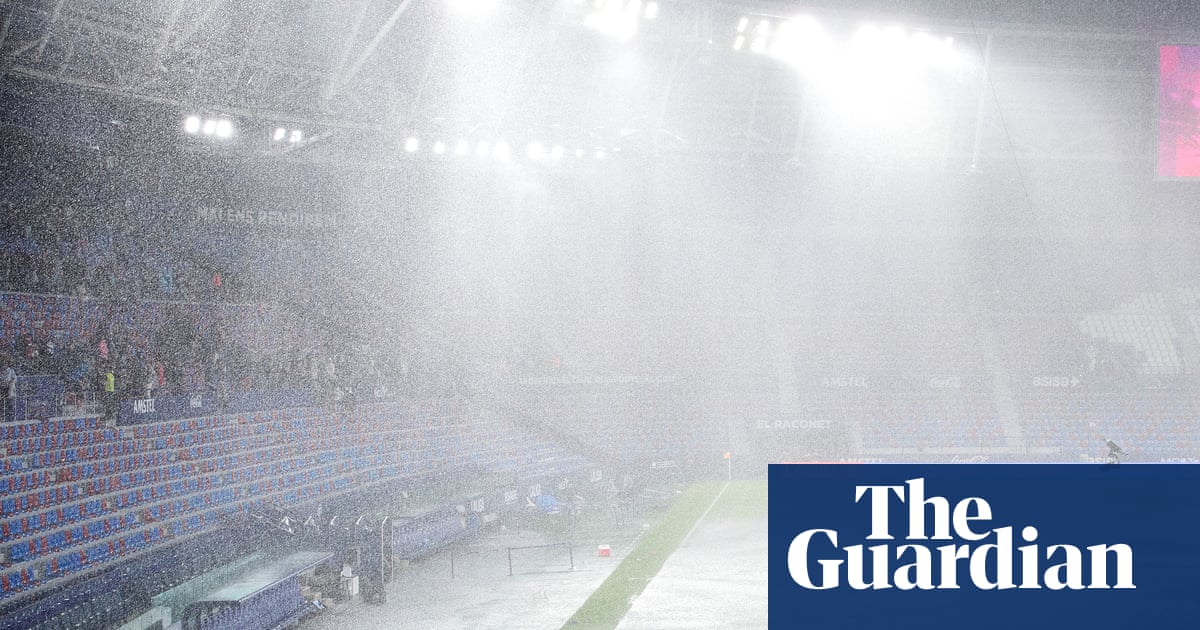
If Cop is the Olympics of climate diplomacy, Antalya has made getting to the starting line an event in itself. Transport has been such an endurance test at the UN climate summit that anyone who reaches the venue in Turkey deserves a medal.Inside, the athletic achievements are less obvious. There are no world records for removing square brackets from negotiating texts, though anyone watching bleary-eyed delegations attempt it may think there should be.Actual Olympians supplied more inspiration. I spoke alongside summer and winter athletes, including the former Swiss alpine skier and two-time Olympic champion Michelle Gisin, Sweden’s cross-country champion Charlotte Kalla, their most decorated winter Olympian, and advocacy group Adapt to Win ambassadors Danielle Alakija, who represented Fiji in the 400m at London 2012, and Kevin Wekesa, who played in the rugby sevens for Kenya at the Paris Olympics. They described how the climate crisis is reshaping the conditions in which they train and compete. Across their sports, safety, performance and the future of competition are increasingly at stake.“There’s such a need for urgency and action,” said Alakija. “When you ask why I’m motivated to speak up, my home is sinking. It is not a matter of two degrees warmer, we are losing land, losing places. There is a little island that I used to spend every birthday at growing up, and when I went home two years ago and took a boat out just to see it, it is completely gone now … We have a voice, a presence, and you’re going to hear me talk about sinking islands and rising temperatures because that is the most important issue of my generation.“One of the great powers we have is our experience of adaptation, so it is important to start to invest in adaptation right now, not in the future. There are communities all over the world suffering, the UK was melting, France was on fire this summer, it is no longer my little corner of the ocean.”“The real question is will we still have a sport to play,” added Wekesa. “In the future will someone say, ‘I used to play rugby, it was a winter sport but now there is no conducive environment for me to play in.’ Imagine being a parent telling your child it is too hot to play.”Their accounts made the issues personal. A warming projection can feel remote. A mountain without snow, a pitch under water or a child kept indoors brings it home. These are places and experiences around which we build our lives.Simon Stiell, the UN climate chief, took the rare step of talking about that power at Cop31’s midpoint. Sport reaches people who will never read a negotiating text, but know exactly what losing their Saturday afternoon would mean. It can make the climate crisis tangible without making people feel powerless.There is practical work behind the appeal. Uefa, European football’s governing body, described investments to help the game adapt. The UN’s Sports for Climate Action Framework brings organisations together to cut emissions, build resilience and use their influence to encourage wider action. Sport has an enormous audience and responsibilities to match.Sport also has a business problem. The whole industry sells the promise that something will happen at a particular time, in a particular place. Increasingly, keeping that promise means higher costs and greater uncertainty. Cancelled fixtures lose income. Damaged facilities need repairing. Insurance becomes more expensive. Clubs still have bills to pay when nobody can play.Sweden’s cross-country champion Charlotte Kalla, their most decorated winter Olympian, was one of the athletes speaking at Cop31 that described how the climate crisis is reshaping the conditions in which they train and compete. Photograph: Matthias Hangst/Getty ImagesThe Game Has Changed, published by Basis, the British Association for Sustainable Sport, the week before Cop31, found that every organisation responding to our survey had experienced extreme-weather impacts this year. Ninety-four per cent thought sport was insufficiently prepared for the climate crisis.Fossil fuel dependence squeezes sport twice: through volatile energy bills today and the mounting climate damage threatening its future. Protecting the business means confronting both.skip past newsletter promotionafter newsletter promotionWhich brings us back to the windowless rooms. Watching knackered ministers and officials slug it out line by line is rarely uplifting. But the Paris Agreement of 2015 was forged through this same attritional process. Almost the whole world remains committed to the agreement. We would be in far deeper trouble without it.Andy Burnham, the only G7 leader to attend Cop31, delivered a dependable performance. Electrify everything possible and generate that power from clean sources to cut emissions, create jobs, lower bills and strengthen security. His attendance and message deserves credit. Delivery will decide the result.This Cop summit was never supposed to be another Paris. Its job is to turn existing promises into practical progress: getting finance moving, helping countries withstand worsening impacts and accelerating the shift away from fossil fuels. But the difference between promising help and delivering it still comes down to countries working together in places like this.That matters to a flooded community, a country struggling with debt and every sports club wondering how to get through another disrupted season. Sport knows the difference between what you say and what happens on the pitch. Nobody other than José Mourinho has ever won a match at a press conference.The spectacle here can be disorienting, but the stakes couldn’t be higher. Sport has been more visible at this Cop than most others, though it’s still quite peripheral. Given its unique power to show how the climate crisis threatens the things we love as well as the things we need, maybe future Cops should put athletes front and centre. For everyone who loves sport, there is something worth defending beyond Antalya’s conference walls – the chance to keep playing. Dom Goggins is chief executive of Basis (British Association for Sustainable Sport). This is an extract from our newsletter, The Hotspot. To subscribe just visit this page and follow the instructions.
Cop31 summit spells out stark warnings for athletes and sport organisations
Full Article
Original Source
Read the full article at Theguardian →KhanList aggregates and links to publicly available news content. We do not host full articles from third-party sources. Always verify important information with original sources.