
ANTALYA – The Asian Infrastructure Investment Bank has agreed a record US$1.6 billion (S$2.06 billion) financing deal with COP31 climate conference host Turkey to support a series of policy reforms aimed at attracting the investment it needs to hit its climate goals, the bank said.Turkey, a founding member of the AIIB, will need an estimated US$68 billion in additional climate investment by 2030, around half from private sources, the bank said in a statement on Nov 12, the fourth day of the two-week UN climate conference being held in Antalya.Covering fiscal policy, financial regulation and sectoral planning, the agreement will support the implementation of Turkey’s Climate Law and its plan to cut planet-warming emissions, which includes an interim target for 2035 and aims to achieve net zero by 2053.The money will help scale sustainable finance, accelerate decarbonisation and boost climate resilience efforts across the country of 86 million people as global warming drives drought, floods and wildfires.“This financing represents AIIB’s largest climate policy-based financing package to date, and we look forward to contributing to Türkiye delivering on its climate ambitions,” said AIIB Chief Investment Officer Konstantin Limitovskiy.Total AIIB climate financing in 2025 was a record US$7.47 billion.Help for Turkey’s nascent trading schemePart of the sustainable finance support will go towards helping the country scale its nascent emissions trading scheme, under which companies in high-emitting sectors will receive and trade allowances.A domestic carbon price could help exporters to the European Union in sectors such as steel and cement, as carbon costs paid in Turkey can be taken into account under the bloc’s carbon border levy on emissions embedded in certain imported products.Programme targets include getting at least 180 facilities reporting baseline emissions under the scheme by April 2027 and securing production licences for 1,800 megawatts of wind and solar capacity by early 2027.The plan also aims to help 225,000 farmers in water-stressed basins switch to less water-intensive crops by 2028 and to have 50,000 hectares designated as carbon sinks – where land absorbs climate-damaging carbon – by 2028.As the country faces increasing pressure from water scarcity, drought, extreme heat, wildfires and urban flooding, the reform plan aims to help strengthen planning and risk management in areas including water, ecosystems and health. REUTERS
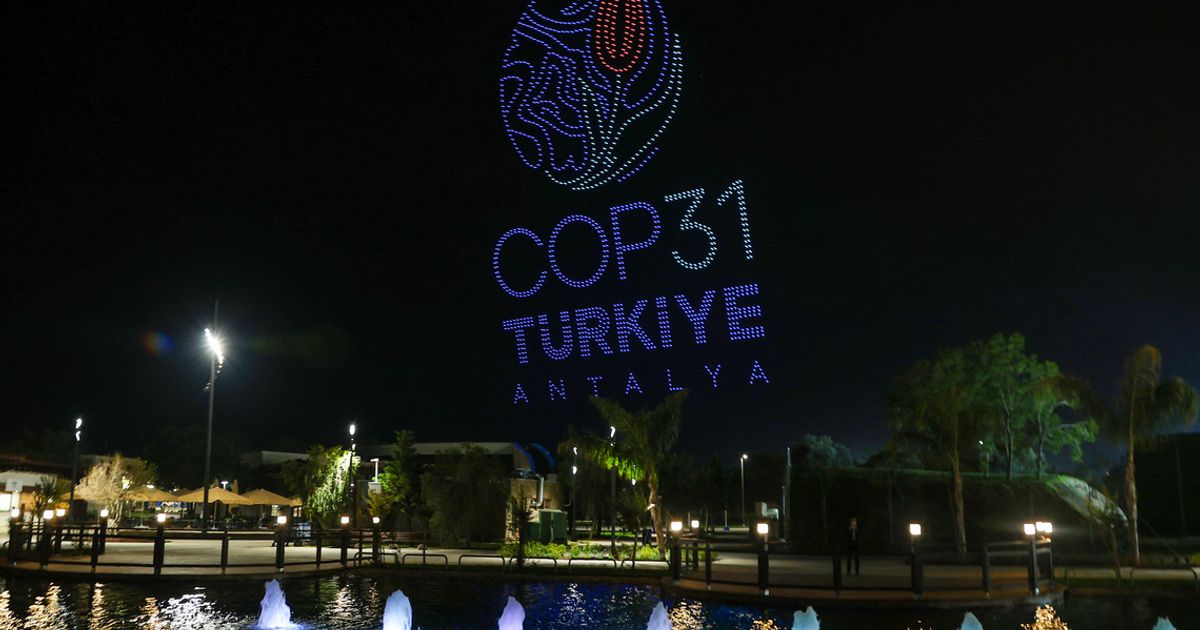
COP31 host Turkey, Asian Infrastructure Investment Bank strike record $2 billion climate policy deal
Full Article
Original Source
Read the full article at Straitstimes →KhanList aggregates and links to publicly available news content. We do not host full articles from third-party sources. Always verify important information with original sources.